Cleaning 101: How To Clean a Butcher Block
Make your butcher block last for years.
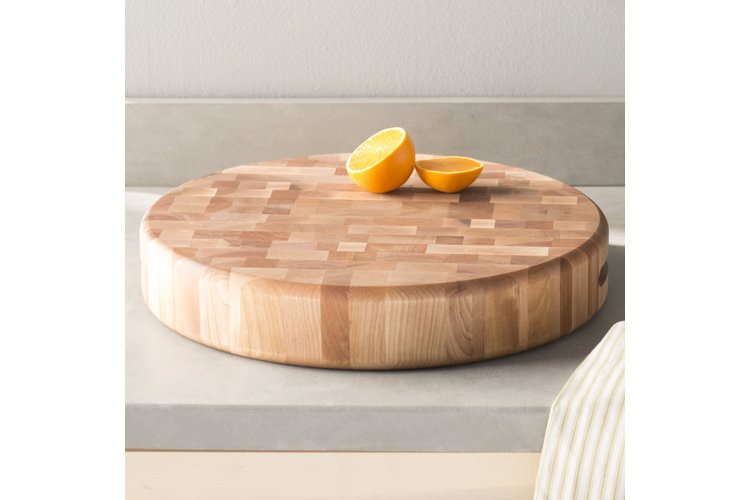
Butcher blocks are a great addition to any kitchen; they look great and also can prolong the life of your cutlery. Whether you have a butcher-block-topped kitchen island or a stand-alone cutting board, make sure it is sanitized and moisturized often. To keep yours looking good for years, learn how to clean a butcher block in our guide.
How to Clean a Butcher Block
How to Clean Daily
What You Will Need
Metal spatula
Liquid dish soap
3 clean cloths
You should clean your butcher block after every use. To do this, take a metal spatula and scrape it across the top of the block to remove food particles. Then take a clean cloth and wet it with warm water and add a small drop of liquid dish soap. Scrub the board with the wet cloth. Do not immerse your butcher block in water. Take a second clean cloth and soak it in warm water. Use this to rinse off the excess soap on the board. With a third clean cloth, hand-dry the board and place it on its side so it can dry easily and evenly.
How to Remove Stains
What You Will Need
Salt
1 lemon
Hydrogen peroxide (use a solution that is 3% hydrogen peroxide)
White vinegar
2 clean cloths
Any spills should also be cleaned up immediately. However, if a stain sets in to the block, sprinkle salt on the stain. Then cut a lemon in half and squeeze its juice over the salt. Then scrub the stain with the pulp side of the lemon. Let this mixture of lemon and salt sit for a few hours. Then rinse it off with a wet cloth and warm water. Take a dry cloth and hand-dry the block, and then rest it on its side to air-dry.
If the lemon and salt doesn’t work, try mixing 1 tablespoon of 3% hydrogen peroxide with 1 cup of water. Dip a clean cloth in the solution and dab the stain. Then, dip another clean cloth in white vinegar and dab the stain. Once the stain is removed, rinse the area off with a clean, damp cloth and let it air-dry.
How to Deodorize
What You Will Need
Liquid dish soap
Baking soda
White vinegar
If your butcher block is emitting an odor, wipe down its surface with warm water and liquid dish soap to remove food residue. Once it is dry, sprinkle baking soda on the block’s surface and let it sit for 15 minutes. Then, dip a clean cloth in a mixture of white vinegar and water (one part vinegar to every three parts water) and scrub the block. Then rinse it off with another clean cloth and warm water before wiping off excess moisture and letting it air-dry.
How to Moisturize
What You Will Need
Mineral oil
3 clean cloths
Once a month, moisturize your butcher block so the wood does not crack or separate. Before moisturizing, make sure your butcher block is clean. Wipe it down and remove any stains. Then, apply mineral oil to a clean cloth and rub it all over the block. Make sure to wipe in the direction of the grain. Let the mineral oil sit for a few hours to let the oil soak into the wood. Then take a clean cloth and wipe off any excess oil.
If your butcher block doesn’t have a varnished surface, it does not need to be moisturized.
How to Disinfect
What You Will Need
Hydrogen peroxide (use a solution that is 3% hydrogen peroxide)
3 clean cloths
On a regular basis, your butcher block will need to be completely disinfected. To do this, pour hydrogen peroxide on a clean cloth and rub it over the butcher block. Let it sit for 10 minutes, then with a damp cloth, wipe the block to remove any remaining hydrogen peroxide. Let it air-dry.
Tip!
Make sure to cut in different areas of the board so it wears evenly. If your butcher block is two-sided, make sure to use both sides.
