Cleaning 101: How to Clean an Area Rug
Give your rug the spa treatment.
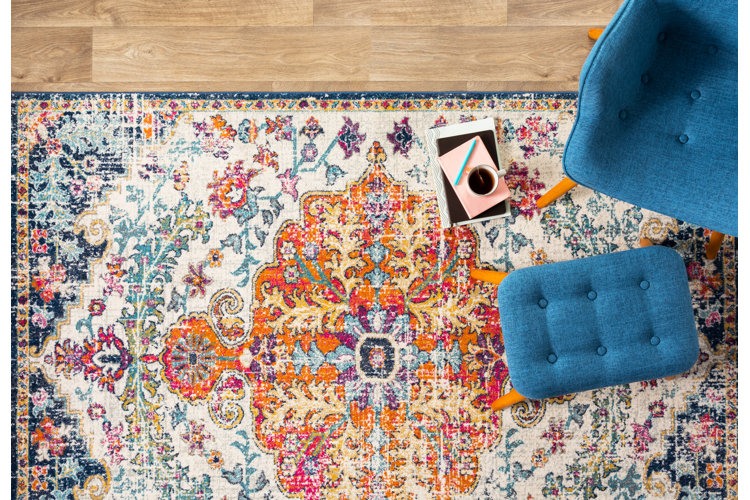
An area rug adds style and comfort to every room. Keep them bright and spotless with our tips for how to clean area rugs.
Project Overview
- Time: 30 minutes – 1 hour
- Skill Level: Beginner
- Number of People Recommended: 1
What You’ll Need:
- Carpet-suitable vacuum cleaner
- Carpet cleaning solution
- Carpet deep cleaner
For outdoor cleaning: - Broom
- Tarp
- Hose or water buckets
- Towels
- Laundry drying rack
1. Reference the Care Tag

(Shop this image: jute area rugs, candle lanterns, wicker & rattan benches, and blue throw pillows)
Always consult your rug's care label to see if it should be dry-cleaned, hand-washed, machine-washed, or only spot-cleaned. If the care tag has been removed, we recommend hand-washing with care or taking your rug to a professional dry cleaning service to ensure it's cleaned properly.
Before you begin, it’s also important to determine how your type of rug will dictate the cleaning process. Here are some types of rugs to look out for that may require special cleaning:
Jute, Sisal, & Bamboo Area Rugs: Since water weakens the fibers of these types of rugs, it is best to not deep-clean them. For regular cleaning, vacuum the top and bottom of the rug, as well as the floor under the rug. To remove stains, dip a microfiber cloth into a mixture of warm water and a tablespoon of laundry detergent. Then blot the stain, and rinse with warm water. Blot it dry with a clean cloth, and let it air-dry.
Delicate or Antique Area Rugs: If you have a delicate/antique rug or a rug made of animal fur or hide, consult a professional to ensure it is cleaned correctly.
Large Area Rugs: When considering how to clean area rugs that are large in size, it may be best to send it to a professional rug cleaning service. These professionals have the tools and equipment to clean extra-large rug surfaces with ease. If you're set on doing it yourself, we recommend using a carpet shampooer or a long scrub brush with a carpet cleaning solution. This will allow you to cover more surface area quickly and help simplify the process.
(Shop this image: cordless vacuums, solid gray area rugs, gray sofas, and gray blankets & throws)
Next, it's time to vacuum! For standard vacuums, make sure you switch to the carpet setting, which is specifically designed to suction out dirt and dust from rug fibers. For a more specialty clean, get a vacuum cleaner designed for carpets.
- For rugs with an attached backing, simply run the vacuum gently over the top of the rug until you've vacuumed the entire surface.
- For double-sided rugs or rugs without a backing, vacuum the top and then flip the rug over and vacuum the underside to ensure you get up all the dust you can.
- For wool and shag rugs, make sure to turn off the beater bar to prevent damage to rug fibers.
Optional Step: We recommend shaking your rug outside after vacuuming because it prevents you from tracking dirt/dust through the house and it gives you a chance to free excess dirt particles that are trapped in the rug fibers. For smaller rugs, you can just hold and shake it out to remove any extra dust particles. For larger rugs, we recommend draping the rug over a clean outdoor surface (like a railing) and using a broom to hit the back of the rug to free any more dust or debris.
(Shop this image: small carpet deep cleaners, geometric ivory area rugs, beige sectionals, and plaid dog beds)
It's recommended that you deep-clean rugs at least once a year to remove dirt, dust, or allergens and to keep rugs looking pristine for the long term. Otherwise, you can vacuum and spot-clean as needed. For the best results, lay your rug on a tarp outside or in your garage/basement to limit water or cleaning solution from getting on nearby carpet/furnishings. Jump to the relevant section below to get started.
Tip!
Always test a small area of your rug first to make sure that the cleaning solution doesn't cause the color to bleed – this is especially important for wool rugs. When in doubt, take your rug to the dry cleaners.
Machine-Washable Rugs: For spot-treating, use a mixture of one tablespoon of water and one tablespoon of laundry detergent and a sponge. Soak the stain in the mixture for 15–30 minutes before using a damp sponge or towel to dab/lift the stain. Repeat this process until the stain is gone. For a deep-clean, just pop the rug in the washing machine! Review How to Care for Your Washable Rugs for more cleaning tips and best practices to preserve your rug.
Cotton & Synthetic Rugs: Lay your rug down on a tarp or deck, but make sure it is close to a water supply, like your garden hose. Follow the directions on the label of your carpet shampoo. Some shampoos require mixing with warm water. If you don’t have carpet shampoo, you can take a bucket and make your own solution of warm water and a tablespoon of mild, liquid dish soap. Before washing your entire rug, first spot-test the shampoo or solution in a small area of the rug to make sure the colors don’t bleed. If the colors do bleed, rinse the spot and take the rug to a dry cleaner. If the colors don't bleed, you're good to go!
Pour the soap solution onto a sturdy, soft-bristle brush and work it into the rug or use a carpet shampooer. Let the rug sit for five minutes before rinsing it off – if using a carpet shampooer, check for a rinse setting. Some models come with rinse technology so you can remove and wash out the cleaning solution with minimal mess.
Wool Rugs: Before washing, make sure to first move your hand across the rug. Sliding in one direction will feel soft, while the other will feel rough. Always wash in the direction of the soft side and use a damp sponge so you don't completely soak the rub fibers (this prevents damage).
- In a bucket, mix cold water and a tablespoon of laundry detergent made specifically for wool.
- Take a second bucket and fill it with cold water.
- Dampen your sponge in the detergent and water solution, and test a small area of the rug to make sure the colors won’t bleed. If the colors do bleed, take the rug to a dry cleaner. If they don’t bleed, continue washing the entire rug in small sections.
Shag Rugs: Have a shag rug? Jump to this guide for step-by-step instructions on cleaning this high-pile rug: Cleaning 101: How to Clean a Shag Rug.
White Rugs: White rugs require different cleaning techniques depending on the type of stain. When in doubt, start with an equal mixture of water and white vinegar. One tablespoon of water and one tablespoon of white vinegar should do the trick for spot-treating.
- Place the mixture in a cup and dip a sponge into it, or opt for a spray bottle for another application method.
- Apply the mixture to any water-soluble stain (drink spills, bodily fluids, food residue).
- Allow it to sit for a few minutes before dabbing the spot with a dish towel or rag.
- For older stains, leave the solution on for approximately 30 minutes before dabbing.
- If white vinegar doesn't do the trick, you may need to try an ammonia water mixture. This is commonly needed for red wine, chocolate, and other hard-to-remove stains.
- Do not use an ammonia mixture if you have a white carpet made of wool – instead, use a dish detergent mixture.
- Combine 1 cup of warm water with 1 tablespoon of ammonia in a spray bottle.
- Apply the mixture to the stain and allow it to set for up to 10 minutes.
- Dab the mixture with a sponge or towel until the stain rises. Exercise caution when using ammonia-based cleaners to prevent skin and respiratory irritation.
After spot-treating, it's time to do a full rug clean. You can use a carpet shampooer (looks much like a vacuum) and a pre-made carpet cleaning solution to deep-clean the entire rug with ease. However, you can also deep-clean white rugs without a carpet shampooer. Start by adding 1 tablespoon of detergent to 1 gallon of water. Mix this solution in a bucket. Scrub the mixture into the carpet with a sponge. Repeat this process for the entire rug. Visually section the rug into four sections and scrub each section thoroughly before moving on to the next. Once you've cleaned the entire rug, leave it for 5–10 minutes before rinsing out the cleaning solution.
Looking to clean your rug with minimal water? Consider steam-cleaning your rug instead of shampooing it. Using a steam cleaner is as easy as using a vacuum cleaner or carpet cleaner, and it cleans the rug without excess water – minimizing the drying time. Because steam-cleaning uses less water, you also don't have to move your rug to a different location to clean it! Here's how to steam a rug for the best results.
Step 1: Vacuum the rug thoroughly to pick up any dirt. If there are any stains on the rug, pretreat it by spraying the rug with a pretreat solution and let it sit for at least 5 minutes.
Step 2: Fill your steam cleaner with 2 cups of hot water. Open up the bottle of your carpet cleaner solution and fill the cup to the indicated line. Pour the cup of solution into your steamer where you filled it with water.
Step 3: Start cleaning your rug slowly. Press the trigger of your steam cleaner as you start to go over the rug in a slow back-and-forth motion to let the cleaner really penetrate the rug.
Step 4: Release the trigger and go back over the same spot slowly. The water in your steam cleaner filter should start to darken or turn brown as an indication of the dirt it is picking up.
Step 5: Repeat steps three and four as you go over the entire rug.
Tip!
Review our guide on How to Use a Steam Cleaner & Change Your Cleaning Routine Forever for more tips and tricks.
5. Select the Appropriate Drying Method
(Shop this image: green chevron rugs, white shag rugs, solid green rugs, and orange striped rugs)
Once you've lathered your rug and rinsed it, it's time to dry it out. This is an important step to prevent mold or mildew growth. We recommend pressing clean, dry towels into the rug to help remove excess water.
Is your rug laying on a tarp? Lift it off of the tarp and let it hang dry on a large drying rack, dry outdoor surface, or a dry tarp in your garage/basement. For smaller rugs, you might be able to hang them on a laundry drying rack in your laundry room. Rugs can take up to 24 hours or more to fully dry depending on size and thickness.
Have a machine washable rug? After removing it from the washing machine, reference the care tag to determine whether you need to hang dry it or if it can go in the dryer on a low heat setting.
Tip!
Make sure to lay your rug flat on the ground or drying rack so that there aren't any odd creases. This will keep the rug from developing wrinkles or curved edges as it dries.
Optional Step: After drying, you can choose to vacuum your rug a second time to help remove any remaining dirt particles and help thicker pile rugs perk back up for a fresh look and feel. Make sure your rug is completely dry before you vacuum it again, as this will prevent damage to the rug fibers. If you only spot-treated your rug, you do not need to complete a second vacuum session.
6. Establish a Regular Cleaning Schedule
(Shop this image: blue Oriental area rugs, gray geometric area rugs, flatweave area rugs, and gray pouf ottomans)
How often you perform your rug maintenance depends on several factors, such as the location of the rug and if it's heavily traveled, your rug’s materials, if you have any pets in the house, and if the rug has acquired any stains.
Rugs will require cleaning more often if they are placed in heavily traveled areas of the house or if they are placed in front of your exterior doors. Rugs that are by the exterior doors to your home tend to accumulate dust and dirt quicker than others, since your shoes bring in dirt or mud from the outside. The general rule of thumb for cleaning rugs is to clean rugs in low-traffic areas every 12 to 18 months. If you start to notice that your rug is looking dirty earlier than this time frame, it’s never a bad idea to give it a good deep-clean!
One way to keep your rug looking healthy year-round is to vacuum it regularly or spot-clean it immediately if any stains appear. If your rug is durable enough to go in the washing machine, performing this rug maintenance routinely is a great easy way to keep your rug looking fresh and clean.
