Canopy Buying Guide
Learn about the different types of canopies and find the one that works for you.
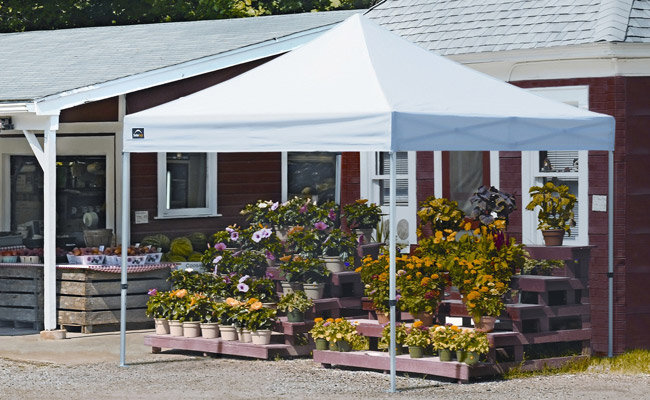
Whether you're looking for a place to host your next party, protection from the sun during sports games, or a place to set up your booth for the next craft fair, we've got you covered. A canopy is a great multi-use item to have for any occasion, but you need to be sure that you are getting the right canopy for your lifestyle.
If you are looking to use your canopy for camping trips you'll want a sport canopy that gives you the durability to withstand the elements, and yet is lightweight enough to carry on the trails. On the other hand, if you're looking for a shelter for a backyard wedding, then you'll want an event canopy with room for everyone. Read on to get all the facts about canopy types, construction, and material types.
Canopy Types
Event Canopies come in a variety of sizes and spaces to accommodate any gathering. Consider this style if you are hosting a wedding, bridal shower, or birthday party to provide shelter from the elements. Event canopies can also be used a temporary car port to protect valuable automobiles.

Pros
- Come up to 30' long
- Most have a steel frame
- Sturdy construction
Cons
- Not ideal for frequent setup/break down
- Heavy
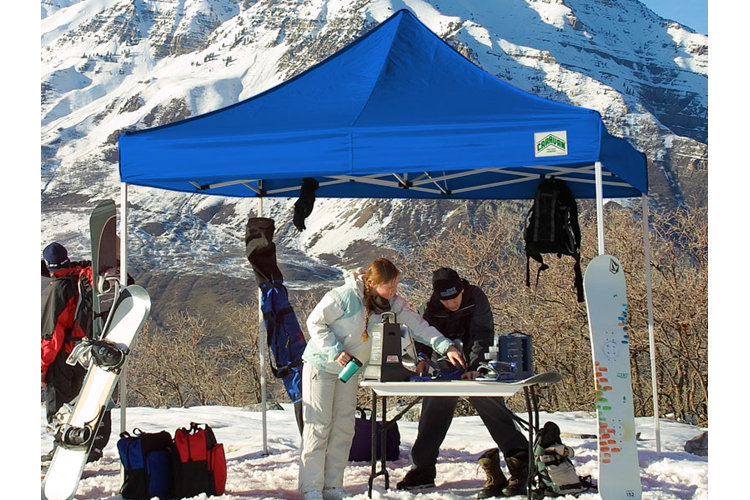
Sports Canopies are built for easy transport and set up. They are typically smaller than other varieties and act as a shield from the sun when on the beach, sports field, or hosting a garage sale. These canopies are not meant to be permanent structures however, so consider all use cases before making your purchase.
Pros
- Water resistant
- Carrying case or roller bag included
- Quick set up and breakdown
Cons
- Less sturdy construction
- Not ideal for prolonged use
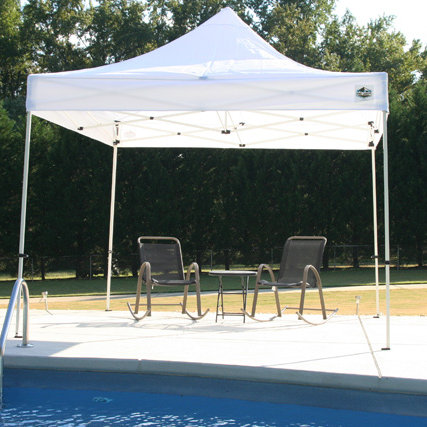
Pop-up Canopies are the easiest to set up and break down with their "pop" open design. Ideal for a backyard barbeque, kid's sporting event, or craft fair, these canopies are light and easy to use. Typically they are 10x10 feet, but other sizes are available as well.
Pros
- Quick set up and breakdown
- Easy to transport
- Versatile
Cons
- Larger sizes require at least two people for set up
- Typically does not include side flaps for protection
Beach Tent Canopy
Beach Tent Canopies have thin legs which are easy to bury in the sand. The slant-leg design (seen in the photo left) is an excellent option since it provides added stability. They often come with a convenient carrying case to make trips to the beach a breeze.
Pros
- Water resistant
- Carrying case or roller bag included
- Quick set up and breakdown
Cons
- Smaller in size
- Typically does not include side flaps for protection
Materials
Canopies come in two basic materials: fabric and PVC/Plastic . Fabric is lightweight, but plastic is far more durable so consider your use case when making your decision. See the pros and cons for each material option below.
Canopy frames are available in steel, aluminum, plastic, or fibreglass. If your canopy will be exposed to large amounts of water then plastic or fibreglass would be ideal. However, if you are looking for a more durable construction then you should consider steel or aluminum. See the chart below to compare the pros and cons of each material.
Features and Accessories
- Weight bags are a necessity if you plan on using your canopy in inclement weather. They are used to weigh down each leg so that the canopy is more stable.
- A travel bag (sometimes included) makes toting your canopy easy. Look for a bag with wheels if you're concerned about the weight.
- Slant-legs are a great feature if you're looking for more stability. These are especially helpful if you will be using your canopy on the beach or other unstable ground.
- Screened or enclosed canopies provide additional shelter from the wind, sun, and insects.
Tip!
During the summer months create an outdoor fort for the little ones under your canopy. Hang battery operated lanterns from the trusses and lay out towels for a cool, shady spot to hang out.
