Chicken Care 101: What Is a Chicken Run & Why You Need One
The key to a happy flock.
There’s much more to raising chickens than providing a coop, sprinkling feed, and collecting eggs. You likely know what a chicken coop is, but may be wondering: what is a chicken run and what’s the difference? Chicken runs are essential for raising healthy chickens and protecting them from environmental threats. We’re here to demystify backyard chicken set-ups, one question at a time. Read on to learn more about chicken runs and why you need one.
What is a Chicken Run?
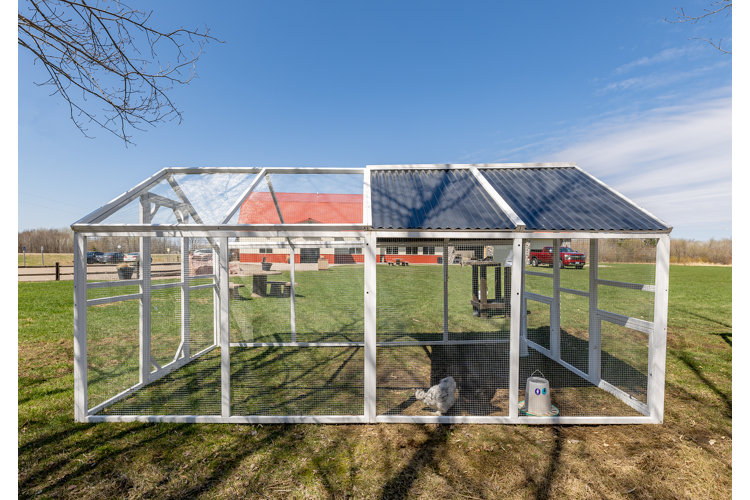
A chicken run is an enclosed outdoor area for your chickens – the outside component makes them different from a chicken coop (the indoor area where chickens sleep and lay their eggs). They consist of a metal or wood frame and have fencing material on all sides and over the top. This outdoor chicken enclosure provides a safe space for your chickens to get fresh air, exercise, and graze without having to worry about predators. Chicken runs are open on the bottom, which allow chickens to scratch the ground and forage for bugs and seeds. Most chicken runs have a partially covered top to offer shade and protection from rain and harsh sun.
Why Do Your Chickens Need a Run?
While every chicken set-up is different, a chicken run is essential for most chickens. Here are a few reasons you should consider using a chicken run:
- Protection From Preditors: Chicken runs offer great protection from predators that pose a threat – on land and from the sky. A secure fence can protect from predators and pests that will snatch chickens away, or steal their food supply, such as foxes, coyotes, racoons, or neighborhood cats and dogs. The top covering prevents hawks from swooping down and taking your feathered friends away. Having a partially covered run also gives your chickens a sense of security and can reduce stress since they know they have a safe space.
- Coop Cleanliness: Feeding your chickens in their run and encouraging them to spend their time in a safe outdoor area will naturally reduce the amount of waste in their coop. A run also gives you a safe place to put them so you can close off their coop to do a thorough cleaning or to remove eggs.
- Chicken Enrichment: Providing your chickens with enrichment activity is essential, since chickens are prone to hurting themselves or other chickens when they are bored. Giving them the proper amount of space to forage, scratch in the dirt, and dust bathe will improve their quality of life and prevent illnesses and unwanted behaviors.
Chicken runs provide your chickens with a safe space to enjoy the outdoors. There are a few different options for types of chicken runs.
- Wooden Chicken Runs: Wooden chicken runs consist of a weather-resistant wooden frame and metal fencing material. Many wood-framed chicken runs use a natural tropical hardwood because it is naturally durable and rot-resistant. Softer woods need to be pressure-treated or sealed with a nontoxic paint to prevent rot.
- Metal Chicken Runs: Metal chicken runs are made of a metal frame like galvanized steel, which is extremely durable and rust-resistant. Galvanized steel chicken coops can last a long time. They also use metal fencing material and typically have a portion of the roof covered with a tarp.
- Freestanding Chicken Runs: Freestanding chicken runs are not attached to a coop, fence, or building. They are closed on all sides, on top, and are open on the bottom. They typically have a hinged door to allow chickens in and out. A walk-in chicken run is tall enough to allow humans to walk in and out to attend to the chickens inside. If you have a large enough chicken run, you can place your chicken’s coop inside it to allow your chickens to go in and out of the coop on their own safely. Placing a coop inside of a predator-resistant chicken run also adds extra security to the coop.
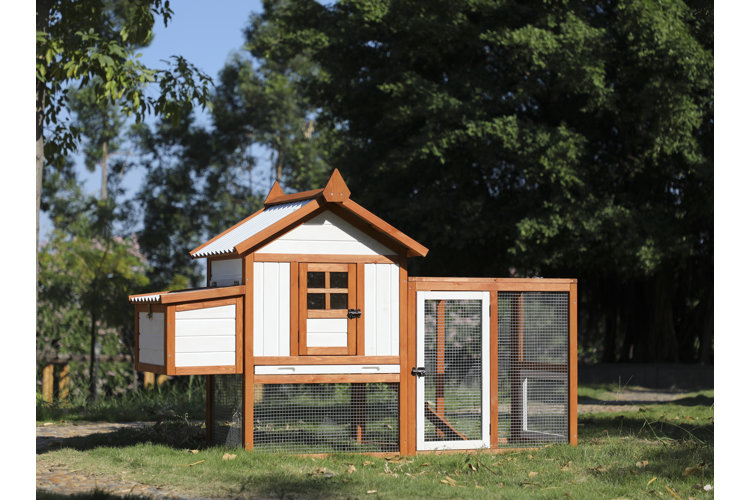
- Coop-Attached Chicken Runs: Some chicken coops have small runs attached to them that either sit below or beside the coop. This allows the chickens to go outside without being vulnerable to predators or being able to run off and get lost. Typically, small runs that are attached to coops are not large enough to fulfill the needs of your chickens and they will need a larger run as well, or else they will need to have supervised free-range time in your yard. Large custom-built runs can be designed to be attached to a coop as well.
