Types of Birdhouses: Choose the Right Home for Your Feathered Friends
Bring all kinds of birds to your backyard.
If you're looking to bring more wildlife into your backyard, a birdhouse can be the addition you're looking for. Since birds are naturally drawn to building nests in enclosed spaces, birdhouses are a great way to provide shelter for nesting birds and protect them from the elements, encouraging them to hang out in your yard. Keep reading below to learn about different types of birdhouses, materials, and features to consider when selecting your perfect birdhouse.
Types of Birdhouses
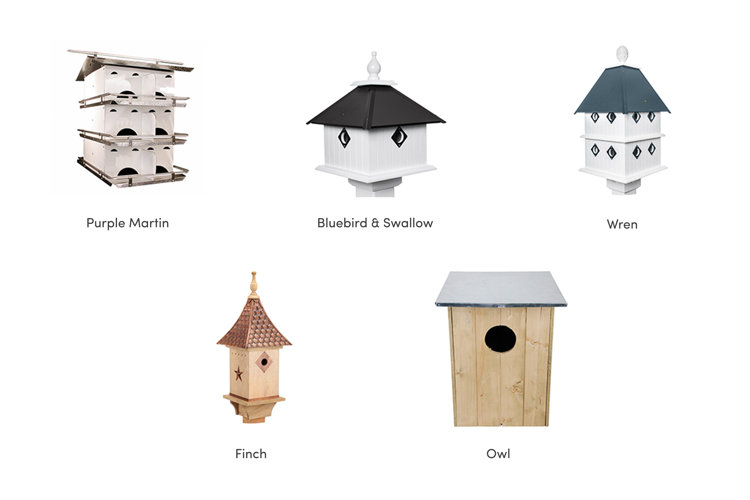
Birdhouses are often categorized by the species of bird you want to attract. Different species have different needs when it comes to shelter, such as opening size and birdhouse placement. We've outlined eight types of birdhouses based on the needs of several common bird species to help you find the right fit.
Purple Martin: Purple martins often nest in colonies, so they require a birdhouse that can accommodate multiple birds. Birdhouses for purple martins should have at least four openings for the birds to come and go freely. Purple martin birdhouses should be mounted on a pole that is between 12–18" to keep the birdhouse away from predators.
Bluebird & Swallow: Bluebirds and swallows tend to have specific requirements when looking to nest. Since they are small birds, these birdhouses should have a hole that is smaller than 1½" to prevent larger birds from entering. The entrance to the birdhouse should be at least 6" from the floor of the birdhouse so that fledglings are safe from any predators.
Wren: One of the most important elements in a wren birdhouse is the size of the hole – the opening should be no larger than 1¼" to allow wrens to enter, but still be too small for larger birds. Wren birdhouses can be installed on a tree, a pole, or the side of a building at a height between 10–15'.
Finch: Finch birdhouses should have an opening hole that is 1½" in diameter and located 4" above the floor to protect the finches from other birds. The birdhouse should be placed in a location where the opening faces away from direct sunlight to prevent the inside of the birdhouse from overheating.
Owl: To attract owls to your yard, add an owl box birdhouse to the side of a mature tree, a building, or atop a freestanding pole. Install the owl box at a height between 10–15’ so that the owls can fly easily into the birdhouse.
Birdhouses come in four main types of materials: wood, metal, resin, and plastic.
Wood: Wood is a classic material for birdhouses for a reason: It provides good insulation well, is very durable, and has a breathable quality. Wood birdhouses come in a variety of styles to suit the aesthetic of your backyard.
Metal: Metal is another sturdy material for birdhouses. One thing to keep in mind when choosing a metal birdhouse is where you plan on placing it. Metal birdhouses can get very hot in warm temperatures or direct sunlight, so they're best kept in shaded areas.
Resin: Resin birdhouses are incredibly lightweight, making them easy to hang or mount on a wall without worrying about the weight of the birdhouse.This type of birdhouse is a long-lasting option due to its durability and ability to withstand a range of different temperatures.
Plastic: Plastic is an affordable and lightweight choice for birdhouses. They come in a stunning range of colors and styles that are sure to spruce up your garden. Since plastic birdhouses can be more prone to cracking in cold temperatures, we recommend storing them inside during colder months and bringing them out again during the warmer months.
Where you plan to place your birdhouse is a key thing to consider when determining which type of mount is best for your home.
Hanging: Hanging birdhouses are one of the most popular types of birdhouses because they are so easy to install. They're often hung from sturdy tree branches or the roof overhang of a house. Attach a hook to the surface you'd like to hang the birdhouse from and use string or wire to hang the birdhouse.
Post-Mounted: Post-mounted birdhouses are a popular choice if your yard doesn't have many trees or fences. Post-mounted birdhouses can be mounted on metal or wood posts and are easy to assemble – simply use the mounting bracket to securely attach the birdhouse to the post. Since most are mounted on top of very tall poles, this birdhouse option offers plenty of protection for the birds nesting inside.
Wall-Mounted: This type of birdhouse typically has a small hole or hook in the back so that it can be mounted on a wall or fence using a nail. Wall-mounted birdhouses are easy to remove from the wall to look inside the nest or clean the interior.
Freestanding: Like their name implies, freestanding birdhouses don't have any particular type of mount and are easy to move around the yard.
Features
In addition to the desired bird species, materials, and mount type, there are a few more features to consider when choosing a new birdhouse.
Assembled: Looking to skip the tools and assembly? Opt for a birdhouse that arrives at your door fully-assembled and ready to install in your yard.
Post-Included: To ensure you have the correct size post, choose a birdhouse that includes a post. This will make sure that you have all the necessary components for assembling a post-mounted birdhouse right away, skipping a trip to the hardware store.
Ventilation Holes: If you live in a warm climate, we recommend choosing a birdhouse with ventilation holes. The ventilation holes will help keep the birdhouse at a comfortable temperature for the birds inside.
Drainage Holes: Drainage holes help the birdhouse dry out after rainstorms. Drainage holes are a helpful feature for birdhouses that aren't installed beneath a shaded area.
Removable Clean-Out Panel: When birds migrate in the fall, it's a good idea to clean the inside of your birdhouse so that the birds can return in the spring to a fresh home. A removable panel allows you to fully clean the interior without having to disassemble the birdhouse.
Tip!
Looking for more ways to bring feathered friends to your yard? Check out our guides Types of Bird Feeders: How to Choose the Right One for inspiration.
