Types of Gazebos: How to Choose the Best Gazebo Design
Create your own retreat.
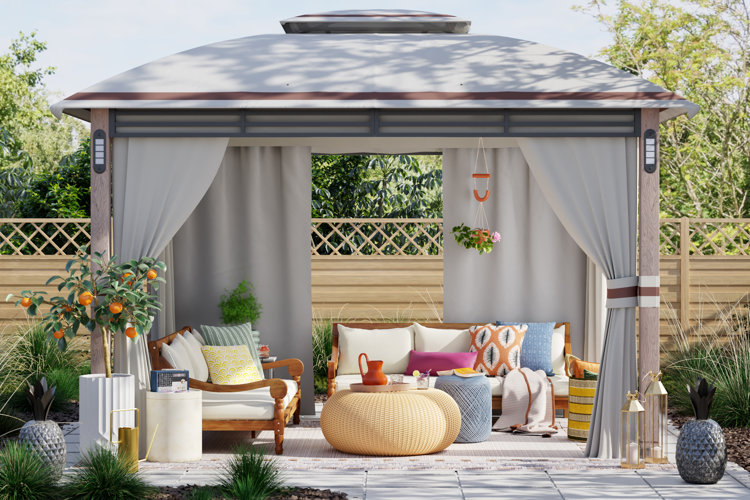
Gazebos are freestanding structures that can easily elevate your outdoor space. They can serve as a stylish focal point in your garden or a useful shade structure that keeps your patio cool. Keep reading to learn more about the different types of gazebos and find tips on choosing one that best suits your backyard.
Tip!
Need help deciding which outdoor shade structure meets your needs? Read our guides Backyard Buying Guide: Pergola vs. Gazebo and Backyard Shade Ideas to learn more.
How to Choose a Gazebo
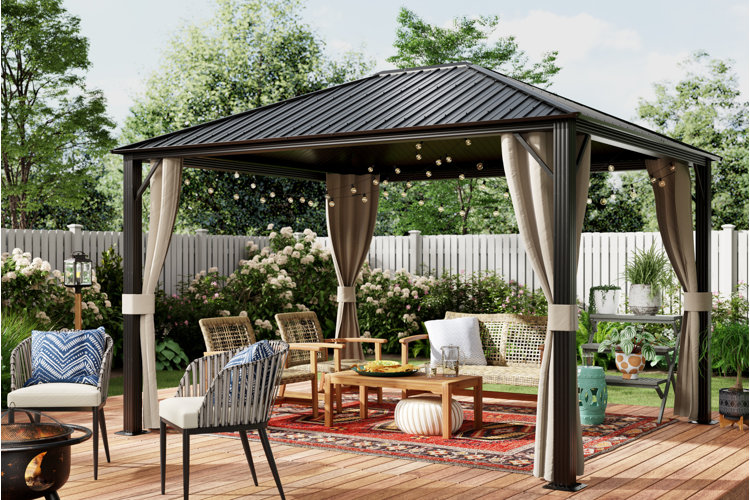
When choosing a gazebo, consider the overall design, installation type, and helpful features that will help it fit seamlessly into your outdoor space.
1. Consider the Different Designs
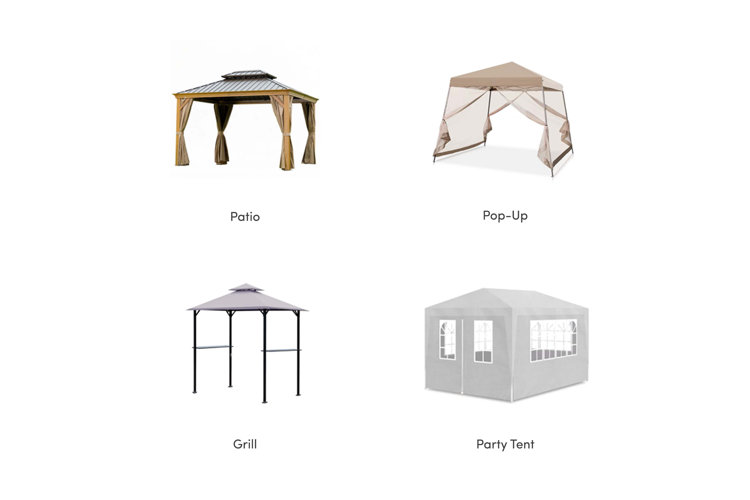
Gazebos come in four common designs – patio, pop-up, grill, and party tent – each with its own benefits.
Patio: The most popular type of gazebo, these are a permanent fixture on your patio or yard. They can be made from metal, wood, plastic, or vinyl.
Pop-Up: As the name states, this portable gazebo can be easily moved and propped up or taken down. It is great for a tailgate party, summer barbeque, or sports game.
Grill: This gazebo style is placed over your grill to shield it from snow and rain. It also covers you if you’re grilling in bad weather or need some shade from the sun.
Party Tent: Party tent gazebos provide a temporary space big enough to accommodate a range of gathering sizes, tables, buffets, and maybe a dance floor. Some designs have window cut-outs to allow natural light in.
2. Pick the Right Installation Type
Gazebos come in a variety of installation types so you can find one that suits your needs. Whether you’re looking to add a permanent fixture to your backyard or searching for a portable one to take on the go, here are the most popular options.
Permanent: These often include a floor, or are anchored to the ground so they can withstand extreme weather. Permanent gazebos should be built on a flat surface, such as an existing patio, pavers, or a concrete pad. To avoid standing water – which leads to rot – you will need to make sure it is placed in an area that has adequate drainage.
Portable: These typically do not include a floor – only four legs and a roof – so they can be taken on the go or moved easily.
Wall-Mounted: Designed to be installed against your home’s exterior wall, these gazebos usually cover a patio and are perfect for creating a shady or bug-free place to relax outside.
Anchored: Anchored gazebos typically come with pre-drilled mounting holes and anchor materials for each of the four legs. This feature allows you to secure a gazebo to the ground or a flat surface by drilling heavy-duty bolts through pre-drilled holes.
3. Find the Correct Size
Choosing the right size is key for large outdoor structures. Start with measuring tape, something to record your measurements, and a ladder if you plan on placing the gazebo somewhere that might have any possible obstructions, like trees or roof overhang.
Measure the length and width of your outdoor space to determine the maximum size for the gazebo. Take account of vertical space too, measuring from the deck or patio floor to the bottom of any obstructions to find the maximum height. If you’re going to place patio furniture or a hot tub inside your gazebo, make sure to measure those pieces too.
Tip!
For more sizing info, read our guide How to Pick the Right Size Pergola or Gazebo.
4. Choose the Best Gazebo Materials
The materials you choose impact your gazebo’s durability, maintenance needs, and overall look, so it’s important to consider both the frame and roof before buying.
Frame Material
Wood: Wood frames add a natural, rustic feel that enhances outdoor spaces. This is also a long-lasting material that’s insect-proof, and can be customized with different stains or paints.
Metal: Metal is another popular material for gazebo frames. Steel provides a durable, wind-resistant build, while aluminum is more lightweight and rust-resistant.
Roof Type
Soft-Top: Soft-top roofs are made with fabric, offering easy installation and flexibility. The fabric roof is best for gazebos that you plan on storing during cooler months of the year when you might not be using the gazebo.
Hard-Top: Hard-top roofs are made from sturdy materials like metal or wood. Though hard-top gazebos can be more costly than soft-top options, the durable, weather-resistant construction has a longer lifespan.
5. Compare Helpful Features
From water-resistance to enclosed screens, these handy features can upgrade your gazebo and make it the go-to spot for relaxing outdoors.
Weather-Resistant: These gazebos are designed to resist the elements and keep you drier in rain or snow. With different qualities like water-, UV-, or rust-resistance, your gazebo can be a long-lasting investment.
No-Foundation-Needed: Concrete pads, pavers, or foundation are not required for setup, making for an easier installation process. However, it's recommended you use stakes or weights to secure the legs to the ground.
Screens-Included: Mesh screens are provided to keep bugs out while maintaining a cool breeze.
Enclosed: Built for more privacy and protection from the elements, these come with mesh screen windows, curtains, and/or walls.
Easy Assembly: Easy-to-assemble gazebos usually have canopy/fabric roofs and simplistic frames that are user-friendly to assemble and disassemble as needed.
Fire-Resistant: Want to pair your gazebo with a fire pit? These gazebos feature a fire-resistant roof made from non-flammable materials. Just make sure to choose a gazebo with enough ventilation and vertical clearance. It’s also best to opt for a gas- or propane-fueled fire pit rather than a wood-burning to lower the chance of stray embers.
Check with your local building codes to see if the size of the structure you are looking at is okay to place in your yard. In most cases, if the gazebo is less than 100 square feet, you will not need special permissions – however, it is always better to double check. Some towns require a certain distance between the structure and the road or utility poles, etc. If you are digging to install your foundation, call your local utility company to ensure that you can dig without hitting a water, sewer, or electrical line.
Any permanent gazebo structure must have a foundation that has proper water drainage and it must be anchored to concrete footers. When bolting it to your deck, use metal strapping to secure it to the beams of the deck. Since gazebos vary so much in size, design, and assembly, it is best to follow manufacturer's directions regarding assembly and installation requirements. Professional installation may be required, as digging, pouring concrete, laying paving stones, or building a lumber foundation is often necessary for installation.
Tip!
Looking for more gazebo inspiration? Read our guide Beautiful Backyard Gazebo Ideas to Elevate Your Outdoors for ideas on styling your new gazebo.
