What Is Badminton? History & Ruled Explained
Discover what all the racket is about.
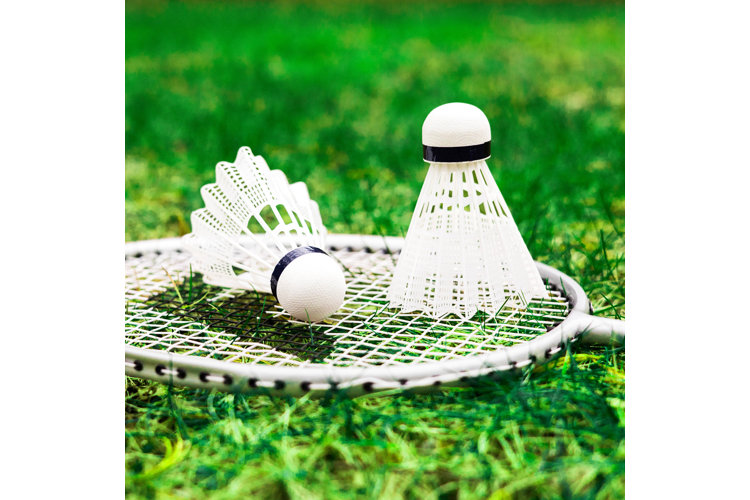
Badminton is a sport, similar to tennis played on a court or lawn using rackets, a net, and a shuttlecock (also called a birdie). So, what is badminton? Keep reading to learn all there is to know about this fun backyard pastime.
In this guide:
What Is Badminton & Who Created It?
What Is a Shuttlecock (Birdie)?
How Does Badminton Differ From Other Racket Sports?
How to Play Badminton
Frequently Asked Questions
What Is Badminton & Who Created It?
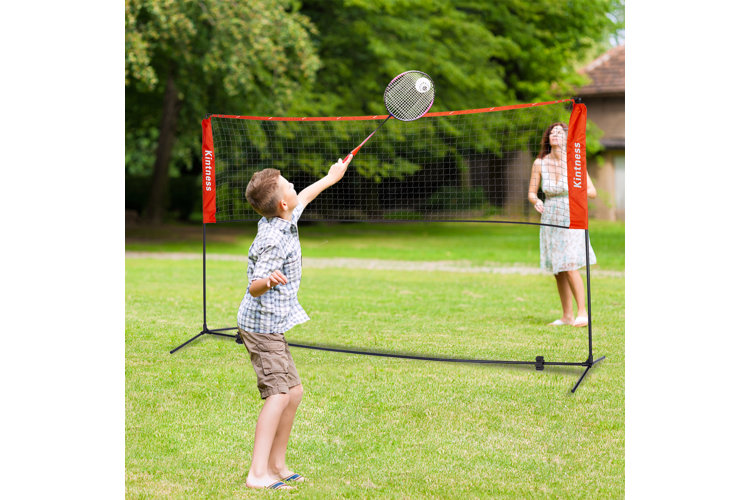
Badminton is much like tennis, but more backyard-friendly because it uses a lightweight birdie instead of a tennis ball. Players use their rackets to serve the shuttlecock and send it over the net to the player on the opposing side. The goal is to use your rackets to keep the shuttlecock from landing on the ground on your side (lest your opponent should score a point) and to finesse your racket so the shuttlecock lands in-bounds on your opponent's side (scoring you a point). The lightweight composition of the shuttlecock makes badminton a fun, fast-moving game, enjoyed in backyards, recreational spaces, and even at professional tournaments.
The history of badminton goes back long before its days as a professional and
recreational pastime. Technically, badminton has been around for more than 1,000 years, originating in countries like China, Greece, and India. During Britain's time in India, officers were introduced to the game. Flash-forward to 1873, when officers demonstrated the game on the Duke of Beaufort's estate, which was named Badminton, in Gloucestershire, England. And thus, the sport was given the name “badminton.”
How Does Badminton Differ From Other Racket Sports?
When playing badminton, the use of a shuttlecock – also called a birdie – is what really sets it apart from other racket sports like tennis or pickleball, which both use traditional spherical-shaped game balls. Unlike tennis or pickleball, badminton rackets have longer handles and shafts along with smaller racket heads and thinner frames. Badminton nets are typically shorter in width than tennis court nets (42' wide) and pickleball nets (22' wide) at 20' wide. However, they do have a taller net height with the top of the net being around 5' off the ground as opposed to around 3' off the ground for tennis or pickleball nets.
Badminton and other racket sports like tennis and pickleball have different variations of scoring systems. However each sport typically has three sets, with the best two out of three (or a specific point score reached) used to declare a winner.
Tip!
Curious about pickleball? Check out our pickleball guide to learn more about this racket sport.
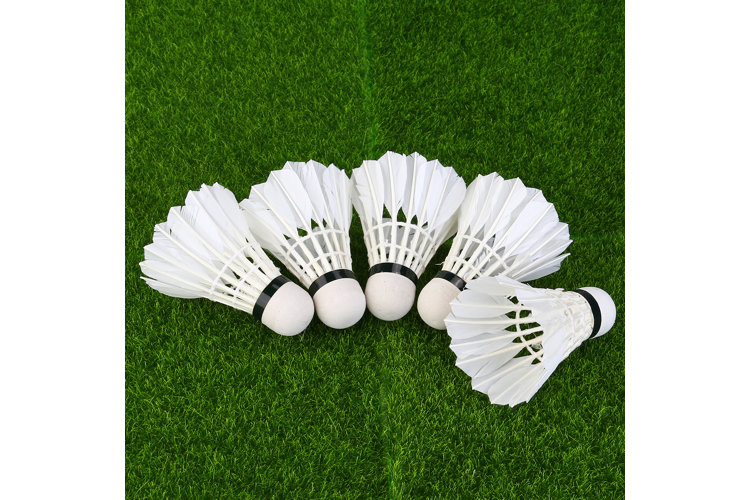
A shuttlecock, often called a birdie, is the lightweight projectile used in badminton instead of a ball. It features a rounded cork base and a cone-shaped skirt that creates drag as it flies through the air. This unique design gives the shuttlecock its distinctive flight path, allowing it to slow down quickly, drop steeply, and make badminton one of the fastest racket sports in the world.
Shuttlecocks are available in two primary materials: feather and nylon (plastic). While both are designed to meet similar flight standards, they offer different levels of durability, consistency, and performance.
Feather Shuttlecock
- Made with natural goose or duck feathers
- Preferred for competitive and tournament play
- Offers the most consistent and predictable flight
- Produces better control for drop shots and smashes
- Wears out more quickly and costs more
Choose a feather shuttlecock if: You want the most authentic playing experience, are practicing advanced techniques, or plan to compete.
Nylon Shuttlecock
- Made with durable synthetic nylon
- Ideal for casual backyard games and beginners
- Slightly less precise but very durable
- Withstands repeated hits and lasts longer
- More affordable and requires less frequent replacement
Choose a nylon shuttlecock if: You're playing recreationally, teaching beginners, or want a durable birdie that can handle frequent backyard games.
How to Play Badminton
Learning how to play badminton is simple once you understand the basic equipment, court setup, serving rules, and scoring..
1. Gather Your Equipment & Players
Before you begin, make sure you have everything you need for a game of badminton:
- A badminton net
- Two or four badminton rackets
- One or more shuttlecocks (birdies)
Badminton can be played as either:
- Singles: One player on each side of the net (2 players total)
- Doubles: Two players on each side of the net (4 players total)
2. Set Up the Court
Most portable badminton sets include a freestanding net that's quick to assemble. Once your net is in place, measure out your playing area.
A regulation badminton court measures:
- 44' long
- 17' wide for singles
- 20' wide for doubles
If you're playing recreationally, don't worry about creating a perfect court. Simply choose a flat area with roughly equal space on both sides of the net and use cones, tape, or chalk to mark the boundaries. This helps keep gameplay fair and makes it easier to determine whether a shuttlecock lands in or out of bounds.
3. Serve & Rally
The rules of badminton can vary depending on the rules of an individual league or depending on the single- or double-player sequence. As a general rule, each game of badminton consists of three sets – these aren't timed; instead, each set reaches completion by whichever player or team gets 21 points first. Whichever team or player wins two-out-of-three sets wins the game.
To start the match, flip a coin or otherwise decide who serves first. The first serve is made from the right service court.
When serving:
- Strike the shuttlecock below waist height
- Keep the racket head pointing downward at contact
- Aim to send the shuttlecock directly into your opponent’s service court
After the first serve:
- Play with an even score serve from the right side
- Players with an odd score serve from the left side
- In doubles, teammates rotate service positions as the score changes
Once the shuttlecock is in play, continue hitting it back and forth over the net until one side wins the rally. If a shuttlecock hits the net during a serve, it's called a let serve, and the server simply serves again. During a rally, however, a shuttlecock that clips the net and still crosses into the opponent's court remains in play.
4. Score Points & Win the Match
Modern badminton uses rally scoring, meaning every rally results in a point for one side, regardless of who served.
You score when your opponent:
- Lets the shuttlecock land on their side of the court
- Hits the shuttlecock out of bounds
- Hits the net or fails to return the shuttlecock
- Commits a fault during play
A shuttlecock that lands on a boundary line is considered in bounds.
A standard match is the best two out of three games, with each game played to 21 points. If the score reaches 20-20, play continues until one player or team leads by two points. If the score reaches 29-29, the next point wins the game, making 30 the highest possible winning score.
Don't worry about memorizing every badminton rule before your first game. Just remember the basics: games are played to 21 points, every rally earns a point, and if the score reaches 20-20, play continues until one player or team leads by two points. If the game reaches 29-29, the next point wins!
Neighborly Tip!
Here are 14 More of the Best Outdoor Games to make the most of good weather.
Frequently Asked Questions
How did badminton get its name?
Badminton was named after the Duke of Beaufort's estate in Gloucestershire, England.
What is a 'let serve' in badminton?
A 'let serve' occurs when the shuttlecock hits the net during a serve and must be served again.
How wide is a doubles badminton court?
A doubles badminton court is 20' wide.
Last updated: August 6, 2026
