What Is a Pony Wall?
Half wall, full function.
If you’ve ever seen a house with half walls dividing the rooms, you’ve probably wondered if they have a specific purpose. Here, we’ve defined what a pony wall is and how it’s used in design to affect the flow, function, and appearance of different areas in the home.
What Is a Pony Wall?
Pony walls are 3' – 4' high partitions that are used to divide rooms into distinct areas. They were a popular design feature in 1960s ranch-style homes and came back into style in the 1990s when open-concept homes were desirable. The term “pony wall" comes from their origins in horse stables where they were used to divide the animals’ stalls.
Now, pony walls serve a decorative purpose and separate areas of your home without the obstruction of a full wall. Pony walls maintain the spacious feeling of an open-concept home while providing a more structured layout for furniture, making them a popular feature in retro-, mid-century modern-, and Craftsman-style homes.
Knee Wall vs. Pony Wall: What’s the Difference?
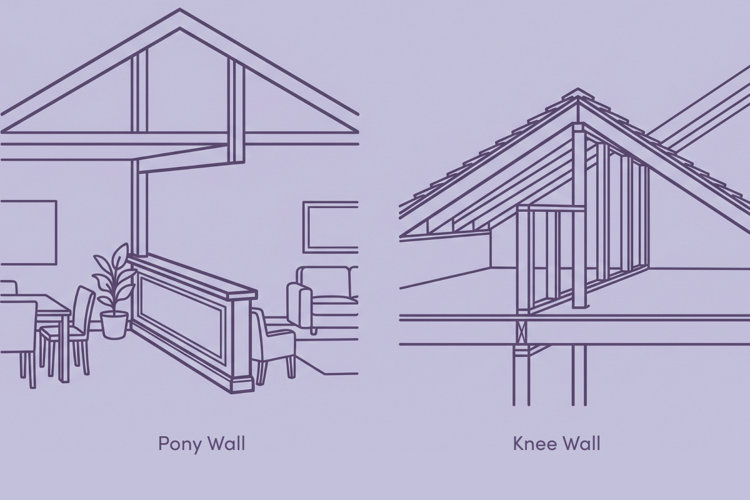
While “pony wall” and “knee wall” are often used interchangeably to describe half walls, they are actually two different types of structures and serve distinct purposes in construction. Let’s break down the differences:
- Pony Walls: Pony walls are decorative interior half walls used to divide spaces. They have no structural purpose and are non-load-bearing walls. Pony walls are between 3' – 4' high and usually finished with drywall, molding, and paint to match the rest of the room.
- Knee Walls: Knee walls, on the other hand, are more functional than decorative. They are designed for structural support and often found in attics where they help bear the weight of the roof. Knee walls are usually under 3' high and can be simple frames or covered in drywall in finished attic spaces.
Functions of a Pony Wall
Pony walls can play a variety of roles. Below, we’ve outlined the most common uses and the benefit of each placement.
1. Divide Open Concept Spaces
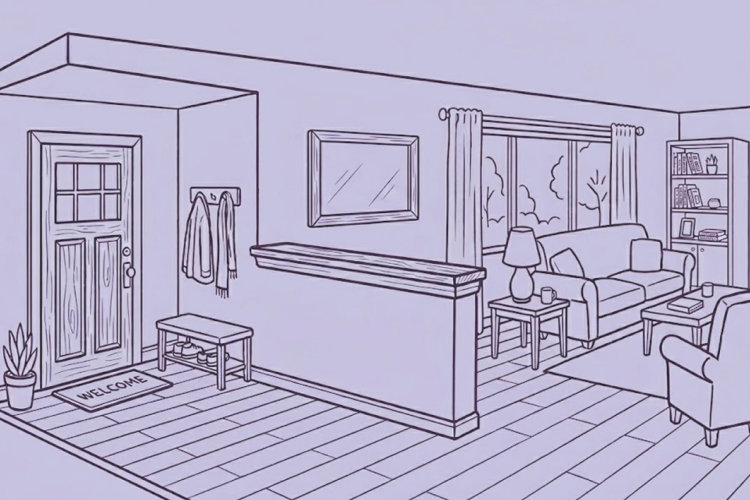
Pony walls are mainly used to partition rooms in the home. You’ll commonly find them between entryways, living rooms, kitchens, and dining rooms to add structure to an otherwise open floor plan. For example, a pony wall may be used to divide the entryway from the living room and direct the flow of traffic from the front door. Instead of using a full wall to define the rooms, a pony wall offers functional division but keeps the space feeling open for more visual flow between the rooms.
Another common place for pony walls is in lofts and second floor hallways to block off the opening above the staircase. They function similarly to a railing as a safety feature. Placing a pony wall above the stairs can make a stairway feel more grand and open with the tall ceilings visible from below. It will also contribute to a more spacious feeling in your upstairs loft or hallway and allow natural light to reach further into your home.
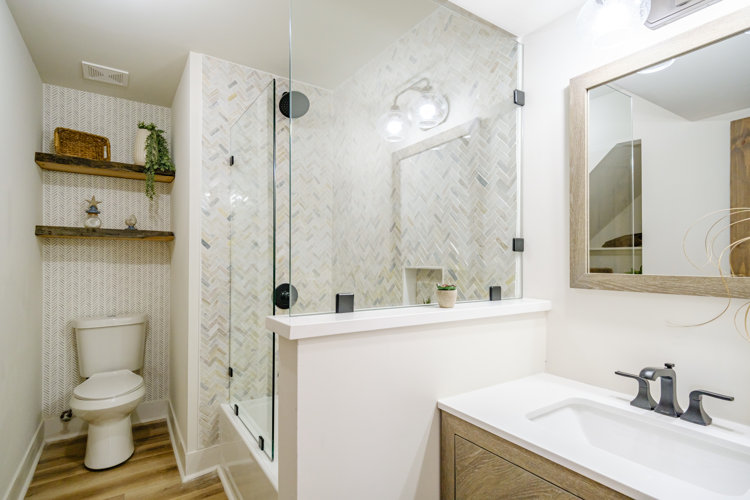
You might also find a pony wall in large, open-concept or en suite bathrooms. They are commonly paired with a glass panel as the side of a walk-in shower enclosure. Pony walls can add a feeling of privacy to large glass showers and help break up the layout of large bathrooms. Bathroom pony walls are often tiled to remain water-resistant in the wet environment and can even be used to store soap bottles and shower accessories along the ledge.
