How to Design a Kitchen Island
Maximize function and style in the middle of your kitchen.
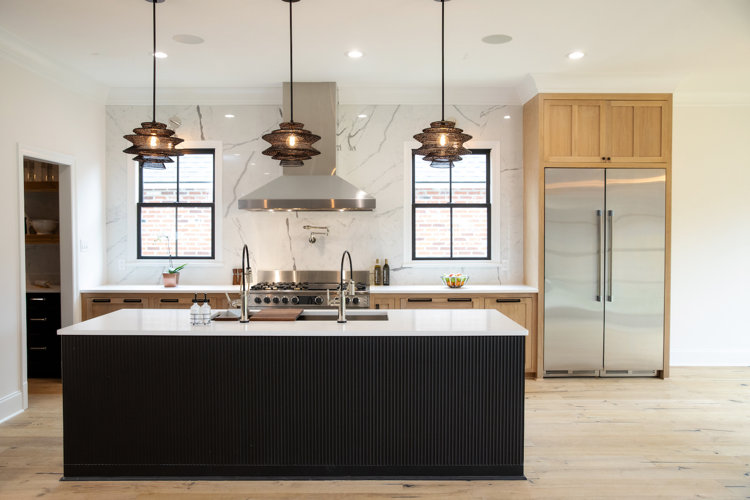
These days just about every contemporary kitchen has an island or a peninsula feature where family members can gather around, sit, and enjoy a home-cooked meal. Whether you choose to use it as a breakfast bar, a prep space, or an eating area, the kitchen island is an important part of the kitchen design that will likely be seen from several rooms in the house. When deciding how to make your kitchen island a visually pleasing major focal point, you will first need to decide whether the purpose of this countertop space will be purely aesthetic or also functional, from there you can begin to establish what other design features work well.
Before you can begin installation, you will need to go through various kitchen island ideas to see what will work best in your space.
Use: The first step in kitchen island design is determining how you plan to use yours. Is it simply an addition to the kitchen design? Will you be installing appliances such as a cooktop or a washer, or is it going to serve as built-in storage space and cabinetry for your kitchen? Or will it serve a multi-functional purpose as a food prep surface with storage and seating?
Size:You need to make sure your kitchen island size is suited to your kitchen space. A large island will not work in a tiny kitchen and a small island will get lost in a large area. You also need to ensure that the layout includes enough space around the island to walk, cook, and clean.
Type: Is your perfect kitchen island freestanding or fitted? Again the space in your kitchen will determine the best possible kitchen island design, along with your intended use. A small freestanding island, for example, is great if you don't have much space and are looking to store items or even move the island out of the way when it is not in use. However, if you plan to install kitchen appliances, a sink, or drawers, or wish to add seating around the countertop, a more sizeable and peninsula is in order.
Shape:What shape best matches your floor plan? Will a U-shaped island add a softened aesthetic or is the L-shape more suitable? Do you need something straightforward and rectangular to work with your kitchen layout or can you opt for something a little more eclectic?
Countertop: What material is going to work best for your intended use? Marble is durable but costly. Quartz is low maintenance and looks great. Do you prefer a butcher-block or a tiled island with an overhang?
Lighting:No matter what you kitchen island is going to be used for, it will need some sort of illumination. Whether you choose overhead pendant lights or under-counter LEDs, you'll want this space to be well lit.
Once you have established your answers to these questions, you will be able to go ahead with your kitchen island installation.
Building a Kitchen Island
Using a sample kitchen belonging to two homeowners, we’ll show you how to create the “wow” factor in an open-plan cooking space with a designer L-shaped kitchen island.
In this room, the kitchen island flows into a spacious breakfast bar where the family will eat their meals every day, so there wasn't a need to include seating in this space.
For that reason, our homeowners chose to add a beautiful fluting that wraps around the two sides and the front of the kitchen island. The construction of this custom-made kitchen island feature cost $7,500.
The large peninsula was then painted in Sherwin-Williams Black Magic paint to create drama and add contrast to this bright space. This island is a great example of how you can create a statement feature that is driven purely by the aesthetic needs of the kitchen space.
On the other hand, most kitchen islands and peninsulas need to incorporate function or durability based on the needs of the family living in the home.
In this remodeling project, our homeowners needed to update their kitchen, most especially to protect the perimeter of the kitchen island from taking a beating when the kids swing their legs from their stools and accidentally kick the surface with their shoes.
They decided to wrap the back of the kitchen island in a tile that has some texture to it. The texture would provide durability, and installing the tile in the same pattern as the backsplash would help connect that design element to the rest of the space.
This solution gave our homeowners the protection they needed for the back of the peninsula and a great architectural detail that could be seen from the living room.
There are so many options to choose from when you are looking for tile that you can incorporate into this type of design. For this project, the homeowners used a 2ʺ x 4ʺ off-white travertine tile which retails at about $6/sq. ft. and installed it in a herringbone pattern, but the possibilities are endless.
Just be sure that when you’re thinking about adding an interesting feature to your kitchen island or peninsula, you choose a material or an application that complements the rest of the kitchen design.
Whether it’s a unique woodworking detail or the smart use of materials to make the peninsula more durable, designing a kitchen island is a great opportunity to create a visual statement in your home.
Award-winning, Baton Rouge-based interior designer and content creator Arianne Bellizaire has been named a High Point Market Authority Style Spotter (2015), Perlick Ambassador of Cool (2017), Villeroy & Boch Color Challenge Winner (2017), Modenus Blog Tour invitee (2016 & 2019), and Modenus DesignHound (Spain and London 2016, Surfaces 2018). She was also selected as an Ambassador for NYDC 2020 What's New What's Next. Her work and expertise have been featured in Forbes, Rue Daily, House Beautiful, Good Housekeeping, Business Of Home, and USA Today.
