What Is Retro Style?
Journey through the decades.
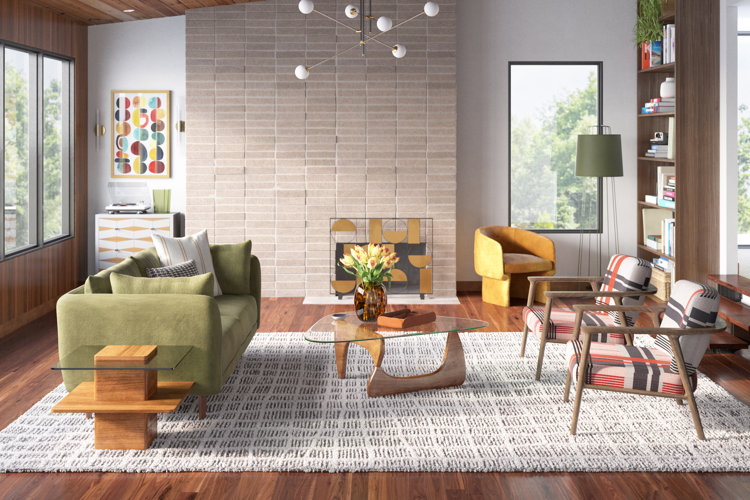
If you’ve ever wondered what retro style is in home design, this article is for you. Retro design combines stylistic elements from past decades to create a colorful living space that is full of personality. In this article, we’ll delve into the defining characteristics of retro style so you can confidently design a home that speaks to styles throughout the ages.
What Is Retro Style?
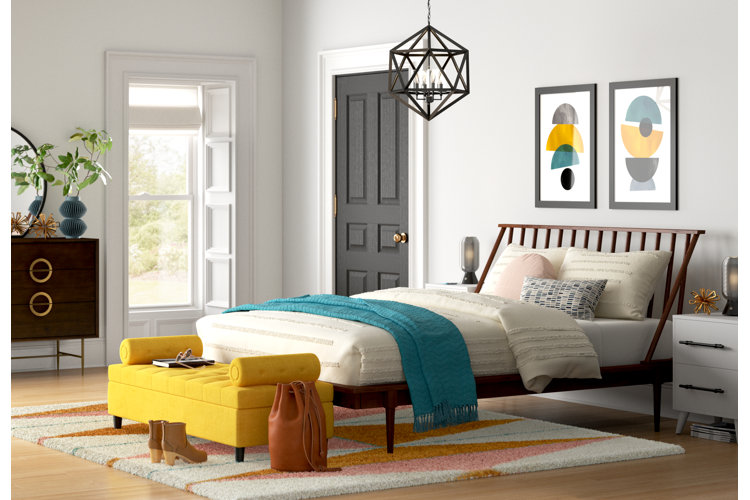
(Shop this image: yellow upholstered benches, teal blankets, retro wood bed frames, and ivory bedding sets)
Retro style refers to any design that draws inspiration from the styles that were popular in the twentieth century. In particular, the ‘50s, ‘60s, ‘70s, and ‘80s are known for their iconic styles that emphasized funky patterns, abstract shapes, and bold colors. Today, retro interior design combines old and new elements to create a charming, nostalgic space with all the comforts of modern living.
Retro style is often used interchangeably with mid-century modern design. While they share many similarities, mid-century modern is actually a subset of retro design that focuses on design aspects from the 1930s to the 1960s. On the other hand, retro style is all-encompassing and can combine elements from various decades and styles – from the art deco era of the 1920s to the boho-hippie ‘60s, rock-and-roll ‘80s, and beyond.
Tip!
To learn more about the nuanced differences between retro and mid-century modern styles, check out our guide Mid-Century Modern Design.
Retro Style Colors
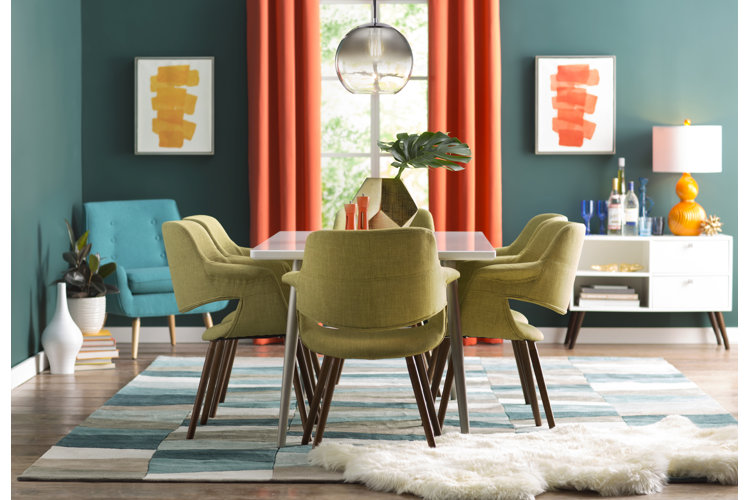
(Shop this image: green dining chairs, teal geometric area rugs, blue retro accent chairs, and yellow modern table lamps)
Bold color is a staple of retro design. You’ll often find warm hues of blue, orange, yellow, and green with pops of red and pink in retro homes. While mid-century modern style tends to incorporate muted tones, retro is famous for going bright. These vivid colors pair well with the earth-toned materials of retro furniture – combining neutrals and colors for a well-balanced space. When creating a color scheme in retro interior design, choose colors with similar saturations to create a cohesive look among the contrasting colors.
(Shop this image: white modern sofas, leather retro accent chairs, wood bookcases, round end tables, and yellow square ottomans)
The use of earthy materials is a key feature in retro interior design. The primary materials used in retro design are natural wood, linen, and leather. Much of retro-style furniture is made from leather or linen upholstery and wooden frames – creating the iconic mid-century look that is commonly found in these homes. These materials are also used throughout the design including in architecture and decor. Wood wall paneling, for instance, was popular between the 1950s and 1970s and can still be found in retro-style homes.
Retro style is easily customizable and can vary greatly from home to home depending on the decades that inspire the design. Depending on your preference, retro homes can include other materials that speak to different styles. Incorporate velvet upholstery and gold fixtures to bring a touch of glam to your home and show influence from the art deco era. Or use rattan furniture to tie in the boho style that speaks to the laid-back design of the flower power era.
(Shop this image: mid-century modern dining sets, retro area rugs, mirrored sideboards, and faux houseplants)
Retro-style furniture uses organic shapes and materials to create a distinct, stylistic environment in your home. The furniture in this design style prioritizes functionality and simplicity while creating visual interest by incorporating abstract shapes. You’ll often see a combination of geometric patterns and curved lines that create a striking contrast in retro design.
When it comes to designing a retro space, consider choosing furniture fixtures that will create a foundation in the room. Opting for neutral colors and natural materials makes it easy to accent with bright colors and patterns that are so characteristic of the retro style. You also can’t go wrong with choosing solid wood furniture to establish a nostalgic feel to your home.
(Shop this image: sputnik chandeliers, mirrored coffee tables, orange retro accent chairs, green velvet sofas, round gold wall mirrors, and pink area rugs)
Retro-style lighting fixtures often have distinct shapes that add to the charm of the space. Abstract ceiling lights – such as sputnik chandeliers – are a common choice because of the striking visual impact they add to a space. Like these chandeliers, other lighting fixtures like table lamps and floor lamps often combine curved elements with straight lines for a distinctly retro look. Choose lights with warm white bulbs to further enhance the retro feeling of your home and create a welcoming ambience.
(Shop this image: orange retro wall art, black leather accent chairs, decorative record players, bar tool sets, and metal bookcases)
Decor in retro interior design can vary greatly depending on your personal preference and the atmosphere you are trying to create. Abstract shapes, bright colors, and bold patterns are staples of retro decor and can easily be incorporated through wall art and decorative objects. Display vintage tech like a spin-dial telephone, record player, or radio to give your home that throw-back feel.
For an ‘80s style look, consider incorporating artwork and decor that has musical motifs. If you’re looking to evoke the energy of the roaring ‘20s, display a glamorous set of bar tools and art deco–inspired glassware. Tie everything together by using houseplants or faux foliage to ground your home in the organic, earthy vibes of mid-century design.
