How to Choose a Bathtub
Your at-home spa awaits!
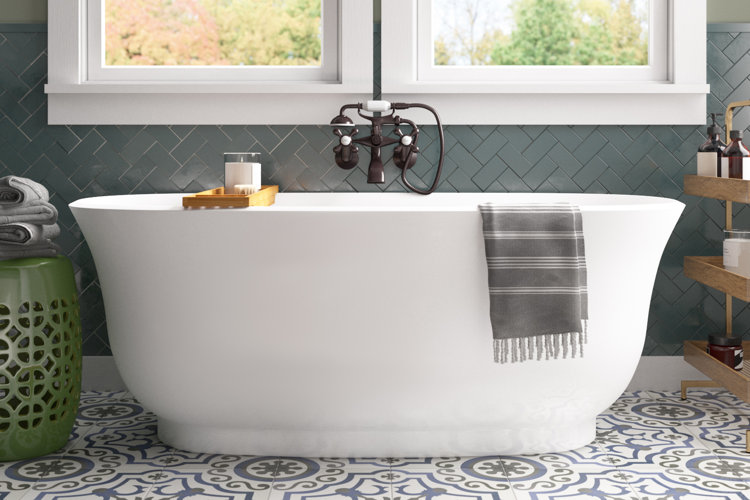
Choosing the right bathtub for your home can be an overwhelming decision because there are so many factors to consider. Luckily, we’ve broken down how to choose a bathtub into five steps to simplify the process for you.
1. Consider Installation Type
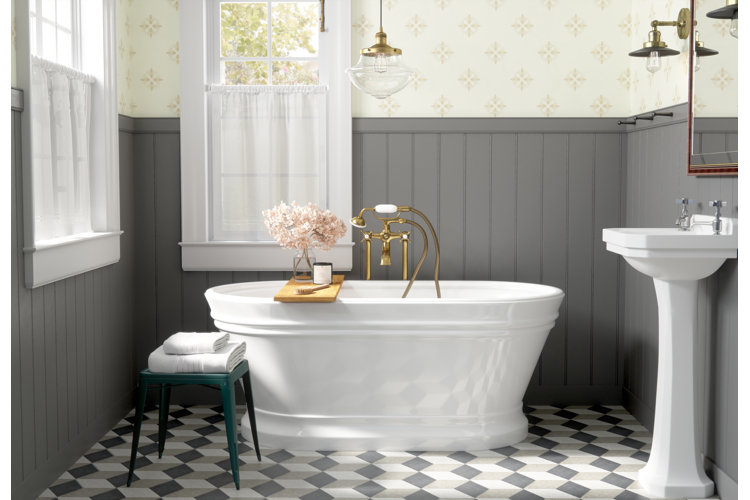
(Shop this image: patterned floor tiles, oval bathtubs, freestanding bathtub faucets, and schoolhouse pendant lighting)
Bathtubs come in a wide variety of installation options to accommodate the layout of your bathroom and the size of the space. From freestanding to undermount, there are plenty of installation types to choose from.
Freestanding: This stand-alone tub is paired with an exterior faucet attached to the wall or floor. This type of bathtub offers easy installation and flexible placement in most bathrooms.
Alcove: Built to be installed into the walls of an alcove, this type of bathtub has three unfinished sides and one finished side (the apron) that faces outward. Tub-shower combinations are common with this type. A left or right tub orientation indicates that drain and faucet placement will be on that side.
Drop-In: This tub shell has a wide rim and is designed to sit inside an enclosure or frame that’s built separately. More intricate installation may be required.
Undermount: Also designed to fit inside an enclosure, this type of bathtub has a rim that’s covered by a surrounding deck made of stone or tile. More complex installation may be required.
Corner: This triangular-shaped tub is installed in the corner of a bathroom and is most often an alcove or drop-in style.
Walk-In: These tubs include a side-panel door and are ideal for those with limited mobility. Many come with additional safety features, like slip-resistant floors and grab bars.
Tip!
Also consider bathtub options that are designed for easy installation – such as those already equipped with drains and faucets.
(Shop this image: single slipper bathtubs, blue floor tiles, bamboo blinds, and light wood double vanities)
Consider how you like to enjoy a bath – whether you want a deep soak or gentle massage. This will help you choose a bath with functionality that suits your lifestyle. Here are the common types of baths:
Soaking: With higher sides than a standard bathtub, this type of bathtub has increased depth for full submersion and comfort.
Whirlpool: This spa-like tub propels jets of water for a soothing massage and hydrotherapy. Installation commonly includes a pump, air switch, electric timer, and access panel for adjustments and maintenance.
Air: This type of bathtub propels jets of air bubbles for a gentler massage. Installation commonly includes a pump, air switch, electric timer, and access panel for adjustments and maintenance.
Whirlpool/Air: Combine the soothing power of whirlpool water jets and the comfort of air-bath air blowers with a whirlpool-and-air combo tub.
Tip!
For an even more relaxing bath experience, look to bathtubs with integrated seats and built-in heaters to maximize your comfort.
(Shop this image: green damask wallpaper, clawfoot bathtubs, crowned-top wall mirrors, and penny floor tiles)
Shape
When choosing which shape works best for your bathroom, consider the layout of the space and how big you want your bathtub to be. Here are the five main shapes of bathtubs to help you find the right fit.
Oval: As one of the most popular shapes, oval bathtubs have a timeless, elongated silhouette. They are typically freestanding soaking bathtubs and come in a wide range of styles to match your aesthetic. The rounded design makes this shape a comfortable option and easy to clean.
Rectangular: Rectangular bathtubs are another popular shape. These bathtubs have a sleek rectangular shape that looks great in any bathroom and can be found in alcove, drop-in, undermount, and freestanding styles. Because of the straight-lined design, rectangular tubs can be installed in corners and along walls to maximize the space.
Round: Round bathtubs often have a circular shape that creates a beautiful contrast to the straight lines throughout a bathroom. These bathtubs are often deeper than they are wide, and they are best suited for large bathrooms since they are usually freestanding fixtures.
Corner: This type of bathtub has three to five sides and is designed to fit neatly in the corner of a bathroom. Corner bathtubs provide plenty of interior space for relaxing while making the most of any unused corners that can't fit other bathtub shapes.
Square: Similar to round bathtubs, square bathtubs have a deep, spacious interior. They have sides that are each equally long, which allows you to place the bathtub in corners or along walls without wasting any space.
Design
Depending on the shape and installation type of your bathtub, there are various designs to choose from as well – each impacting the comfort and function of the bathtub.
Back-to-Wall: These baths are meant to be installed against the wall, either as alcove or semi-freestanding fixtures.
Single Slipper: Slipper bathtubs have higher edges on one side to allow you to lean back for a comfortable soak.
Double Slipper: Double slippers have raised edges on both ends so you can and lean back in either direction.
Roll-Top: Roll-top bathtubs have rounded top edges to provide a sleek look and comfortable headrest.
(Shop this image: gray single vanities, lantern pendant lighting, vintage-look area rugs, and double slipper bathtubs)
Material is another important element when choosing the right bathtub. The material affects different factors, such as durability, price, and how easy the surface is to clean.
Acrylic: Lightweight, easy to repair, and available in many colors and shapes, acrylic tubs can be more moderately priced.
Fiberglass: These types of tubs are lightweight, reparable, and often more affordable than acrylic options.
Cast Iron: Enameled cast iron is durable, solid, excellent at retaining heat, and available in many colors.
Porcelain: Usually made with a steel or cast iron base, porcelain-enameled tubs have an affordable, luxurious look that’s resistant to scratching and will retain its glossy finish for years.
Copper: This artisan option, often constructed with hammered recycled copper, is a costlier but one-of-a-kind finish that grows richer with time.
Tip!
Use our guide The Best Bathtub Materials: Which One Is Right for You? to help you determine the right bathtub material for your bathroom.
5. Measure Your Bathroom
Step 1: Check Your Floors
Before you begin measuring, use a level to ensure your floor is level. This will guarantee accurate measurements and prevent water from spilling over your bathtub onto the floor.
Step 2: Measure the Length of Your Space
If your bathtub will be enclosed in an alcove, measure from wall to wall to find the length of available space. When measuring for undermount or drop-in baths, make sure to account for the lip of the tub by measuring at least one extra inch out from each wall. If your space isn’t constrained by walls, your bathroom floor plan and existing plumbing should determine where your bathtub will go – and how big it can be. The most common bathtub length is 60".
Step 3: Measure the Width of Your Space
To find the distance of usable space, measure from the wall forward, keeping in mind that you’ll need clearance for the swing of any doors, space to access plumbing for any future maintenance, and enough room to get in and out of the bathtub comfortably. The most common bathtub width is 30".
Step 4: Think About Drain Placement
If you're replacing an existing bathtub, it's easiest to choose a new bathtub with a similar drain placement so that you don't need to reroute any plumbing systems. Drains are typically placed in the center or on the left or right side of the bathtub. Bathtubs with reversible drains allow you to place the bathtub in either direction.
Step 5: Measure the Height of Your Space
Consider bathtub height relative to the floor, factoring in faucet height and existing features like window ledges or electrical outlets. The most common bathtub height is 15" – 16".
Step 6: Consider Basin Size
The length and width of a bathtub’s basin will determine how well you fit inside. To find the interior length, measure from the left side to the right, going down the middle of the tub so you’re measuring the two farthest points. To find the interior width, repeat this measuring process, going from the back inside wall to the front. The most common basin size is 60" x 30".
Step 7: Consider Soaking Depth
The depth of your tub will affect your level of submersion. To find the soaking depth of a tub, measure the inside wall of a bathtub from the base to the overflow drain at its deepest point. The overflow drain prevents the water inside from overflowing and is often placed a few inches below the top of the bathtub. The most common bathtub soaking depth is 14" – 17".
Step 8: Consider Tub Capacity
Once you’ve calculated your desired basin size, consider the volume of water it will take to fill it. To find a bathtub’s exact capacity in gallons, look under the specifications tab on the right-hand side of a product’s page. Make sure your water heater can fill a basin of that size, and that your floors can support the additional weight of the water. To determine if your water heater is large enough for a bathtub, the general rule is that the water heater tank should be about two-thirds of the size of the bathtub. The most common bathtub capacity is 80 gallons.
Step 9: Measure for Delivery
Determine which entrance to your home has the easiest access for delivery. Then, measure the height and width of all doorways and hallways the tub will need to pass through, to make sure your new tub will make it easily to your bathroom come delivery day.
Tip!
Check out our guide How to Choose the Right Bathtub Dimensions to find the standard sizes for different bathtub types.
