How to Choose a Shower Enclosure
We've gathered the key information for shower enclosure shapes and styles.
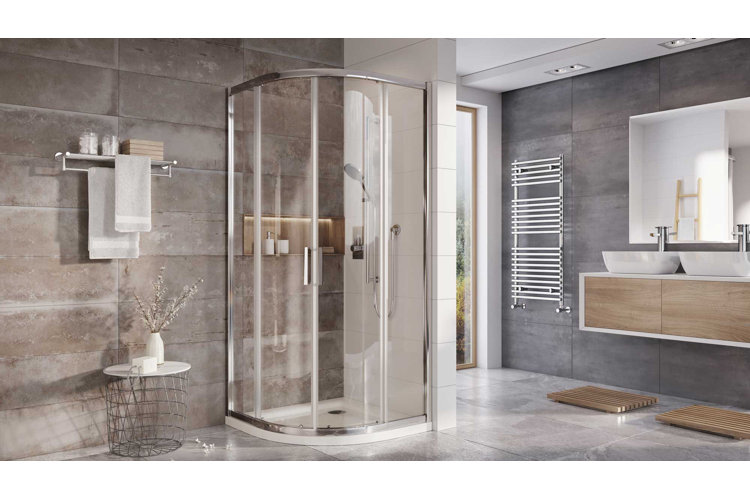
When you're looking for a shower enclosure, the easiest decision to make is usually the shape of the shower. Unless you're doing a complete renovation, it's best to look at what types and shapes of enclosures will fit the existing shower layout in your bathroom. After deciding which enclosure shapes will fit your space, then take a look at shower door styles. Ultimately, it all comes down to your personal preference for shower space, durability, and overall aesthetic. We've broken down the general door styles and shower enclosure shapes below to help you start this home improvement project.
Tip!
Renovating your bathroom? Design a space you’ll love with tips from our guide: 19 Inspiring Bathroom Design Ideas (With Photos!)
How to Measure for a Shower or Tub Enclosure
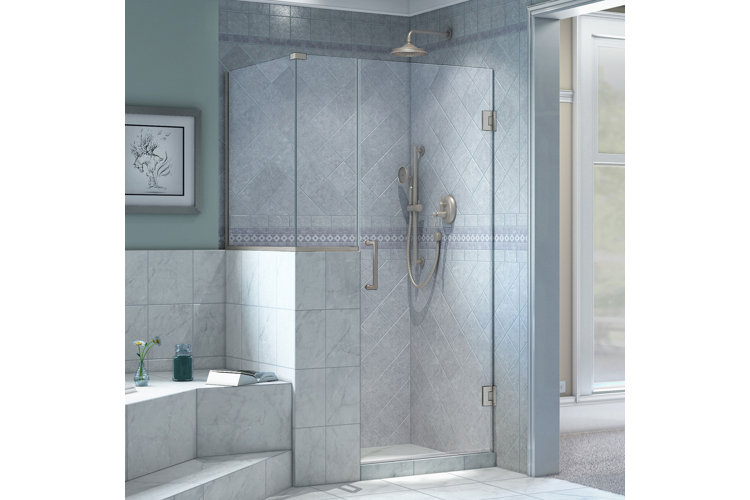
Narrow your shower enclosure search and streamline the installation process by first getting your measurements down so you can browse with confidence:
1. Measure the height of the enclosure space
If you have a shower base or a tub base already installed, measure from the top edge of the base to the top edge of your shower tiles. This ensures the top of your enclosure lines up with the tile backsplash for a seamless look. Without a shower base, measure from the floor to the top edge of the shower tiles and leave room for one to three inches or more for the shower base. Even if your shower tiles go all the way to the ceiling there should be at least one foot of space between the top of the shower enclosure and the ceiling to ensure proper ventilation for steam and air.
2. Measure the width of the enclosure space.
If you have a framed shower stall, tub base, or a walled shower with a doorless entryway already installed, measuring the width is as simple as measuring from one side to the other to determine the right size of the door. For corner enclosure spaces, measure from the wall to the proposed outer corner of your enclosure to determine the right width. For curved shower enclosures, measure the width as you would with corner shower enclosures, and then measure from your end point to determine the width to the other corner wall. This creates a right angle you can use to visualize the surface area a curved shower would fit into.
3. Measure the length of the enclosure space.
For rectangular, square, and neo-angle shower enclosures, you need to measure the length of the proposed enclosure area to adjacent walls to determine the right measurements for the sides of the enclosure.
4. Measure the depth of the enclosure space.
If you already have a shower base, you only need to measure the length and width of the shower base to determine the right enclosure dimensions to line up with the base. However, if you don't already have a shower base, you will need to measure the depth from an imaginary base to the shower walls to determine how far from the wall you can put a shower enclosure without overwhelming the rest of your bathroom.
5. Measure door clearance space.
Considering a pivot or hinged shower door style for your shower enclosure? Be sure to measure from the proposed enclosure spot to potential door obstructions like the bathroom vanity, freestanding bathtub, or toilet to ensure there's enough room to open the door. This way you can check your measurements against shower door widths to narrow down your search. Get more door measurement help in our step-by-step guide.
For easy installation, look for a shower enclosure that includes the shower base. This takes away the guessing game of what size base you need for your enclosure and ensures everything lines up correctly.
Tip!
Simplify the process even more if you plan to replace your current shower enclosure by taking its height, width, and depth measurements before removal. This way you can determine the exact dimensions of a shower enclosure that's right for your space.
Door Styles
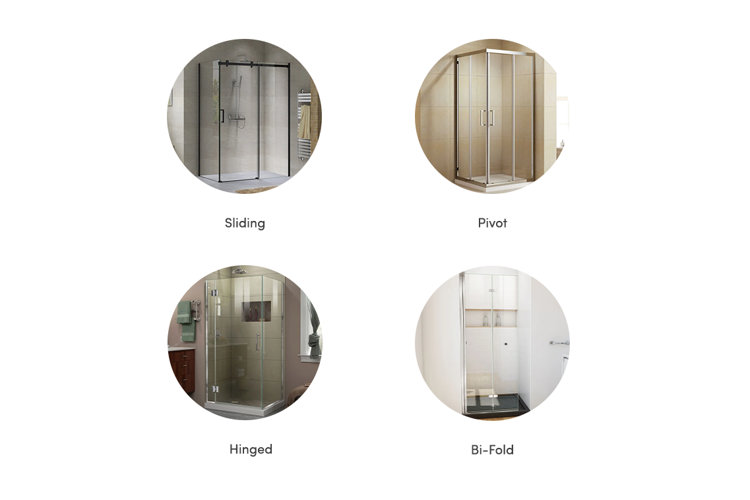
Sliding Door: Sliding door shower enclosures come in a variety of price ranges. Great for small spaces, a sliding door enclosure takes up the least amount of real estate in your bathroom. Look for door and full-length panel seals to make sure the shower is watertight where the door slides back.
Pivot Doors: Pivot doors, also referred to as swinging doors, open outward in one smooth motion. These are another great option for small spaces, and especially for a small shower entrance that isn't wide enough to fit the panels of a sliding door. Because of the small hinges attached to the shower bottom and top, all-glass shower enclosures often feature pivot doors for a clean-lined, modern look.
Hinged Doors: Hinged doors are often used with neo-angle shower enclosures and can be installed to swing in or out. Unlike pivot doors, hinged doors have hinges on the side of the door panel. Look for hinged doors that have seal-through hinges for leak protection and all stainless steel parts for maximum durability.
Bi-Fold Doors: Bi-fold shower doors are great for small bathrooms and tight spaces. They take away the guesswork of measuring how much space the shower door will need to open, as well as providing a space-saving alternative to a sliding door if your shower enclosure has a narrower entrance with walls to either side or is a framed shower stall that only needs a door. Bi-fold door styles consist of two or more glass panels connected together with hinges, with one of the panels attached to the wall. The panels fold inward like a fan when you pull the handle on the unattached side.
Rectangle or Square: Rectangular shower enclosures are one of the most common shapes, and can offer a spacious amount of bathing room with a variety of door style options including sliding or pivot styles. Square enclosures, on the other hand, offer a clean-lined look for a smaller space or corner.
Neo-Angle: Mostly used for corner stand-alone showers, neo-angle shower enclosures feature a swing hinged door and can be installed to open left or right. This type of enclosure is usually for corner shower locations. The neo-angle design also places the door in the center for easy entry into a smaller shower space. Besides elevating your bathroom with its unconventional design, neo-angle enclosures also ensure you can place a bathroom vanity, towel rack, or another essential to each side of the shower without worrying about where the door will open into, due to its central location.
Curved: Curved or round shower enclosures help smaller bathrooms appear larger due to their lack of corners that would otherwise jut outwards into the space. Their lack of corners also creates a spacious feel inside the shower. Their rounded appearance also helps to create a soothing atmosphere that not only looks amazing, but also invites you in with its relaxed shape. These enclosure shower shapes fit perfectly into corner shower areas and come in all door styles. However, we suggest a sliding door configuration for compact bathrooms to maximize room for bathroom vanities, towel storage, and other bathroom essentials.
Additional Considerations
After determining the right style and door shape, it's time to consider the more detailed aspects of a shower enclosure, which can elevate your bathroom aesthetic and make getting ready for the day an enjoyable task. Check out these features to elevate your shower enclosures:
Frame Type: The frame type you choose will help convey the aesthetic of your bathroom. Framed bathroom enclosures connect the thin glass panels with thick metal frames on the sides and connecting corners for a more traditional look. This option is typically on the more budget-friendly side because it’s made of thin glass and installation is super easy, thanks to the metal frames.
Semi-frameless enclosures have thin, barely-there metal frames to connect glass panels and attach them to the walls, so you get a mid-range price enclosure with a frameless feel. Frameless shower enclosures are on the higher end of the price spectrum because they are made up of thick panels of glass that are strong enough to support themselves without the metal frames between them to hold the look together. Semi-frameless enclosures give your bathroom a modern, seamless, and uncluttered look.
Frame Finish: If you’re going with a framed or semi-framed shower enclosure, you can match the frame finish to the other hardware in your bathroom, such as the shower head, bathroom faucet, vanity drawer knobs, and towel rings. Choose from sleek white, brushed stainless steel, oil-rubbed bronze, modern black, and more.
Tip!
Get more shower styling advice in our bathroom shower ideas guide.
Glass Style: There are a variety of glass styles you can choose from for your shower enclosure to further define your bathroom aesthetic and elevate your shower space. Clear glass shower enclosures work well in small bathrooms, since the clear glass adds a sleek sheen and the appearance of a larger space. Frosted or tinted glass styles create an added layer of privacy compared to clear glass shower enclosures, and you won't need to wash them as often because water splatter and soap suds won't be as obvious. Patterned glass styles take the concept of clear glass enclosures up a notch and add a level of craftsmanship to your bathroom.
Enclosure Size: You can input your own measurements in the dimensions tab on product pages to see which products fit your space criteria, or browse by bathroom size to find compatible enclosure sizes. Get more measurement help to choose the right shower enclosure, below.
Tip!
Check out our shower fixture guide to figure out which essentials you need for your shower enclosure.
Now that you know how to choose a shower enclosure, are you ready to find your shower staple?
