How to Use a Meat Thermometer to Get the Perfect Dish Every Time
Nailed it.
A meat thermometer is one of the best tools to have in the kitchen. It takes out all the guesswork and not only ensures the meat is cooked to a safe internal temperature, but it also prevents you from overcooking it. Read on to learn how to use a meat thermometer the right way.
When to Use a Meat Thermometer
Meat thermometers can be used anywhere you cook, whether you’re making a roast in the oven, heating up barbecue on the grill, or throwing chicken in the deep fryer.
It’s best to bring the meat thermometer out toward the end of the cooking. If you're using a recipe, start checking about 10 minutes before the cook time ends. Try not to check the meat too often to prevent all of its juices from running out and drying out.
1. Insert the Thermometer in the Right Spot
Make sure to insert the probe into meat, not hitting bone or gristle. For example, when using a meat thermometer for chicken, pierce the thigh, avoiding the bone, and the thickest part of the breast to get the best reading. To use a meat thermometer for meats such as ribs, or a rack of lamb, check in the center portion, again moving away from bones or gristle.
2. Get It to the Right Depth
To use a leave-in meat thermometer insert the thermometer at least two inches into the center of the largest muscle or thickest portion of the uncooked meat. The meat thermometer should not touch any fat, bone, or the pan. For thinner foods, such as burgers and pork chops, insert the stem through the side of the meat cut to get an accurate reading.
3. Don’t Wait for the Right Temperature
To ensure you don’t dry out your meat, take the food off the heat before it reaches the target internal temperature, about 5-10 degrees lower, then let it rest for at least 10 minutes. This will allow the steak to very gently finish cooking and prevent all of its juices from running out and drying out the meat, which also makes for a less messy carving.
Tip!
Eggs and all ground meats must be cooked to 160°F; poultry and fowl to 165°F; and fresh meat steaks, chops, and roasts to 145°F.
How to Use Different Types of Meat Thermometers
Digital Display Thermometers
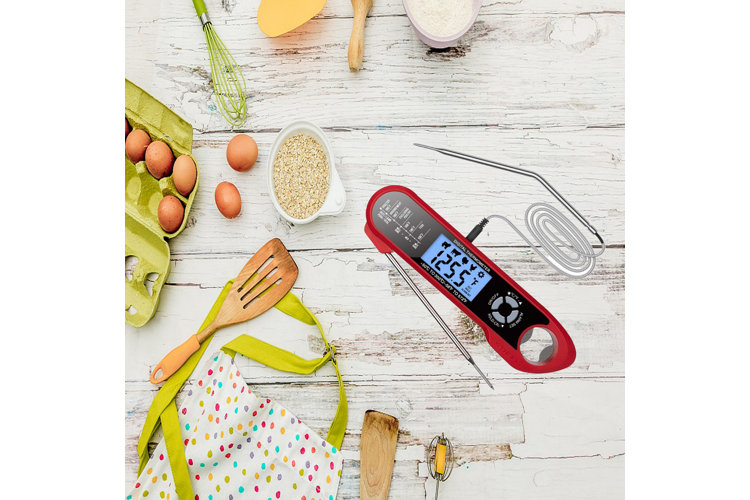
Digital and instant-read thermometers are best suited for the everyday chef because they have a quick response time, are easy to read, and are the most reasonably priced. Insert the end of the thermometer into the thickest part of the meat and wait about 10 seconds to get a complete temperature read. They generally can’t be left in the food while it’s cooking, but some do come with a corded probe that can be left in while the thermometer stays outside (see Probe Thermometers). These are great for grilling, cooking on the stove, or in the oven.
Dial Display Thermometers
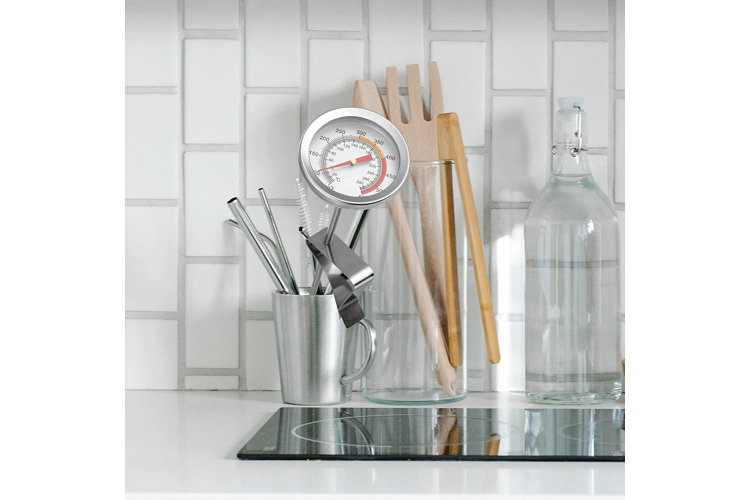
Dial thermometers are leave-in thermometers that can stay in the food while it cooks. They can be more difficult to read than digital thermometers and take longer to reach the temperature, but they are better for large cuts of meat like hams, turkeys, and other traditional roasts like meatloaf. Like the digital display thermometer, put the end into the thickest part of the meat and wait for the temperature, if the read is at the desired temperature, push a little further and wait for another read to ensure it’s cooked all the way through.
Infrared Thermometers
Infrared thermometers take temperatures by measuring infrared light to determine how hot or cold something is. To use, simply aim the thermometer at your meat and pull the trigger. The temperature will show up on the display panel. Infrared thermometers are great if you can't get close to your food while cooking.
Probe Thermometers
Traditional digital probe thermometers are oven safe and monitor the temperature of the food throughout cooking. The probe that goes into the meat is connected by a wire to a base that sits outside the oven and reflects the temperature as the meat cooks.
Wireless Thermometers
Wireless digital probe thermometers are “smart” versions of the digital probe thermometer that are safe to go in the oven but relay temperature info to an app via Bluetooth. Many apps let you set the cook time and doneness preference for the meat you’re cooking and even estimate your total cook time.
Programmable Thermometers
Programmable meat thermometers allow you to set your own temperature preferences and save them for the future. Simply program the temperature you want your meat to finish at, and your thermometer will let you know when your meat reaches that temperature.
Now that you know all the ins and outs of how to use a meat thermometer, check out our other temperature reading devices for all your kitchen needs including deep frying or candy coating.
