Best Basement Flooring Options
Learn about the top four flooring materials and why they're best suited for the challenges of basements.
From uneven foundations and heavy flooding to typical moisture and humidity, basement flooring has to withstand the wear and tear of a variety of potentially damaging threats. Learn more about the most popular basement flooring options to ensure that the option you choose is best suited for the specific demands of your space.
Vinyl Tiles and Planks
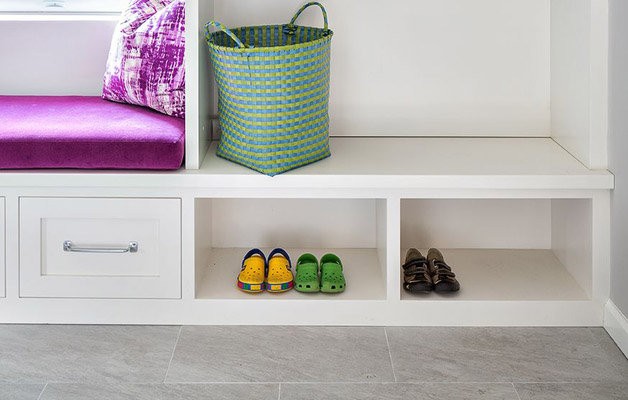
Design: Clean Design Partners
For decades, this synthetic plastic has been one of the most affordable and versatile flooring options for basements. From wood to stone to ceramic, vinyl can emulate any material. This flooring is highly resistant to condensation, mould, mildew, and moisture—making it ideal for basements. Unlike cold ceramic, vinyl often comes with an underlayment of cushion for a warmer, softer touch. The material itself is affordable, plus you can easily install the flooring over concrete slab yourself without the expense of hiring a professional.
Vinyl resists daily wear and tear, though over time may dent, bubble or curl. For a longer lasting option, opt for thicker vinyl tiles or planks.
Engineered Hardwood
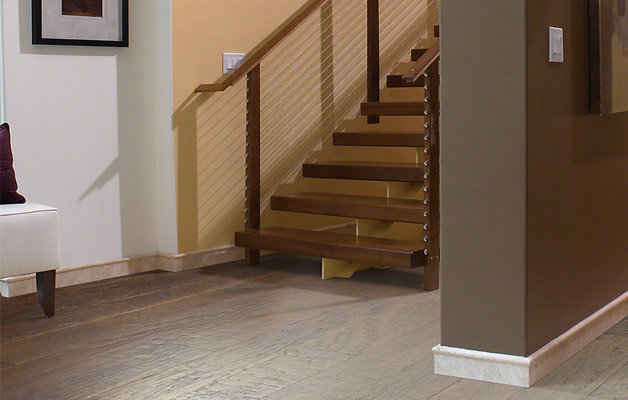
A rendition of traditional hardwood, engineered options adhere three to twelve layers of plywood together to create a plank. The thicker top layer is called the wear layer, and can be refinished if need be. This flooring can be installed over concrete slab in two ways, making it ideal for basements: either glued directly to slab, or floating over it with click-and-lock planks. It’s more resistant to moisture levels than solid wood flooring, and therefore can withstand damp basements.
Although engineered hardwood flooring can withstand some moisture, it is not completely resistant to water. If flooding occurs and the flooring is completely submerged swelling and buckling will occur.
Laminate Planks
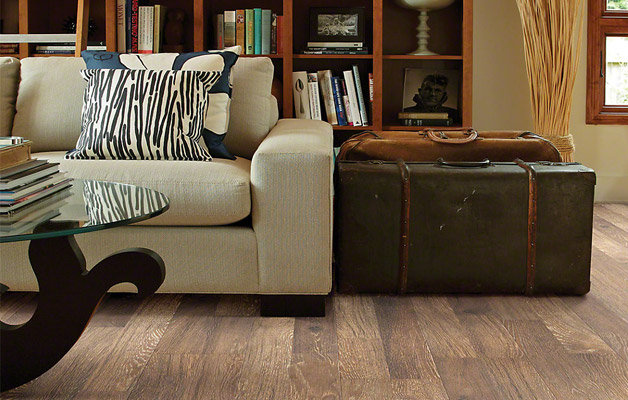
As one of the most versatile and affordable options, laminate flooring comes in a seemingly endless variety of styles—thanks to its five-layer composition. Underlayment and protectant melamine resin are topped with fiberboard, which offers impact-resistance, durability, and stability. Then comes the high-definition picture—which captures endless options, from hardwood to tile and slate—finished with another layer of melamine resin. Installation is simple with an easy click-lock system, and the floor floats over the existing surface.
Although it may look like it, laminate flooring is not hardwood. Once the top layer of melamine starts to show its age, the product needs to be replaced and cannot be refinished like traditional hardwood flooring.
Ceramic Tile
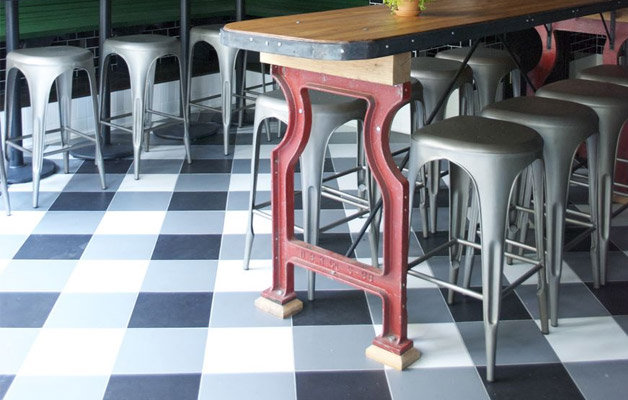
Design: BHDM Design LLC
One of the most durable, long lasting basement floor options out there, ceramic tile is made and formed from clay, and is available in various shapes and sizes. If flooding or condensation is an issue in your basement, this flooring is a perfect contender to withstand the water—as it’s both fire- and water-resistant. This flooring can be installed directly over concrete slab, which conserves space in a low-ceiling basement. Ceramic flooring should last as long as your house does!
Due to its durability, ceramic comes with a few downsides. The flooring is hard and cold, which can make walking barefoot uncomfortable. Also, moisture or spills can create a slippery surface.
