How To Buy a Bird Cage
Learn how to buy the perfect bird cage with our editors' helpful tips.
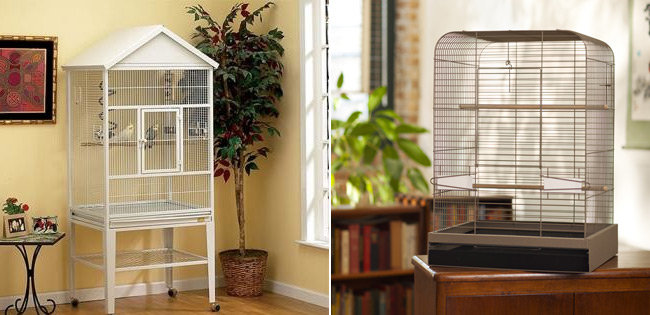
The size of a cage is determined based on the type of bird you have. Large birds need a bigger cage with wide bar spacing while a small bird fits comfortably in a smaller cage with narrow bar spacing. (You want the right bar spacing so your bird can't escape through the bars.)
Bar Spacing
- This is the amount of room between the bars of the cage.
- Pick a cage with spacing that is comparable in size to your bird. Unsuitable sizing may cause harm to your pet, like a damaged beak, foot, or wing.
- Bar spacing style varies depending on the type of bird you have. For example: A parrot bird cage should feature bars that are horizontally oriented. This way the bird will be able to use its beak and feet to climb.
Shape
- Consider a rectangular cage over a round cage. Unlike round cages, rectangular cages feature corners for birds to perch on. The round cage will also make a bird feel trapped and insecure.
- For small birds, it is important to choose a cage that is longer length wise than height wise. The length provides more room for the birds to fly around.
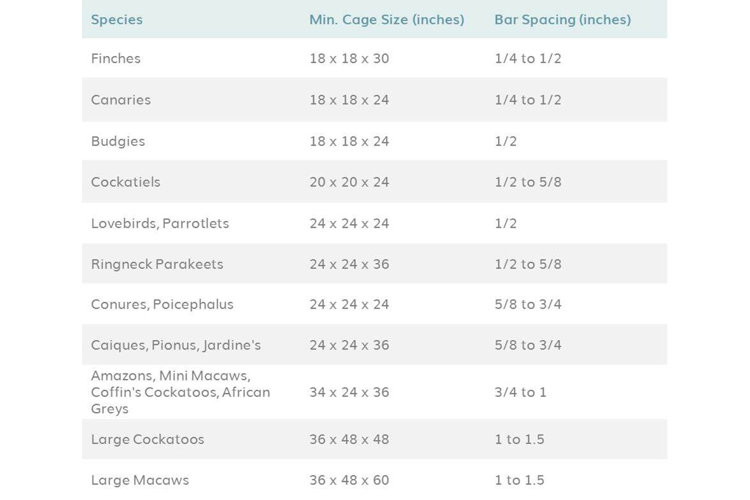
Use the below chart as a guideline to help you figure out what size cage best suites the needs of your pet.
Think About Location
The location of your bird cage is determined based on the bird's personality. Examine the difference between indoor and outdoor cages below:
Indoor Cages
- Place in sunny, draft-free area
- Put the cage in a room with plenty of human interaction for social birds
- Consider a noise-free area for shy birds
Outdoor Cages
- Most are durable and versatile
- Large styles come with a walk-in style feature
- Often made with various wire gauges
- Some come with hanging bird domes to protect the bird from outdoor elements
Popular Design Features
There are two types of door options to consider: swing doors and door-in-door. Explore what each option has to offer below.
1. Swing Doors
- A cage with small swing doors will prevent the bird from escaping and still provides plenty of room for you to access the interior.
- Instead of a small swing door, think about investing in a cage with a large door option. This makes it easy for one to access the back side of the cage and prevents wing and feather damage when you take the bird out of the cage.
2. Door-in-Door
- This door option combines two functions: a smaller door that allows you to feed the pet without risk of it escaping and a large door for easy access into the interior of the cage.
Other design features to consider:
Perches: A bar in the cage that provides a spot for the bird to hang out on
Food Cups: A container that holds food and water
Pull Out Tray: Provides easy clean up and access into the cage's interior
Food Access Doors: Allows one to reach the food and water without reaching into the cage
Casters: Wheels featured on the bottom of a cage for easy transporting
Whether you have a small parakeet or large cockatoo, finding a comfy home for your feathery friend can be quite the task. There are so many styles in the market that it can be tough picking out the best option. To help narrow down your choices, here is what you need consider: the bird's species, location of the cage, style options (size and shape), and design features. Keep reading to find out more.
Tip!
Place the bird cage at chest level. If the cage is placed any lower, the bird can feel vulnerable and timid.
Check out our Bird Cage Buying Guide for more in-depth information on choosing a bird cage.
