Jelly Roll Pan vs. Baking Sheet: What's the Difference?
Breaking down the differences between these baking staples.
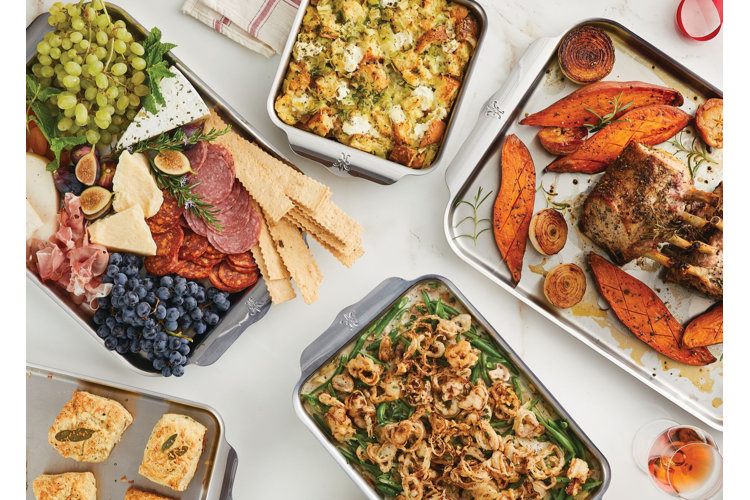
Whether you’re baking a sheet cake or roasting vegetables, the correct cookware leads to delicious results. While jelly roll pans and baking sheets may seem similar, understanding their differences enhances your experience in the kitchen. Ready to cook or bake with confidence? Continue reading for a comprehensive breakdown of the jelly roll pan vs. baking sheet.
What Is a Jelly Roll Pan?
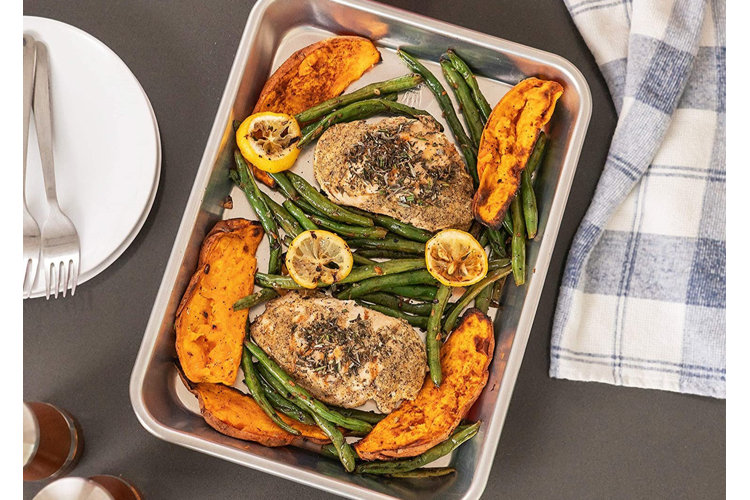
What is a jelly roll pan, exactly? Commonly used among bakers, the jelly roll pan is a variation of the traditional baking sheet. The usual jelly roll pan size is a 10" x 15" flat surface encompassed by a 1" rim.
The jelly roll pan was originally named for its primary function – baking flat sponge cakes that formed “jelly roll” desserts. This bakeware eventually became a multipurpose kitchen staple, used for everything from decadent desserts to one-pan dinners.
Tip!
Curious to learn more? Check out What Is a Jelly Roll Pan for a breakdown of everything you need to know, from origins to common uses.
What Is a Baking Sheet?
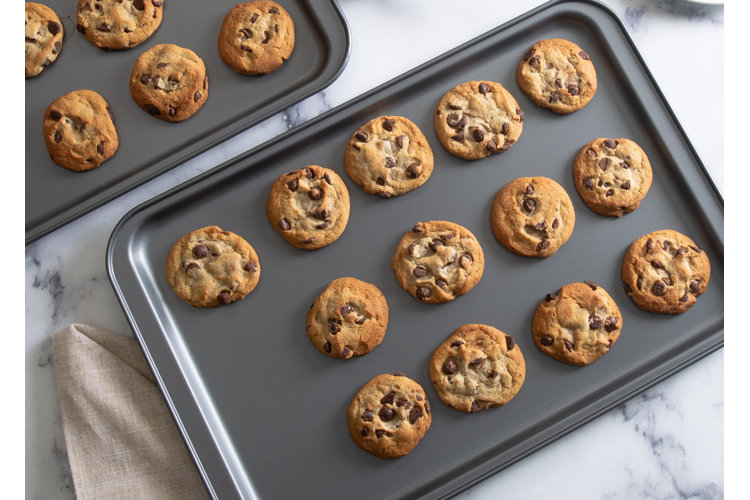
A baking sheet is one of the most common kitchen tools, making it a staple in many households. A half-sheet pan is the home-oven standard, traditionally measuring 26" x 18" or 13" x 18". This rectangular pan typically has low or no rims, making it a versatile flat surface.
The baking sheet was named for its key purpose, which is to provide a flat surface to bake everything from cookies to croissants. It is a cooking staple, providing an ideal surface to roast chicken or vegetables.
Tip!
Curious which baking sheet sizes are right for you? Our comprehensive guide has you covered.
Jelly Roll Pans vs. Baking Sheets: Key Differences
When it comes to a jelly roll pan vs. baking sheet, their primary differences are related to dimension, design, and common uses.
- Size: The size of a jelly roll pan is customarily 10" x 15" with a 1" rim, making it a smaller and deeper variation of the traditional baking sheet. By contrast, the rimless baking sheet usually measures 13" x 18" or 26" x 18", offering the space to cook larger servings.
- Edges: The jelly roll pan’s distinct rim prevents liquid or batter from overflowing, making it the perfect choice for baking sponge cakes or one-pan dinners. By contrast, baking sheets are rimless or built with low rims, boosting airflow to achieve crispier food texture.
- Purpose: Jelly roll pans are best used for recipes that require a contained surface because of its spill-preventing structure – think sponge cakes, dessert bars, or one-pan dinners with added oil and sauce. On the other hand, baking sheets are the better choice when a larger or flatter surface is required. The baking sheet is ideal for roasting a big batch of vegetables, baking cookies, or throwing a frozen pizza in the oven.
- Material and Durability: Both jelly roll pans and baking sheets are typically constructed of aluminum or stainless steel. However, baking sheets usually have a heavier build to combat the wear of high temperatures and frequent use.
While jelly roll pans and baking sheets are occasionally interchangeable, the answer depends on your recipe and desired results. Either option works for tasks like baking cookies, roasting vegetables, or cooking smaller portions.
However, only jelly roll pans contain liquid or batter while achieving the thickness of dimension-specific recipes, like sponge cakes. Similarly, large one-pan meals may not fit into the standard jelly roll pan, and the jelly roll pan’s raised edges may interfere with even airflow and roasting.
