Ladder Sizes: How to Choose the Right Height & Capacity
Find the ladder size that works for you.
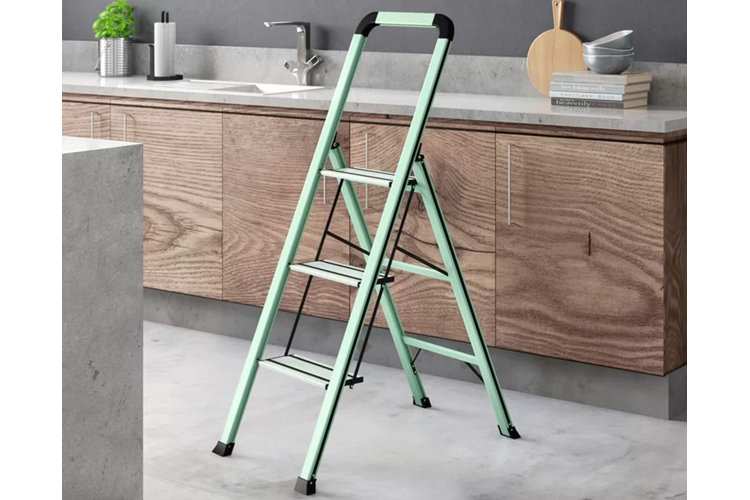
Whether you're reorganizing kitchen cabinets or cleaning the gutters, ladders are essential for getting to those hard-to-reach areas of your home. There are a wide variety of different types and sizes available to help you tackle any task. From stepladder sizes to extension ladder sizes, our guide covers all you need to know to select the ladder size that best suits your needs.
Tip!
Need help choosing the right type of ladder? Check out our Ladder Buying Guide: Types of Ladders to learn more about ladder designs and materials.
Ladder Height
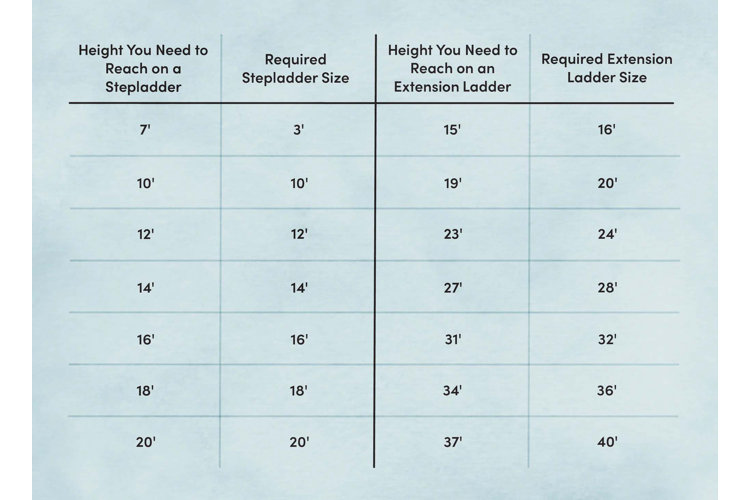
Height is a key measurement when choosing the right ladder size. Using a ladder that is too short or too tall can affect your safety and ability to complete your task. Selecting the right ladder height is important because there can be quite a difference between the actual measured height of a ladder and its usable length. Here are some important size considerations for each type of ladder:
Considerations for Stepladders
With stepladders, you should never stand on the top two rungs for safety reasons. When choosing a stepladder size, look for a height that's no shorter than 4' less than the maximum height you need to reach – that way, you can easily access the height you need to, without standing on the top two rungs of the ladder.
Considerations for Straight or Extension Ladders
Straight ladders are a type of ladder that is used at a vertical angle and propped against a stable support surface, such as a wall. Extension ladders have a similar shape as straight ladders, but feature two sections that are connected by a set of brackets so that you can adjust the height of the ladder.
- Since straight and extension ladders lean against a supporting structure, the angle they are placed at will further reduce their reach.
- For maximum safety on straight and extension ladders, we recommend avoiding the top three rungs.
- The distance between rungs on these ladders is generally 1', which means you should look for a ladder that is 2'–3' taller than the maximum height you need to reach so that you don't have to use the top three rungs.
- Some extension ladders require that you leave 3'–5' of overlap, depending on their height.
This overlap helps ensure the ladder is placed securely and safely. If they are being used to reach a roof or platform, they should extend 3' above the rooftop or top of the platform. Remember to take all these factors into account when calculating what straight or extension ladder size you will need.
In addition to height, it's important to find the right ladder load capacity. Load capacity refers to the amount of weight a ladder can handle. Depending on how you plan on using the ladder, you may need a ladder with a higher load capacity. Make sure to factor in the total weight of any materials or tools and the person using the ladder when determining the correct load capacity. Projects like roofing require a higher load capacity than painting or yard work. Check out our chart above to see which type of ladder is best suited for you.
Type III ladders are standard for household use, including housekeeping, painting, or yard work. Type II ladders and type I ladders are best for light commercial or industrial use. Type IAA or IA ladders are meant for heavy-duty jobs like roofing.
Get browsing to make repairs and DIY projects a breeze!
