Find Your Perfect Pillow Type: A Guide to Better Sleep
Comfort begins here.

Do you have trouble sleeping through the night or wake up feeling stiff and sore? Choosing the right pillow is the most effective way to ensure your spine stays aligned while you sleep, so you wake feeling refreshed every morning. Learn about different types of pillows, fill materials, and sizes to find the perfect fit.
1. Determine Your Sleep Position & Support Needs
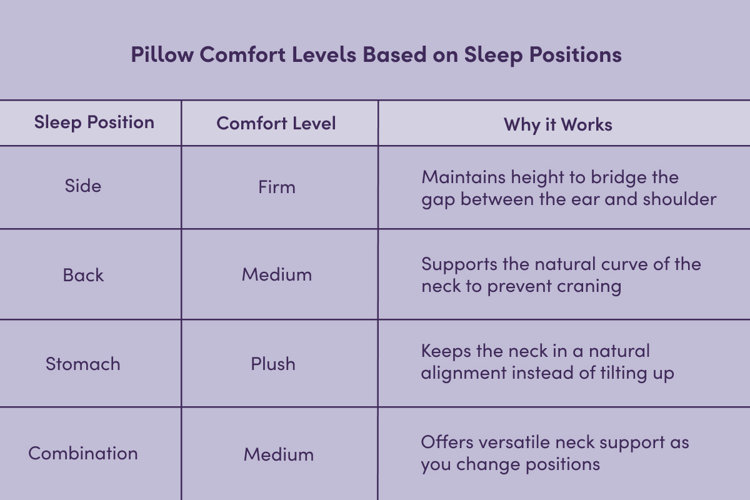
Your primary sleeping position determines the firmness and features you need for proper neck alignment. Review the available comfort levels to find the pillow plushness that offers the best support:
- Plush: A plush pillow is perfect for stomach sleepers because it sinks down easily, keeping the head low and preventing the neck from twisting at an awkward upward angle. This soft, low-profile cushioning ensures your spine stays comfortably flat and aligned while you sleep face down.
- Medium: A medium pillow provides the ultimate balance of support and give for back sleepers who need their head cradled without being pushed too far forward. It is also the ideal choice for combination sleepers who toss and turn, as it adapts well to multiple positions throughout the night.
- Firm: A firm pillow is essential for side sleepers because it fills the gap between the mattress and the ear, keeping the head properly elevated. This sturdy support ensures that a side sleeper's neck and spine remain in a straight, healthy line until morning.
Once you know your most common sleeping position, pick a material that suits your preference for breathability, support, and longevity. Explore these common pillow fill materials to find one that works for you:
- Down: Made from at least 75% soft down clusters, true down offers unmatched plushness, breathability, and long-lasting comfort for those seeking a cloud-like pillow feel.
- Down & Feathers: A mixture of down and feathers offers a supportive but moldable pillow that is more budget-friendly than true down pillows.
- Down Blend: Unlike pillows made with pure down or a down-and-feather mixture, a down blend pillow contains a small amount of down mixed with synthetic materials to create a bouncier, more affordable pillow.
- Down Alternative: Down alternative pillows are made with synthetic material that mimics the feeling of down, but they are often hypoallergenic, machine-washable, and budget-friendly.
- Cotton: For sleepers who prefer a firmer, cooler pillow, cotton is a dense, breathable, and highly absorbent material that offers reliable head and neck support without trapping heat like synthetic materials.
- Wool: Wool is a natural fill material that is hypoallergenic, dust mite-resistant, and retains its shape well over time. It offers firmer support and superior temperature regulation throughout the seasons.
- Memory Foam: Memory foam is a dense, supportive material that uniquely molds to the shape of your head and neck for optimal support. It is best for those seeking a highly-structured pillow to relieve neck pain.
- Shredded Memory Foam: Shredded memory foam offers the pressure-relieving support of memory foam but with more adjustability so you can fluff the pillow to your exact preference.
- Latex: Natural latex comes from rubber trees and offers bouncy and highly durable neck support that feels cooler than memory foam.
3. Think About Your Sleep Temperature
Beyond plushness and support, the pillow material you choose will also impact its temperature. Think about how you generally feel when sleeping and what temperature effect you prefer from a pillow. Consider the following scenarios:
- If you sleep hot: Look for breathable materials like down or cooling gel memory foam that help dissipate heat and improve airflow.
- If you sleep warm but want a balanced temperature: Cotton covers and down alternative fills offer a balance of softness and breathability.
- If you sleep cold: Dense memory foam and thicker down fills can help retain warmth for a cozier sleep experience.
- If you want cooling: Search for pillows labeled cooling, moisture-wicking, ventilated foam, or temperature regulating.
Depending on the size of your bed or your sleeping habits, you may need to opt for a specific size pillow. Review the available pillow sizes, their dimensions, and recommended use cases below:
- Standard Pillows (20" x 26"): A single standard pillow is typically used on a twin or twin XL bed, while full/double beds can accommodate two standard pillows.
- Jumbo/Super Standard Pillows (20" x 28"): Jumbo or super-standard pillows are 2" wider than a standard pillow. The extra length provides support for those who roll around and switch sleeping positions throughout the night.
- Queen-Size Pillows (20" x 30"): Queen-size pillows are usually used on queen beds and fit perfectly two across.
- King-Size Pillows (20" x 36"): King-size pillows are used on king and California king beds. These pillows fit perfectly two across a California king bed and leave a couple of inches of space on a king bed.
In general, a pillow should be replaced every 1–3 years to ensure proper support and hygiene, but the quality, fill material, frequency of usage, and how you care for it will determine how long a pillow lasts. Review the chart above for tips on when to replace your pillow and how to extend its lifespan. Using a pillow protector and caring for your pillow according to the manufacturer’s instructions can help it last longer. For an easy, low-maintenance option, look for machine-washable pillows.
6. Consider Safe & Sustainable Options
Looking for cleaner materials, fewer chemicals, or naturally breathable comfort? These options can help create a healthier sleep environment while supporting more sustainable sourcing.
- Eco-Conscious Sourcing: Look for pillows made from organic cotton. These products are renewable, biodegradable, and produced with a smaller carbon footprint.
- Fewer Chemicals: Pillows that are OEKO-TEX® or CertiPUR-US® certified are free from harmful chemicals, synthetic dyes, and off-gassing, so you can sleep soundly knowing your pillow is safe and nontoxic.
- Cleaner Sleep Environment: Materials like organic wool and natural latex are inherently resistant to dust mites, mold, and mildew, providing a deep level of hypoallergenic protection. Look for antimicrobial pillows to support your immune system health while you sleep.
There are different types of pillows that vary in terms of size, shape, support, and functionality. While this guide mainly focuses on bed pillows, here are some other pillow types that offer unique support:
- Contour Pillow: Contour pillows are a type of bed pillow that feature a unique curved shape designed to conform to your neck and head. They are often made of firm materials, such as memory foam or gel, to hold their shape and offer optimal support and spine alignment throughout the night.
- Wedge Pillow: Wedge pillows have a distinct triangular design and are most commonly used to provide back support while you’re sitting up in bed. They can also be used under your knees to help elevate your legs while you lie down.
- Body Pillow: Body pillows have an elongated design that supports the length of your body while you sleep. They are ideal for side-sleepers and can alleviate pressure on your hips, knees, and back while you sleep on your side.
- Pregnancy Pillow: Pregnancy pillows are a type of contoured body pillow that has a unique U-shape that wraps around your body to provide ergonomic support. While they are specifically designed to support pregnant bellies, these pillows can also be used by those who suffer from chronic pain, restless sleep, or just want a cozy, enveloped feel.
