Porcelain Tiles vs. Ceramic Tiles: Know the Difference
Learn the key differences between porcelain tiles and ceramic tiles
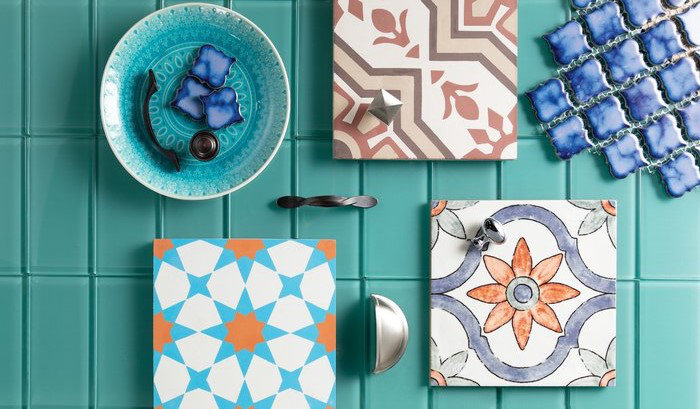
When it comes to telling the difference between ceramic and porcelain tile, at a quick glance, there are almost no distinguishable differences between the two. It is their composition and manufacturing processes that set porcelain and ceramic tiles apart from one another. Though both porcelain and ceramic tiles are both clay-based and kiln-fired, porcelain is technically a specialized subtype of ceramic with a hardier construction. The two main factors to consider when choosing porcelain tiles vs. ceramic tiles are cost and water resistance. These will help you determine which type of tile you should use; from there, you can select the style and design that work best in your space.
In This Guide:
Porcelain Tile vs. Ceramic Tile
What Is Porcelain Tile?
What Is Ceramic Tile?
Porcelain vs. Ceramic Tile: Which Is Better?
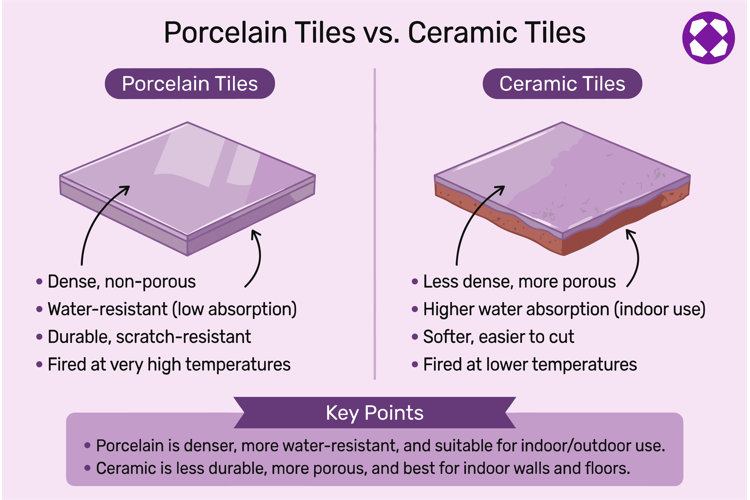
While both tile materials are well suited for renovation projects, compare the benefits and considerations of each to see which is better for your home.
What Is Porcelain Tile?
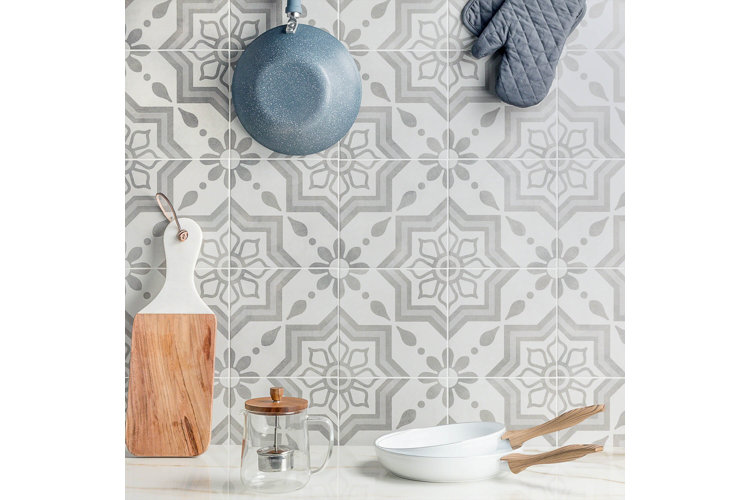
The main question most homeowners have is "what is the difference between porcelain and ceramic tile?" There are a number of ways to discern between the two, starting with the creation process. Porcelain tiles are manufactured using a mix of refined clay and other natural ingredients, which all are packed at high pressures and then baked at higher temperatures in the kiln. They are then either left in their natural state or, using professional-grade inkjet technology, transformed to look like stone, wood, concrete, or other materials.
Due to their more complex materials and manufacturing process, porcelain tiles on average cost at least 60% more than ceramic tiles, which can be a large determining factor when you are making the choice between porcelain tiles vs. ceramic tiles.
While the initial cost is higher, you might want to ask yourself how durable is porcelain tile? Porcelain tiles are denser than ceramic tiles, which in turn make them more durable and thus less subject to wear and tear, a feature that makes them great for commercial use. Before you disregard it as an option, you should keep in mind that the higher durability of porcelain tiles technically saves you in the long run as they are known to last for years.
Porcelain Floor Tile Features
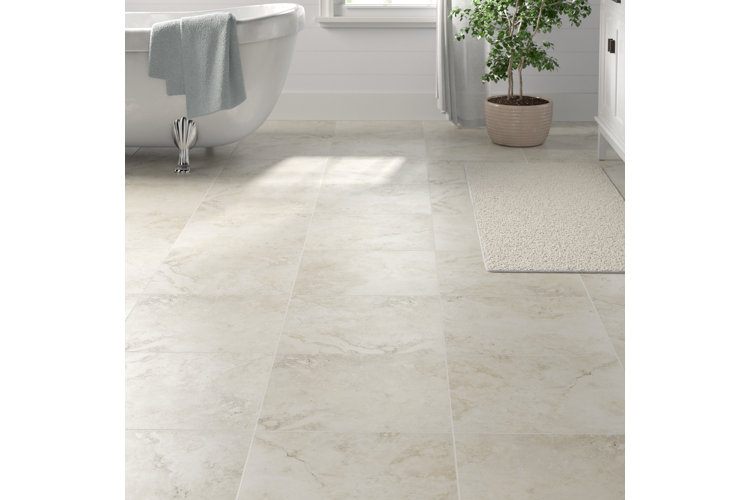
There are many things about porcelain tile that make it a top choice for homeowners looking to replace their flooring.
Glaze: When selecting porcelain tiles, you have the choice between a glazed or unglazed finish. Glazed porcelain tiles are more stain-resistant and longer lasting. Unglazed porcelain tiles have higher slip resistance, abrasion resistance and impact resistance. Porcelain tiles have through-bodied coloration running throughout their entire thickness, which means that in the event of a broken piece of porcelain (glazed or unglazed), the uniform color of the tile itself will make any chips less noticeable.
Water Resistance: Porcelain tiles are highly water-resistant, which means they are virtually impervious to water damage, even after prolonged exposure. This high water-resistance makes porcelain tiles a fantastic option for bathroom, shower, and kitchen floors. Some modern porcelain floor tiles are even frost-proof, which is especially useful in colder outdoor weather as they won't absorb water and crack in freezing conditions. When it comes to porcelain tiles vs ceramic tiles, a big plus is that porcelain floor tiles are easy to clean, making them the ideal choice in high-traffic areas such as mudrooms, hallways, and living areas.
Styles: One of the biggest benefits of modern porcelain tiles is the high-tech inkjet printing processes used in their manufacturing. This printing creates such realistic looking tiles that only up-close examination would discern them from real wood or natural stone. You can therefore choose porcelain tiles that recreate the upscale and opulent look of more high-maintenance flooring types like marble, travertine, wood, and even metal without the maintenance and cost.
Porcelain tiles work well as a countertop and wall material, particularly because they come in more shapes and styles than ceramic tiles. The diverse options for looks, colors, patterns, and sizes make porcelain wall tile perfect for buyers with specific taste, which is especially advantageous when creating a distinct decor theme. The great thing about porcelain tile is that it is generally more forgiving when it comes to spills and scratches, which is beneficial in spaces where this is more likely to happen, like the kitchen.
Tip!
It's a good idea to save an extra box or two of tiles just in case you need to replace any at a later stage.
What Is Ceramic Tile?
The difference between ceramic and porcelain tiles is that ceramic tiles are kiln-fired at a lower temperature than porcelain tiles, making them softer and less dense. They are more porous which makes for higher absorption rates, so unfinished ceramic tiles should not be used in wet areas. The clay used to create ceramic tiles is less refined than the clay used to create porcelain tiles, resulting in a more affordable price tag but a less durable product. Ceramic tiles usually stay cooler than porcelain tiles, which is why they are popular for homes in warmer climates, though this also means that they are colder in the winter months.
Ceramic Floor Tile Features
Glaze: Ceramic tiles have a plain composition that is coated with a colored glaze. The durable glaze finish can be customized in a variety of colors and patterns. This means though that any chips will show the natural color beneath, which may emphasize tarnish. If you choose unglazed ceramic tiles, it is recommended that they are sealed to protect the surface from liquid. The unglazed surface of a ceramic tile will feel coarse, especially if its design includes ripples and raised shapes. If you enjoy being barefoot, it's worth knowing that glazed ceramic floor tiles generally have a softer surface than porcelain floor tiles, which can be more comfortable to walk on.
Water Resistance: Due to the fact that they are less durable, ceramic floor tiles are better used in areas with less traffic. Ceramic floor tiles are not ideal for outdoors, not only because they are more fragile, but also because their higher absorption rate will cause them to get damaged by the elements. When comparing the maintenance of porcelain tiles vs. ceramic tiles, note that ceramic tiles require more frequent cleaning; any spills must also be wiped away immediately.
When it comes to the durability of porcelain tiles vs. ceramic tiles, ceramic tiles work well in areas with less or no traffic such as walls and backsplashes. Ceramic tiles come in many different finishes from ornate to contemporary, particularly with textured surfaces as well. Ceramic tiles have more artful, intricate designs with varieties in surface texture, which make for visual depth that works particularly well for backsplashes. Their light weight means they are easier to cut, which is better for home DIYers looking for a budget-friendly installation project – there's no need to front the cost of hiring a professional. Due to their affordability, it is even possible to create a statement room by tiling both the floor and wall with the same eye-catching patterned ceramic tiles.
With a clearer understanding of the pros and cons of porcelain tiles vs. ceramic tiles, you should now be able to select the type that is perfect for your tiling needs.
