Refrigerator Dimensions: What is the Standard Size of a Refrigerator?
A standard-size guide for a stress-free installation.
A new refrigerator can be a big investment, so it's important to find one that suits your storage needs and fits in your kitchen. Standard-sized appliances make this process easier and pair well with standard-sized cabinets. Read our guide to learn about the standard refrigerator dimensions and easy steps to help you choose the right one.
What Is the Standard Size of a Refrigerator?
Most standard refrigerators have exterior measurements that range from 28 3/4" to 39 3/4" wide, 61 3/4" to 71 1/4" tall, and 28 3/4" to 34 5/8" deep, though the true standard size depends on the type of refrigerator. There are four common types of refrigerator designs: French door, side-by-side, top freezer, and bottom freezer.
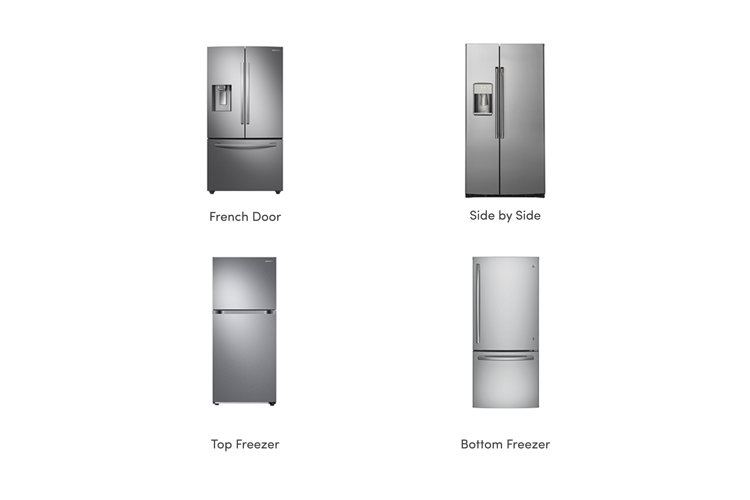
French Door: This popular refrigerator style features two half-doors and a bottom-mounted freezer that pulls out like a drawer. French door refrigerators have a standard size that ranges from 29 1/2" to 36" wide, 68 1/2" to 70 1/8" tall, and 29 3/8" to 34 3/8" deep.
Side-by-Side: Side-by-side refrigerators have two parallel doors with a vertical split, with the freezer on one side and the refrigerator on the other. This style is 32 3/4" to 39 3/4" wide, 65 7/8" to 71 1/4" tall, and 29 3/4" to 31 1/4" deep.
Top Freezer: This type of refrigerator has a two-door design with a top-mounted freezer. Top freezer refrigerators measure from 28 3/4" to 32 3/4" wide, 61 3/4 to 66 1/4" tall, and 28 3/4" to 34 1/2" deep.
Bottom Freezer: Bottom freezer refrigerators are a two-door design with a bottom-mounted freezer that can open like a door or pull out like a drawer. The standard size for this type of freezer is 29 1/2" to 32 3/4 " wide, 67" to 70" tall, and 33 3/8" deep.
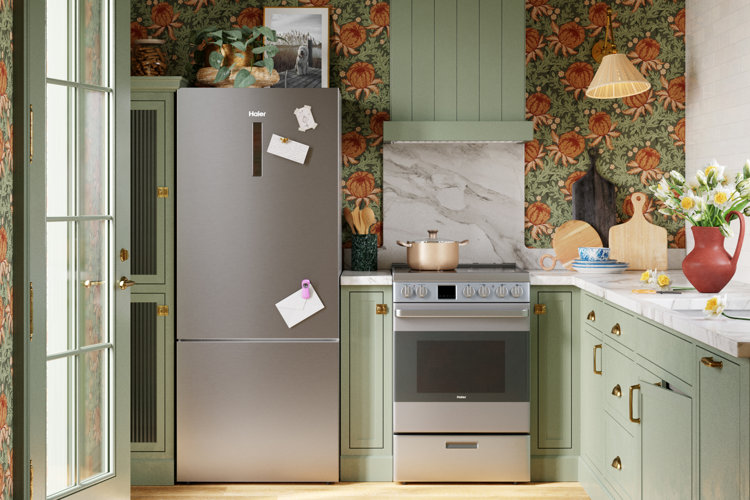
(Shop this image: bottom-freezer refrigerators, Oriental hallway runners, black pendant lights, and wooden fruit bowls)
1. Consider Household Size
Total capacity measures the amount of storage that the refrigerator can hold and should be measured by the amount of people in a household. To find the ideal appliance capacity for your household, a general rule is that each person should have 4 to 6 cu. ft. of storage. For example, a household of four people should have a refrigerator with a total capacity between 16 cu. ft. and 24 cu. ft.
2. Compare Counter-Depth vs. Standard-Depth
Counter Depth: Counter-depth refrigerators have a depth of 24" to 28" and are designed to be flush with the countertops to create a sleek, streamlined look. Because counter-depth refrigerators have a narrower depth, they often have a taller profile and wider design than standard-depth refrigerators. This is something to keep in mind if your kitchen has cabinets above the refrigerator to make sure the refrigerator will still fit in the designated space.
Tip!
For more information about counter-depth refrigerators, read our guide What is a Counter-Depth Refrigerator?
Standard Depth: If you're looking for optimal storage, then a standard-depth refrigerator is the best choice for you. They typically measure between 30" to 40" deep and extend 6" past the countertops. Though standard-depth refrigerators may take up more floor space than counter-depth refrigerators, their deep storage ability better accommodates larger households.
3. Decide Between Freestanding vs. Built-In
Freestanding: This type of refrigerator is a stand-alone appliance that can be installed anywhere. They can be nestled within cabinets and have finished sides so that they can be left exposed as well. Freestanding refrigerators are more popular since they are easy to install in any part of the kitchen and come in nearly every size.
Built-In: Built-in refrigerators are built into the cabinetry of a kitchen, making them permanent fixtures. To fit seamlessly into the cabinet design, built-in refrigerators are often counter-depth. This makes the refrigerators taller and wider than most freestanding models. Built-in refrigerators are an excellent choice if you're looking to create a seamless, customized kitchen.
4. Factor in Clearance & Ventilation
When choosing an appliance, factor in how much space is needed when the refrigerator doors and drawers are open, and consider any obstructions that could get in the way of this, like walls or kitchen islands. For proper ventilation, leave 1/2" of space on all sides of the refrigerator, including above the top and behind the back. This will ensure that the refrigerator can cool itself properly and last longer.
5. Prepare for Delivery
Make delivery easier by measuring the doorways and hallways that the refrigerator would pass through on its way to the kitchen to make sure it will fit. Try to find the most direct path to the kitchen that avoids staircases and tight turns if possible. Move any furniture to make sure it has a clear route.
Tip!
Now that you know how to choose the right size appliance for your kitchen, read The Ultimate Refrigerator Buying Guide to help you finalize your decision.
