Size Up Your Seating: Recliner Dimensions & Sizing
Fit for comfort.
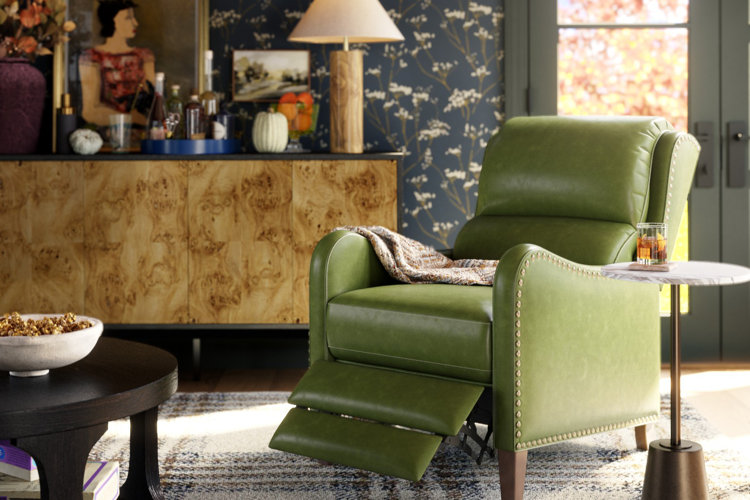
Recliners come in a wide range of sizes designed to fit different space constraints and support requirements. The dimensions of your recliner will ultimately affect the chair’s comfort and how it will fit in your home, which is why it’s essential to choose the right one. Consider these common recliner dimensions to find the perfect fit for your space.
1. Learn How to Measure a Recliner
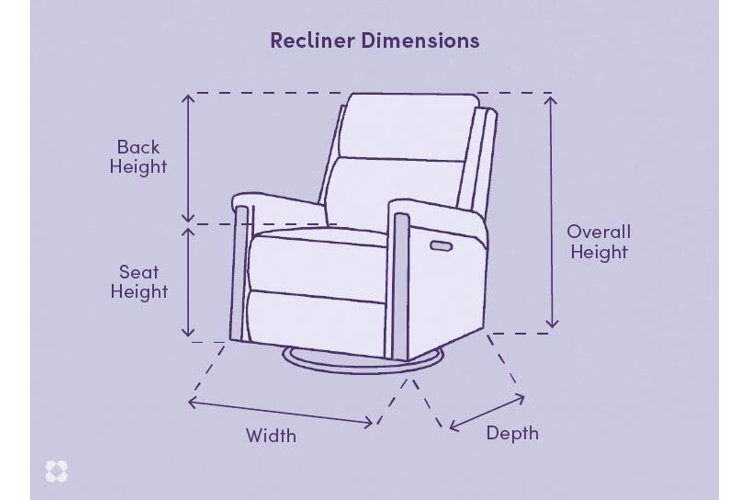
Before purchasing a recliner, it’s important to understand how they are measured so you can predict how the new recliner will fit in your home. Consider the following dimensions:
Height: The height of your recliner is the measurement from the floor to the top of the back cushion when it’s in the upright position. Most recliners are around 40" tall to provide back and neck support when seated and reclined.
Width: The width of recliners is the distance across the front from side to side, including the seat width and the arms of the chair. Recliner width varies based on the size and style chair you choose – the standard recliner being between 39" and 49" wide.
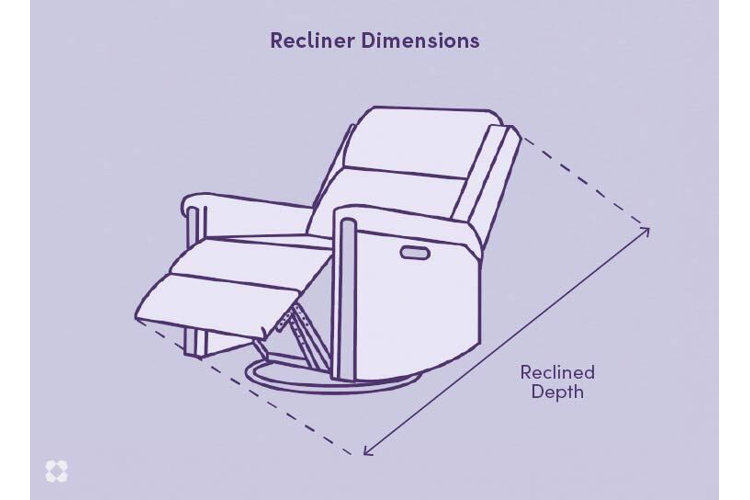
Depth: A recliner’s depth is measured from front to back to include the seat depth and thickness of the back cushion when it’s in its upright position. They are typically between 35" – 39" deep when fully upright. Keep in mind that a recliner’s depth can nearly double to around 60" – 65" when it is in a fully reclined position. For the dimensions of each recliner, check the “Specifications” tab under the product description and make sure your space has enough clearance for your recliner to fully extend.
Tip!
There’s more to choosing the right recliner than its dimensions. Check out Different Types of Recliners to Help You Relax & Unwind to explore the available features, materials, and more so you can pick the perfect chair.
2. Consider Common Recliner Sizes
Recliners come in three standard sizes, measured by width, that can be used to get a general idea of how the chair will fit in your space. Compare these size options and their average measurements:
Small: Small recliners are less than 38" wide and have a narrow frame that makes them suitable for smaller spaces like a home office, guest room, or corner sitting area. Small recliners usually have a narrower seat or thinner arm rests, offering the best support for people with petite builds.
Standard: Standard recliners are between 39" – 49" wide and typically used in pairs or as a standalone accent chair in standard-sized living rooms. They provide the perfect balance between comfort and space-efficiency and are designed to support an average adult.
Oversized: Oversized recliners are more than 50" wide and are ideal if you’re looking for ultimate comfort and extra room to spread out. They require more space in a large living room or home theater, but the extra width allows you to curl up, stretch, or share it with a pet. They can also be more comfortable for people with larger builds.
Body Proportions & Weight Capacity
When choosing a recliner, you want the seat to be proportional to your body to ensure your comfort and proper support. If you or a family member are 5'4" or shorter, consider a small recliner with a shallower seat depth. Standard recliners are the best fit for people between 5'5" – 5'9" to support their legs and head when reclined. For people over 5'10", you may want to consider an oversized recliner with a tall back to provide more support.
While considering the fit of your recliner, also take a moment to factor in weight capacity. You can filter by weight capacity while shopping for recliners to ensure a safe and supportive seat for everyone in your household. Consider the available weight capacities:
Lightweight: Supports up to 200 lbs.
Standard: Supports between 200 and 400 lbs.
Heavyweight: Supports over 400 lbs.
Room Size & Layout
Consider the size of your room and how a recliner will look in the space. An oversized recliner, for instance, may look disproportionate in a small living room, while a small recliner may not make enough of a visual impact in a large room. If you want to style a pair of recliners in your living room, you may need to consider a smaller model to accommodate them both.
Wall Clearance
In addition to the dimensions of your recliner, you’ll need to factor in clearance space in your room. Most recliners require between 12" – 18" of clearance behind them in order to recline properly, though some wall-hugger models can be placed as close as 4" – 6" to a wall. Regardless of the design, be sure to check the manufacturer’s recommended clearance for each chair under the product description.
Tip!
Before placing your recliner order, measure all of the doorways and hallways it will need to pass through upon delivery. You want to make sure your new recliner will fit through the delivery pathway once it arrives. For narrow hallways or doors, consider buying an assembly-required recliner that can more easily fit through your home.
