Slow Cooker vs. Pressure Cooker: How to Choose the Right One
Ready, set, cook!
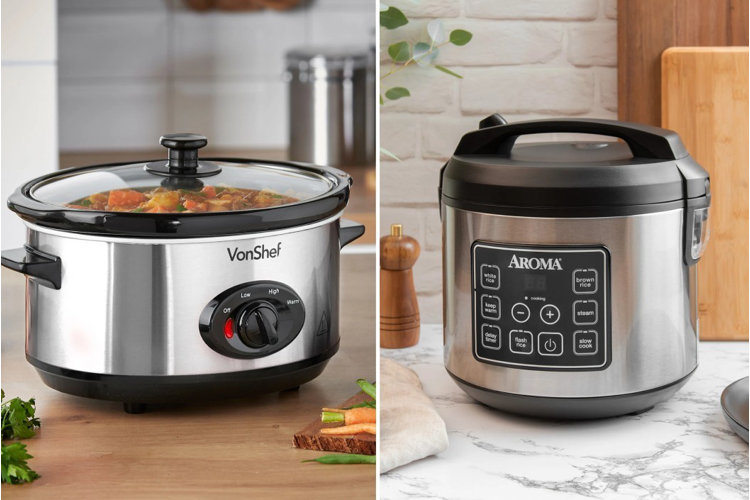
Slow cookers and pressure cookers both specialize in convenience, but the two aren’t interchangeable. Read our guide on the differences between slow cookers vs. pressure cookers so you can choose the right countertop appliance for your kitchen.
Slow Cookers vs. Pressure Cookers
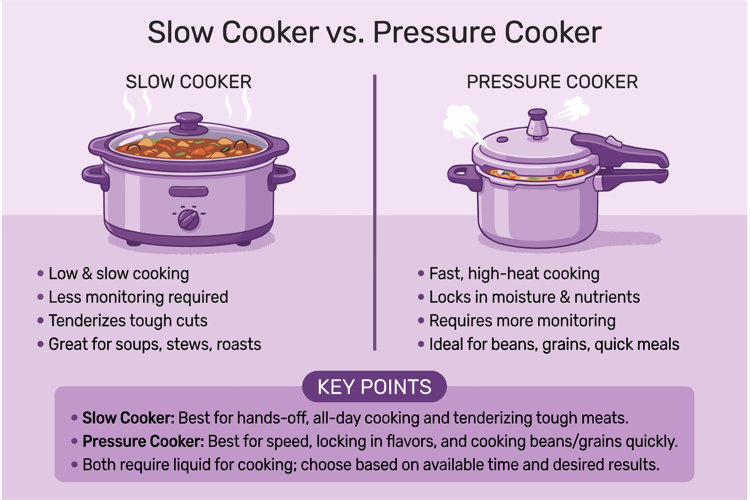
Slow cookers and pressure cookers are countertop appliances that can be used in place of pots, pans, and even ovens to cook delicious stews, roasts, and other one-pot dishes.
Design-wise, slow cookers and pressure cookers look very similar. Typically, both have well-fitting lids, two outward-facing handles, and a control panel or dial with temperature and time settings. Both also usually have a removable pot-like interior for easy cleaning. However, these cooking appliances have notable differences as well – keep reading to explore each option to decide which is best for you.
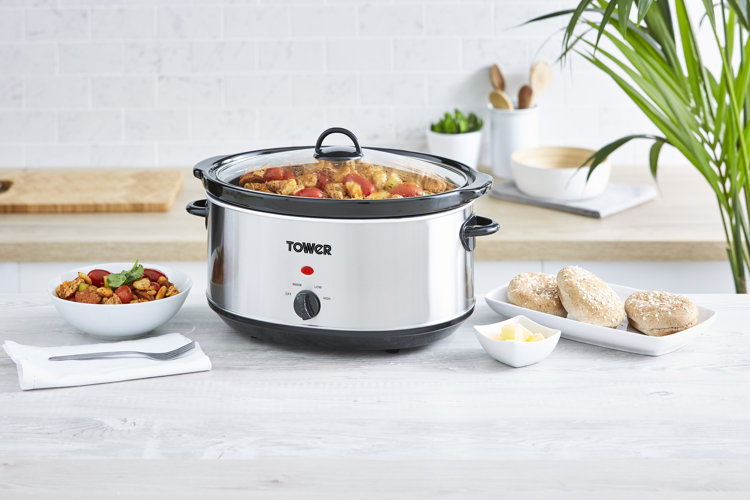
A slow cooker is an electric countertop appliance with built-in heating capabilities. All you have to do is plug it into a standard household outlet, add your ingredients, and select your cooking settings. Slow cookers operate on very low heat, so you can leave them on the counter to cook while you’re at work or in bed. The long, slow cook time helps to lock in flavors and tenderize meat to perfection.
Benefits of a Slow Cooker
- Cooks Slowly: Slow cookers cook and tenderize food at a low temperature over a period of 4–8 hours. They are great for cooking tough cuts of meat or raw/root vegetables without losing any flavor.
- Minimal Prep Required: Slow cookers can help cut down on meal prep time if you have a busy schedule. Just add all of the ingredients to your slow cooker, plug it in, set the cook time, and breeze through your to-do list while you wait.
- Versatile: Slow cookers feature a variety of settings and functions, allowing you to tackle all sorts of recipes. Some even have sous vide or roast settings for even more cooking opportunities.
- Portable: Some slow cookers come with handles and are convenient for bringing food on the go to potlucks, tailgates, or family gatherings! Plug the slow cooker in at your event to finish cooking or keep your food warm.
Slow Cooker Considerations
- Requires Searing: Due to a slow cooker's low heat settings, you'll need to sear ingredients in a separate pan before you add them to achieve the same flavor development.
- Ingredients Must Be Timed: When using a slow cooker, you also need to consider which foods cook faster than others and plan accordingly – especially since slow cookers take several hours per meal. Things like pasta, dairy, fish, and herbs or spices should be added toward the end of the cooking session to protect their structure and flavors.
Tip!
Read our related guide Slow Cookers 101: How to Use a Crock Pot for more helpful tips on how to master the slow cooker.
What Is a Pressure Cooker?
Pressure cookers utilize pressurized steam to cook food at a hotter temperature. This makes them much faster than most other cooking methods. What usually takes three hours to cook in an oven might need only an hour in a pressure cooker. When their built-in indicators detect pressure within, their lids lock in place and cannot be unlocked until that pressure has gone down. Once your food is done cooking, simply turn off the pressure cooker and unplug it to prevent overcooking the food.
Electric vs. Stove Top Pressure Cookers
When it comes to choosing a pressure cooker, you have two main options: electric and stove top.
Electric: Electric pressure cookers look and operate similarly to slow cookers. They plug into standard household outlets, are beginner-friendly, and usually feature digital cooking and temperature controls.
Stove Top: Stove top pressure cookers more closely resemble large saucepans and require a bit more know-how. However, they do also offer more control over the cooking process and can reach higher temperatures because they rely on the stove burner's heat rather than an internal heating component.
Benefits of a Pressure Cooker
- Cook With Steam: Pressure cookers use pressurized steam and high heat to cook food in an hour or less. They are ideal for cooking grains, vegetables, and lean meats that require higher cooking temperatures or less time to break down fats.
- Short Cook Time: We recommend a pressure cooker to anyone who enjoys delicious meals with minimal cook time. Because they cook food quickly, pressure cookers are perfect for anyone who meal preps and batch cooks food. They're also a must-have kitchen appliance for those who need to make meals quickly before rushing off to after-school/work activities.
- Ideal for Canning: If you’re an avid canner, using a pressure cooker can help you safely preserve low-acid foods like vegetables, meats, sauces, or soups. The high pressure and high heat kill harmful bacteria more effectively than just a boiling water bath.
- Versatility: Many modern pressure cookers are multifunctional appliances that allow you to sear, braise, bake, steam, sauté, and more. Because they can handle so many functions, these electric multicookers can save you time and counter space.
Pressure Cooker Considerations
- Good for Grains & Legumes: Because of their quick, intense cooking capabilities, pressure cookers are great for cooking structured legumes like beans and lentils as well as grains like pasta, rice, and oatmeal. You can even make hard-boiled eggs in a pressure cooker. Often, electric pressure cookers will have specific cooking settings for different meals, so a finished dish is only the press of a button away.
- Good for Lean Meats: Lean meats like chicken breast or fish have less fat, and therefore, don't need as much time to cook. Using a pressure cooker instead of a slow cooker for these types of meats helps keep them from getting tough or dry.
Tip!
Want to learn more about pressure cookers and their wide application? Check out our guide on How to Use a Pressure Cooker.
