What Is a Mosaic Tile? Explore This Beautiful Decorative Accent
Learn about mosaic tiles and where to use them.
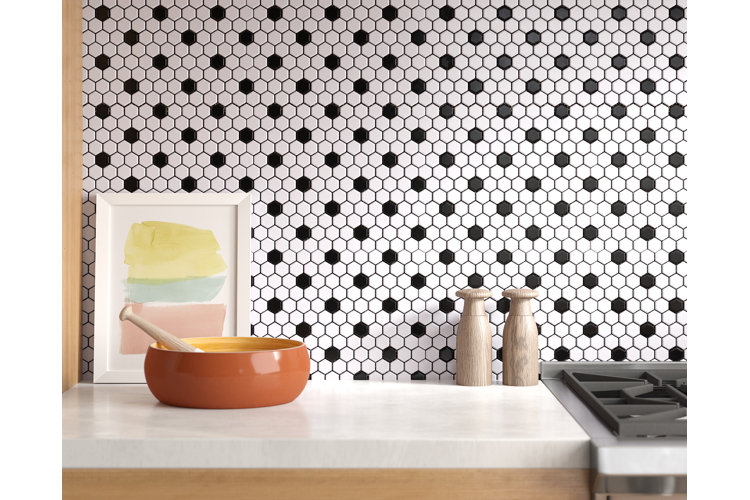
Mosaic tiles have been used as decorative accents in bathrooms, kitchens, and even outdoors for centuries, helping to increase visual appeal and bring life into any space. The question is, what exactly is a mosaic tile, and how can this aesthetic addition work in your space?
What Is a Mosaic Tile?
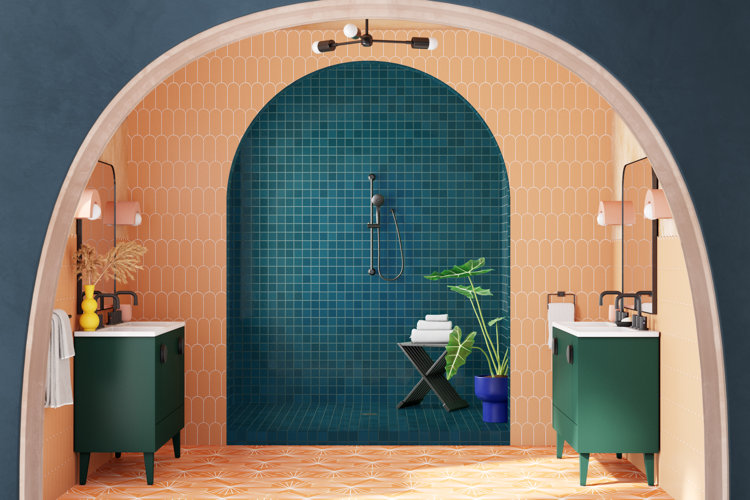
Mosaic tile comprises a collection of smaller tiles of various shapes, designs, or patterns (typically repeating) and assembled onto a mesh backing to keep them all together. The individual mosaic tiles measure 1" x 1", 1" x 2", 2" x 2", or 2" x 4" and are glued to a 12" x 12" or 13" x 13" backing to create one larger tile that is easier to install than several singular tiles.
The beauty of mosaic tiles is that they can be laid together to create a bigger image or pattern that can cover a large surface like a floor or countertop, or they can be cut up into smaller rows to be used as border tiles or backsplashes. This versatile tile comes in a range of materials, including glass, porcelain, ceramic, and even natural stone. Additionally, you can choose from an impressive range of colors to help bring the various hues in a room together and make for a more cohesive and balanced look.
Tip!
Because the individual tiles are smaller, they require more grout than standard tiles, making for a more slip-resistant surface that is suitable for wet locations like bathroom and shower floors.
Where Is Mosaic Tile Used?
Since it can be used for both smaller accents and larger floor and wall installations, you'll find mosaic tile is used in a broad array of locations.
Kitchen: These tiles are commonly used for backsplashes, countertops, and accent walls because they are easy to clean and add bright touches to the space.
Bathroom: You can also use mosaic tile for floors, backsplashes, and shower walls since the extra grout makes for a nonslip surface.
Outdoor: Mosaic tile is great for outdoor floors – and even as the decorative surround of in-ground concrete swimming pools – because of both its nonslip and ornamental properties.
Tip!
Read How to Visualize the Size of Your Tile to avoid miscalculating the size of your tiles.
Mosaic Tile Materials
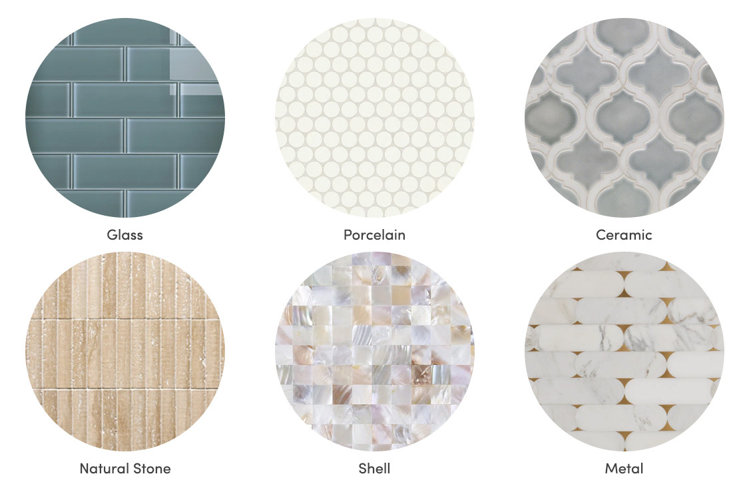
Historically, mosaics were made from small hand-cut pieces of glass, ceramic, or stone, which were individually laid and set in a binding agent called mortar. Today, mosaic tiles come in a broad range of materials that are all pre-cut and pre-assembled to make your life that much easier. Here are the top mosaic tile materials.
Glass: Glass was originally used by the Ancient Romans, though now it comes in an impressive range of colors and patterns. Some are even made from recycled glass for a sustainable option. Through different manufacturing techniques, it's possible to get opaque, translucent, and mirrored glass mosaic tiles. This moisture- and stain-resistant tile is especially great for kitchen backsplashes.
Porcelain: This clay-based material is easy to clean and has a high stain- and water-resistance. Since they're so easy to maintain, porcelain mosaic tiles are extremely popular in kitchens as backsplashes, walls, and countertops.
Ceramic: Made from natural kiln-fired clay, ceramic can come glazed or unglazed, offering various finishes and degrees of durability depending on the installation location. This mosaic tile material is typically more budget-friendly than ceramic while still offering durability thanks to the higher firing temperatures that make for a denser product.
Tip!
Take a look at Porcelain Tiles vs. Ceramic Tiles: Know the Difference to learn more about these two materials.
Natural Stone: These sustainable materials are mined from natural quarries and have been used to make mosaics for thousands of years. They can be made from marble, travertine, and pebbles – all making for unique aesthetics. There is a wide array of styles and looks to choose from, which all offer great options for hard-wearing locations like bathroom and kitchen floors, shower interiors, and even fireplace surrounds.
Shell: This durable, stain-resistant material is made from sea shells, particularly mother-of-pearl. Shell shimmers in ways that are reminiscent of the ocean, offering a stunning effect. It's commonly used for accents rather than large-format tiling due to the high cost of this premium material. These tiles are commonly used for tiling the backsplash or the surround for the shower niche.
Metal: This unique mosaic tile material is not composed solely of metal but rather one of the above materials (usually ceramic or porcelain) mixed with a metal inlay (typically brass), making for a durable and long-lasting tile. The metallic element provides a dramatic touch, especially when paired with a dark tile. Metal mosaic tiles are also costly, making them an excellent way to elevate other simple tiles.
Tip!
For an in-depth look at the different tile materials and their properties, read What You Need to Know About Tile Materials & Their Qualities.
Mosaic Tile Patterns
The mosaic tile pattern refers to the way the small mosaic tiles have been laid to form a specific design or motif. They can instantly add character to a room, provide contrast, or even coordinate with other design components.
Herringbone/Chevron: Herringbone tile comprises many rectangle tiles placed in a staggered, zigzag pattern that resembles the bones of a fish, while chevron tiles are positioned at overlapping 45-degree angles from one another to create a chevron or arrow shape. These are great for floors (similar to parquet floors) but also look good as backsplashes.
Brick: Similar to subway tile, this mosaic pattern uses brick-shaped tiles that are placed next to one another in an even or staggered pattern. This is a fairly neutral design that fits in most applications from kitchen backsplash to bathroom walls.
Penny Round: As the name suggests, the small individual circular mosaic tiles are around the size of a penny. Their small size makes them incredibly versatile, allowing you to create a simple design or more complex arrangement.. Whether you choose penny round tiles in a single hue or in contrasting colors that make a pattern, these mosaic tiles are especially ideal for floors and walls – particularly those in bathrooms.
Honeycomb: The honeycomb or hexagonal tiles provide a geometric design that looks great in modern and mid-century modern homes. The hexagonal shape can create a more dynamic look than square or rectangular tiles. It's even more dramatic when paired with textural materials like metal or natural stone.
Fish Scale: Also named for their appearance, these mosaic tiles look like fish scales – especially when they are made from shell or glossy, mirrored materials. These tiles are often used in damp locations like bathrooms, but are popular as kitchen backsplashes too.
Basket Weave: This unique mosaic pattern comprises tiles placed in interlocking designs to create the appearance of a woven basket, providing a textured and dimensional effect. These tiles work well on floors, backsplashes, and walls, offering a quick and simple way to add an intricate pattern to your space.
Octagon & Dot: This design is a sort of blend between honeycomb and penny round tiles. The repeating octagonal tiles feature smaller diamond tiles dotting four corners around each shape. The larger octagon tile usually comes in white or another light color, while the dot is often a black or contrasting hue. Together, this creates a vintage-inspired look that is great for kitchens and bathrooms
Linear: This pattern typically comprises thin rectangular tiles of varying lengths that are stacked in staggered order. Many times, linear tiles will feature one color in different tones for added depth. Linear mosaic tiles are most commonly used for accents and backsplashes.
Grid: This classic mosaic tile design is made up of small equal-sized square tiles. These grid-patterned sheets can include tiles of different colors to create a multicolored or gradient look. You can use grid tiles pretty much anywhere, including in your swimming pool, shower, and floors!
