What Is a Tagine?
Bring out your meals' flavor with a tagine.
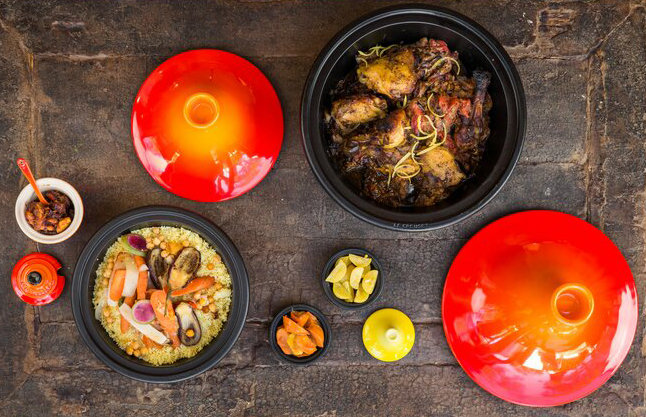
Using new cooking instruments is a great way to experiment and get outside your comfort zone in the kitchen. We recommend trying the tagine, a Moroccan cooking device that can bring out moisture and flavor in your dishes. If you’re still asking yourself, "What is a tagine?" read on for more.
What Is a Tagine?
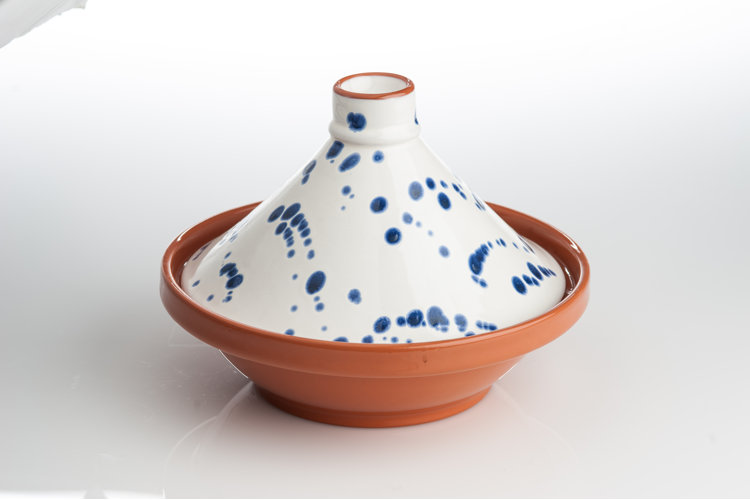
A tagine is a Moroccan cooking dish typically made of clay or ceramic. You can use a tagine on the stove or in the oven at low heat to slowly cook meat, vegetables, and stew. It has two pieces: a tall, sloped lid, and a broad, shallow bottom that doubles as a serving dish. Tagines make your dishes particularly flavorful because the lid prevents any moisture from escaping and taking flavor with it. Instead, condensation drips off of the sloped lid and back into the dish, preserving the flavor. The tagine does not require much attention while it cooks – you do not have to stir, because the top is closed off.
What Is a Tagine Used For?
The word "tagine" also refers to the traditional stew-like dish that is usually made in this cookware. The ingredients in a tagine vary greatly, but usually include a mixture of meat or fish with vegetables and fruit. You can use a tagine to make any food item more moist and flavorful, and you can use it in place of a pan or skillet in most cases. The major differences between using a tagine or a skillet are cook time and temperature. Traditional tagines made of clay or ceramic require low heat and will take much longer to cook – poultry takes about 2 hours, and beef or lamb takes about 4 hours.
What Is a Tagine Made Of?
Terracotta: Terracotta, or unglazed clay, is one of the traditional Moroccan materials used to make tagines. Terracotta tagines lend an earthy, rich flavor to your meals but require extra heat precautions such as low heat and a heat diffuser on flat cooktops.
Ceramic: Ceramic is now commonly used in Morocco to make tagines. Ceramic tagines often have beautiful designs painted on them, creating an aesthetic and functional piece of kitchenware. You should use low heat and a heat diffuser on flat cooktops with these tagines. Make sure to check that your ceramic tagine is intended for cooking, because some are meant only for decorative purposes.
Cast Iron: Cast-iron tagines are intended for use on modern stove tops – they do not need a diffuser and can be used with high heat settings. A cast-iron tagine is usually oven-safe, but make sure to check the product description to be certain. You can cook food more quickly in a cast-iron tagine and do not have to worry about cracks from high heat. Cast iron is known for even heating, rich flavor, and a long life-span.
Stainless Steel: A stainless steel tagine tolerates high temperatures and is often less expensive than tagines made of other materials. They do not need diffusers, are oven-safe, and are easy to clean. Stainless steel heats up more quickly than cast iron, but it does not impart the same richness of flavor.
Cooking Temperature for Ceramic & Clay Tagines
Clay or ceramic tagines will crack if they are exposed to high heat. Do not let the tagine sit directly on the heat source – if you are using an electric, induction, glass, ceramic, or any kind of flat stove top, you should use a heat diffuser or piece of aluminum foil to protect your tagine. Place your heat diffuser on your stove top as a buffer between the tagine and your heat source. Use a low to medium heat setting while cooking to maintain nothing more than a simmer. If the tagine is in the oven, the temperature should not exceed 325° F/160° C.
Remember not to expose your tagine to quick temperature changes. Avoid moving a hot tagine to a cold surface, using cold liquid in a hot tagine, putting a cold tagine in a preheated oven, or using hot liquid in a cold tagine.
You can also find tagines that are compatible with specific kinds of stove tops. Choosing a tagine compatible with your stove top can help prevent cracks from heat damage.
How Do You Season a Tagine?
Before you use a tagine, you must season it. You should continue to do so every 2–3 months. The proper seasoning method will vary depending on the material of your tagine. These instructions are for clay and ceramic tagines. Read your manufacturer's instructions for tips about seasoning your specific model.
- Soak the tagine in water overnight or for a minimum of 2 hours.
- Remove the tagine from the water when it is done soaking and dry it off. If your tagine is made of unglazed clay, rub both pieces inside and out with olive oil to protect it.
- Put your tagine in the oven before you begin to preheat it. Set a timer for 2 hours and turn on the oven to 300° F/150° C.
- When your timer goes off after 2 hours, turn off the oven and let your tagine cool completely. Wash the tagine in the sink with warm water and mild soap or vinegar. Let the tagine dry entirely and then coat its interior with olive oil.
Now your tagine is ready to use!
Tip!
Most tagines are cleaned by hand using warm water and soap or vinegar, then left to dry. However, you can also opt for a dishwasher-safe option. Make sure to store your tagine with the lid ajar to prevent mold growth.
How Do You Use a Tagine?
Now you’re ready to begin cooking with your tagine. One thing to keep in mind is that the bottom half of the tagine is your serving dish. You can plan out your presentation before you begin cooking.
Create a bottom layer. Place a layer of vegetables across the tagine dish, which acts as a base layer for the rest of the dish. Chopped onion, celery, or carrots are typical bases and can be flavored with chopped garlic.
Add olive oil. Add olive oil on top of the layer of vegetables. The amount will vary depending on your recipe and the size of your tagine.
Add your main element. Use meat or fish on top of your base vegetable layer. Place them in the center of the tagine and surround them with more vegetables around the sides.
Don’t forget seasoning. Make sure to season your dish to bring out flavor. Common spices used with tagine dishes include paprika, garlic powder, cardamom, coriander, allspice, and ground turmeric.
Add water or chicken stock. Using water or chicken stock helps keep your dish moist and succulent. Check your recipe for the exact amount you want to add.
Start cooking. Put the top on your tagine and put it on the stove, then turn the stove to low heat. Check your recipe for the cook time, which can range from 2 hours for poultry to 4 hours for thicker cuts of meat. Cook time will also vary depending on how much food you are cooking.
Serve your dish. When your meal has finished cooking, take your tagine off the stove and place it on a folded cloth in the middle of your table (to protect your tagine from temperature shifts). The bottom half of your tagine is now a beautiful serving dish! A tagine is typically a communal dish, and everyone can take what they want for themselves.
Tagine Terms to Know
PTFE-Free: PTFE is a material best known by its brand name, Teflon. If you heat PTFE cookware on high heat for an extended period of time, it can release fluorine, a chemical that is harmful to the respiratory system. A PTFE-free tagine does not use this material.
PFOA-Free: PFOA is a synthetic compound which has been found to be a carcinogen in animals and linked to other health problems. PFOA is sometimes used in the manufacturing of PTFE cookware. While it has not been proven that PFOA is harmful in cooking materials, try PFOA-free tagines to avoid this concern.
Tagine Size & Capacity
Tagines come in a variety of sizes depending on how many people you will be feeding. Here are the available sizes:
1–2 servings: under 2 quarts
3–4 servings: 2–3 quarts
4–5 servings: 3–5 quarts
Over 9 servings: Over 7 quarts
