What Is an Evaporative Cooler? Learn Why It’s Right for Your Home
Stay cool and comfortable.
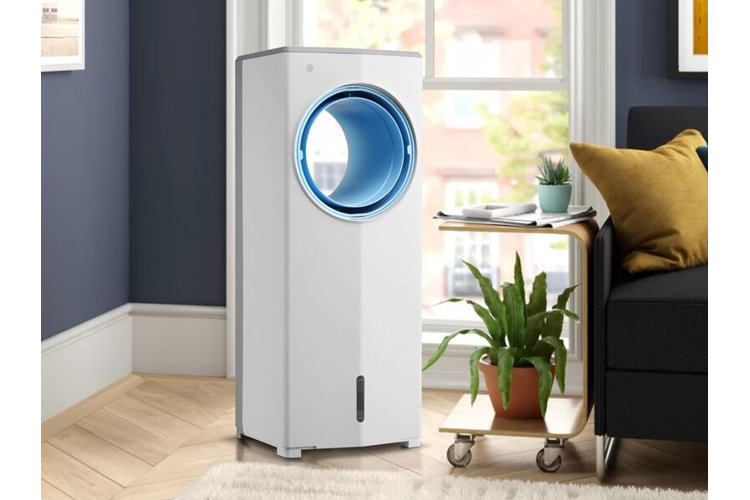
As the weather warms up, we're all looking for ways to beat the heat and keep our homes at a comfortable temperature. Evaporative coolers are a great option that use the natural processes of evaporation to create a cool breeze. With plenty of benefits, such as low energy cost and efficient cooling, evaporative coolers can be a better choice than traditional fans or air conditioners for keeping your home at a comfortable temperature. Keep reading to learn about the types of evaporative coolers, benefits, and features.
What is an Evaporative Cooler?
How to Choose the Right Evaporative Cooler
How to Maintain an Evaporative Cooler
What Is an Evaporative Cooler?
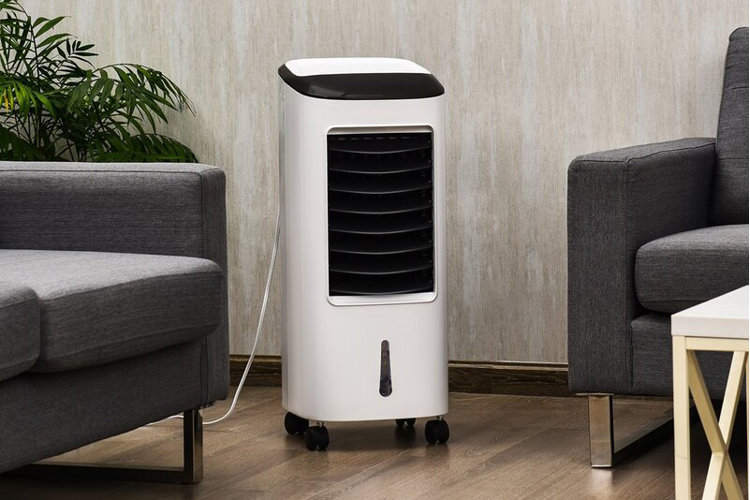
An evaporative cooler, also known as a swamp cooler, is an energy-efficient type of cooling unit that relies on evaporation. It is made up of three main components: a fan, a pump system that circulates water, and a pad that absorbs water to maintain moisture. An evaporative cooler operates by using the electric-powered fan to draw in hot, dry air from outside the unit and circulate the air through the damp pad before blowing the cooled air out into a room. The hot air meeting the damp cooling pad causes the cold water to evaporate into gas, which creates the cool air and the overall cooling effect on the room.
Since evaporative coolers use evaporation to produce cool air and add moisture, they are best suited for hot and dry climates with temperatures above 80°. This is because the evaporative cooler is most effective when it's pulling in hot, dry air that will most effectively evaporate the cold water inside the system. Humid air is less effective at producing the cooling effect, since it already has moisture in it and therefore won’t as well.
Evaporative coolers are a great alternative to fans or air conditioners because they actually cool the room without using up too much energy, so they’re great for keeping cooling costs low. Traditional fans often only circulate air and don't necessarily affect the overall temperature of a room. Evaporative coolers can oscillate side-to-side like traditional fans, giving you full-coverage cooling. Though air conditioners can lower the temperature of a room, they typically use much more energy – which translates into a higher utility bill – than an evaporative cooler to cool an indoor space.
Note: Unlike when using a traditional air conditioner, you should keep a window open while using an evaporative cooler. Because evaporative coolers work best with dry air, they need cross-ventilation and fresh air to keep a steady flow of cool air and avoid recirculating the humid air.
How to Choose the Right Evaporative Cooler
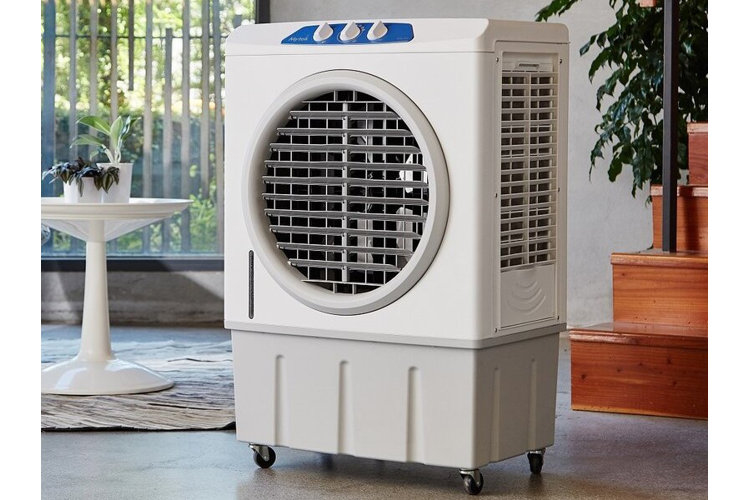
Evaporative coolers come in different mount types and sizes to suit your space. To help you find one that meets your needs, we've highlighted a few things to consider when browsing for an evaporative cooler.
Mount Type
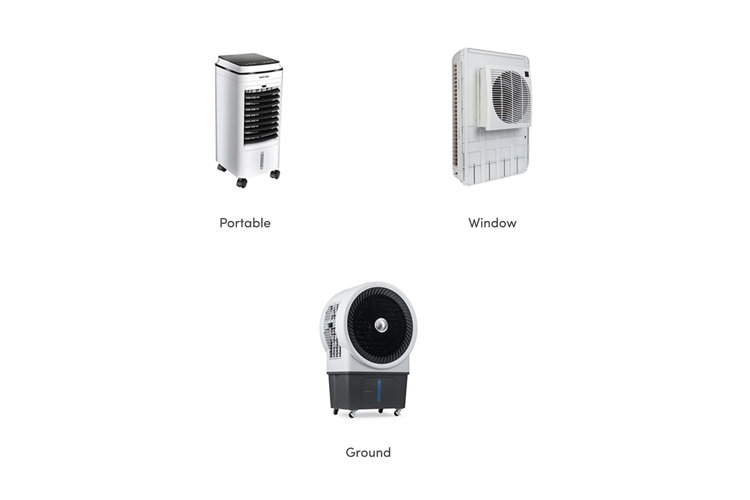
When choosing an evaporative cooler design for your home, it comes down to which type of installation you'd prefer. There are three main mount types to choose from: portable, window, and ground.
Portable: Portable units are the most popular type of evaporative cooler. Portable evaporative coolers come in a variety of sizes to accommodate different spaces. They simply plug into an outlet and often have wheels to make transporting them from one room to another easy.
Window: Window-mounted models create a sidedraft, meaning that the cool air blows from one fixed side of the room, unlike with a portable model that can be moved around the room. Since it's mounted in a window, a window-mounted cooler takes up no floor space and always has open access to fresh air.
Ground: Ground units are installed on the ground to give off an updraft air flow and are more accessible for maintenance than window-mounted units. Similar to portable units, they sit on the floor and can be mounted on optional wheels for easy mobility.
Pad Type
The cooling pad is an essential component in the cooling process. Cooling pads often range in cost and durability, so this is an important factor to consider when choosing which evaporative cooler is right for you. Since evaporative coolers are designed to use a specific type of cooling pad, it's best to check the specifications listed for each cooler.
Aspen Wood: Aspen wood pads are the most common type of cooling pad. These pads are made of wood shavings, which makes them a natural and affordable option. Aspen wood pads need to be replaced more frequently than synthetic pads.
Synthetic: Synthetic pads are made of synthetic fibers like polyester instead of wood shavings, which helps them last longer. Synthetic pads can often be washed and reused because of their durability and mold-resistant properties.
Rigid Media / Cellulose: This type of cooling pad is made of specially-engineered cellulose paper to produce optimal cooling. The absorbent paper is folded into a sturdy cross-fluted design that maximizes the amount of evaporation. They typically require less water and less energy than other types of cooling pads.
Cool Area
The size of your space is another key consideration when choosing which evaporative cooler is best for your home. Make sure to measure your space, so that you can choose the evaporative cooler with the right coverage. Evaporative coolers are rated by the area of square feet that they cool, which makes it easy to find one that suits your space.
Key Features
Evaporative coolers come with a variety of convenient features to consider. From remote controls to programmable timers, these features make evaporative cooler designs even better.
Ice Compartment: Evaporative coolers that feature an ice compartment can generate cold air faster. The dedicated ice compartments make the cooling pad even cooler, which produces a blast of cold air and helps cool down your space quicker.
Low Water Indicator: The low water indicator alerts you when your evaporative cooler requires a refill.
Quiet Mode: Avoid excess noise with the quiet mode feature. This feature is ideal for quiet spaces like home offices or bedrooms.
Remote Control: Use a remote control to turn the evaporative cooler on and off easily. The remote control also allows you to change the air speed, temperature, and oscillation from side-to-side without having to get up.
Programmable Timer: Set a programmable timer so that your evaporative cooler runs during the warmest part of the day or through the night. This is a great feature for areas with transitional weather, and it will help lower your energy costs.
Wheels / Casters: Wheels or casters make it quick and easy to move your evaporative cooler from one place to another. This applies to portable coolers and ground coolers.
How to Maintain an Evaporative Cooler
Proper maintenance will keep your evaporative cooler running smoothly and working for a long time. Avoid repair costs by regularly draining and cleaning your evaporative cooler. Sediment and minerals can build up and should be removed by regular cleanings to keep your cooler working at an optimal level. We also recommend deep-cleaning the evaporative cooler each season to ensure it operates efficiently for several months at a time.
Like any other type of cooling system, it's also important to check the different parts of the evaporative cooler on a regular basis. About once a month, check the pad, filters, reservoir, and pump to make sure each part is working properly and doesn't need to be replaced.
To clean the evaporative cooler, wipe down the exterior with a cloth and warm water. Drain the water reservoir, wipe the inside, and check for any buildup. Remove the filters and cooling pads. Wash the filters with soap and water, then wipe down the filter compartment and the frame that holds the cooling pads. It's best to replace the cooling pads twice during the season you use it, or once a month if you use the evaporative cooler continuously throughout the year.
At the end of the cooling season, it's important to clean and dry the unit completely. Turn off the unit, unplug it from the outlet, and disconnect the pump from the motor. Drain the water supply before washing the exterior, water reservoir, and filters with soap and water. Let each component dry fully before reassembling and storing the evaporative cooler in a dry, covered space.
Tip!
Read our guide How to Cool Down a Room for even more tips on keeping your home at a comfortable temperature.
