What Is Japandi Style?
Two favorite aesthetics combined.
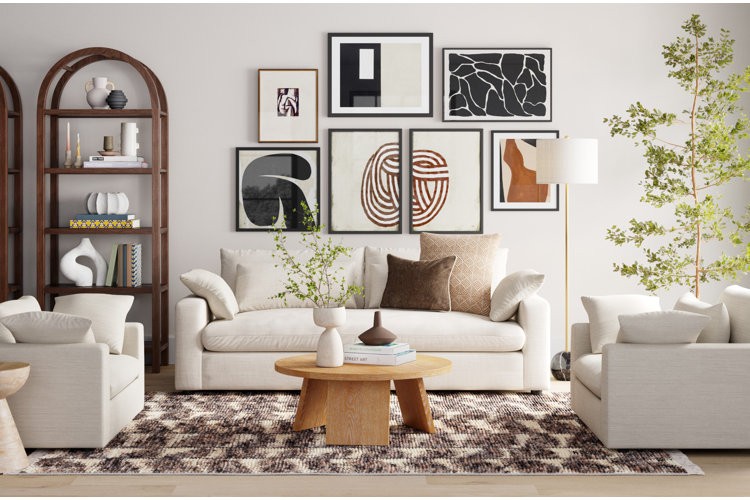
If you're a lover of the Japanese and Scandinavian home design styles, then meet your new favorite style – Japandi. Keep reading to get familiar with this earthy minimalistic aesthetic.
What Is Japandi Style?
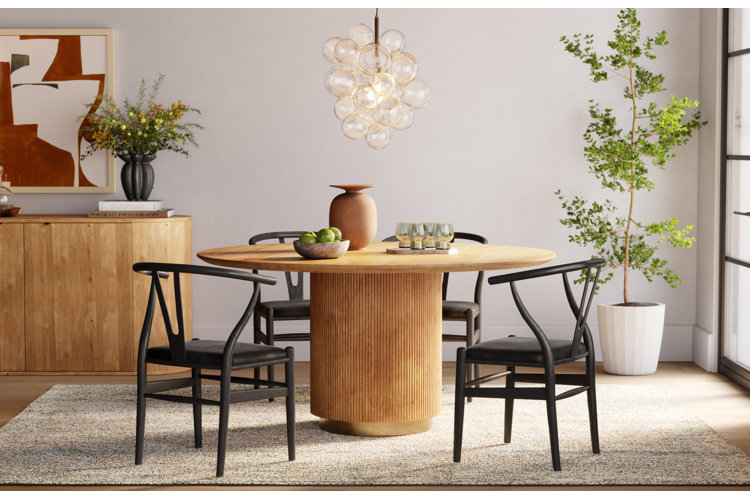
(Shop this image: modern pedestal dining tables, black wishbone dining chairs, faux trees with planters, sputnik chandeliers, and modern wood sideboards.)
Japandi style is a minimalist design style that combines the elegance and natural beauty of traditional Japanese design with the sleek and clean notes of Scandinavian 'Scandi' style. When brought together, you get Japandi – a style that's warm and inviting yet minimalistic at heart.
How to Achieve Japandi Interiors
Here are the fundamental ways to transform your home into a Japandi retreat.
1. Reduce Clutter Wherever Possible
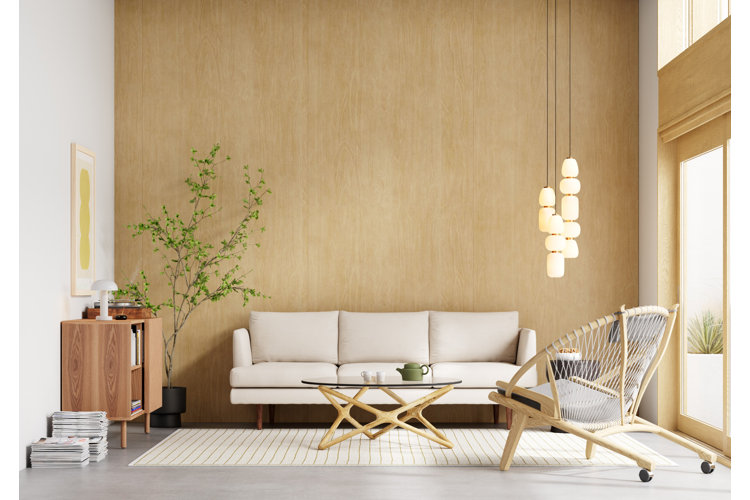
(Shop this image: wood wall paneling, modern beige sofas, glass abstract coffee tables, white striped rugs, boho accent chairs, and faux trees with planters.)
First, clear out the clutter, one room at a time. Doing this will enhance the room's natural light and give your space a cleaner, brighter appearance. Opt for storage furniture, cabinetry, decorative boxes, and baskets to help organize and tuck away excess items from view. This allows you to create a free-flowing room that's open and spacious.
Tip!
Hide clutter and add aesthetic appeal with a shoji screen room divider.
(Shop this image: modern pedestal dining tables, wishbone dining chairs, black rattan chandeliers, and striped rugs with tassels.)
While Scandinavian design is all about monochrome rooms in shades of white, cream, and beige, Japandi changes things up by introducing more rich browns, dark grays, and black accents. These colors add a bit more visual depth and rustic vibes, which helps define the style and sets it apart from 'Scandi'. For success, start with a warm neutral palette with shades of beige, white, or cream. Use these as the main furniture, wall, and floor colors. Then, work in deeper shades of brown, gray, or black through lighting, decor, or floor coverings. Pops of muted green, blue, pink, and orange are also welcomed.
(Shop this image: white modern chaise lounges, modern pedestal coffee tables, mid-century modern leather chairs, striped rugs, jute poufs, and jute area rugs.)
Japandi likes to combine a lot of materials that pay homage to nature while also adding texture to create a well-balanced space that's sleek yet inviting. Materials like wood (especially oak), stone, rattan, and bamboo are big in this space and blend together for a harmonious design. Wood is a great material for the biggest pieces of furniture and pairs well with stone and rattan/bamboo accessories for a nice complement. Plants are also a great natural textural element to include. If you want to really embody the natural side of Japandi, add real plants to your home to nurture and blossom in your space.
Similarly, furniture upholstery, rugs, and throw pillows/blankets are typically made with natural fabrics like cotton, linen, or wool – especially wool in a textured boucle weave.
(Shop this image: light wood beds, light wood nightstands, light wood dressers, white bedding, and oversized modern wall art.)
Low-profile, modern furniture is a must-have in any Japandi aesthetic because it contributes to an open light-filled room, it has clean streamlined edges, and it lacks any embellishments that could visually clutter the space. These pieces are usually made with light wood or bamboo – a great sustainable alternative to traditional hardwoods.
(Shop this image: brown abstract wall art, free-form wood coffee tables, beige mid-century modern sofas, and mid-century modern accent chairs.)
Wabi-sabi is a design principle often used in traditional Japanese interiors, which focuses on finding beauty in nature's imperfections and prioritizing earthy color schemes. In Japandi spaces, this looks like raw-edge or free-form wood tables, cracked stoneware or abstract sculptures made from natural materials, and modern artwork featuring shades of brown, cream, white, gray, or black. Make sure to keep decor to a few stylish pieces to prevent cluttering the space.
