What Is Porcelain? Your Guide to a Timeless Home Material
A true household staple.
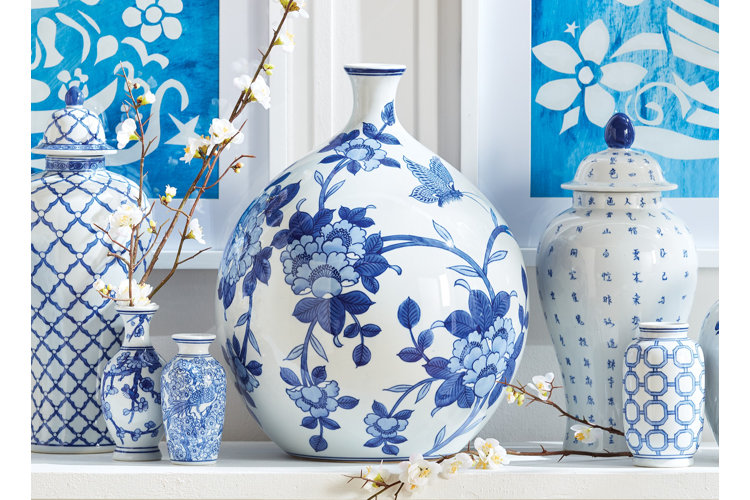
Porcelain is a fine, dense ceramic made by firing kaolin clay with feldspar and silica at very high temperatures. The result is a hard, non-porous material that works beautifully for everyday dinnerware, bathroom and kitchen tile, and decorative accents. Compared with standard ceramic, porcelain is typically stronger, less absorbent, and more resistant to staining – making it a practical choice throughout the home. Read on to learn more about what porcelain is and how to use it in your home.
What Is Porcelain Made Of?
A Brief History of Porcelain
Types of Porcelain for Your Home
Benefits of Porcelain as a Home Material
Porcelain vs. Ceramic vs. Bone China
How to Choose Porcelain for Your Home
Porcelain Care & Maintenance
Frequently Asked Questions
What Is Porcelain Made Of?
Key Ingredients of Porcelain
Porcelain is made of a combination of kaolin clay and several minerals that give it its characteristic white sheen and durable composition. Minerals commonly used in porcelain are:
- Quartz
- Sand
- Feldspar
- Magnesium
- Bone Ash
How Is Porcelain Fired & Vitrified
Once potters transform the porcelain clay mixture into an intricate shape or design, they fire it in a kiln. Porcelain is fired in a kiln at temperatures of 2200°F–2650°F before glazing to ensure it reaches its maximum hardness and vitrified (glass-like) look.
A Brief History of Porcelain
Over time, porcelain has become a durable staple in homes all over the world, but its origins date back over 2,000 years ago.
Origins in China and Global Spread
Porcelain originated in China over 2,000 years ago with the first primitive forms being made between 618-907 CE, and the more recognized forms being refined between 1279-1368 CE. It was originally made of kaolin clay and petuntse, a feldspathic rock also known as china stone.
The word porcelain comes from porcellana, which is the word Marco Polo used to describe the pottery he saw while in China. It was first introduced to Europe in the 14th century, upon which European craftsmen started to develop their own varieties using other minerals.
Types of Porcelain for Your Home
There are three types of porcelain you might encounter as you browse. Here's an overview of each option:
- Hard-Paste (True) Porcelain: This type of porcelain is similar to the original Chinese porcelain variation, which is why it's also called "true" porcelain. It is extremely durable because it's fired in the kiln at 2650°F and is made using a combination of kaolin and petuntse stone, which is native to China and contains a variety of minerals like mica, quartz, and feldspar.
- Soft-Paste (Artificial) Porcelain: This variety of porcelain is referred to as "soft" or "artificial" porcelain due to its composition of kaolin clay and ground glass, making it less-durable and more affordable. Soft-paste porcelain is fired at lower temperatures – around 2200°F. It is also known as European porcelain, as it was originally created in Europe in an attempt to recreate Chinese porcelain.
- Bone China: Bone china originated in 18th-century England. It is made of bone ash, usually derived from cattle bones, along with kaolin and other minerals. This combination is easy to fire at a lower temperature (around 2300°F), while still producing an ultra-durable material. The bone ash seal cracks in the pottery, making it more durable and enhancing the glossy or translucent appearance. For this reason, bone china is typically more expensive than traditional porcelain.
Benefits of Porcelain as a Home Material
With a better understanding of what porcelain is, let's discuss why you should use it in your home and decor.
Durability & Heat Resistance
Porcelain is an ultra-durable material that can last for decades when well cared for. Its nonporous properties make it less susceptible to scratches, chips, or breakage, so porcelain pieces will look pristine after years of use.
Stain Resistance & Easy Cleaning
Its nonporous composition makes it less likely to stain or suffer moisture damage – that's why it's so popular for bathroom tiling and dinnerware. Porcelain is easy to wipe down or dust since it doesn't trap stains, dust, or bacteria. Most porcelain dinnerware can go in the dishwasher. However, we recommend hand-washing painted porcelain items unless they’re specified as dishwasher-safe by the manufacturer.
Elevated Style & Pattern Choices
Porcelain has a sleek, glossy appearance that elevates any space. Whether fired in the kiln to appear translucent), vitrified, or opaque, porcelain has a refreshing sheen and milky white composition. Its white finish and fine-grained pattern makes it easy for artisans to paint and achieve bold colors, giving you many designs to choose from.
Porcelain vs. Ceramic vs. Bone China
Porcelain vs. Ceramic
Technically, porcelain is considered a type of ceramic material because it's made from raw natural materials. However, there are some main characteristics that set it apart from other ceramics. The differences come down to the materials, firing temperature, and durability. Other ceramics use coarser materials and are fired at lower temperatures which doesn’t give them the same vitrification as porcelain. Get a more in-depth understanding of the difference with our guide on Porcelain Tiles vs. Ceramic Tiles.
Porcelain vs. Bone China
Bone china is considered a type of porcelain that uses bone ash and kaolin instead of the traditional mixture of kaolin and petuntse stone. While they both produce the same vitrified, white appearance, bone china can look slightly more cream-colored because of the bone ash. The main differences between bone china and traditional porcelain are their firing needs, durability, and price point. Bone china can be fired at lower temperatures while achieving the same results as traditional porcelain. Similarly, the inclusion of bone ash makes bone china much more durable than porcelain as it helps solidify and strengthen the clay mixture. Ultimately, bone china is used to make fine china pieces and is usually more expensive than traditional porcelain due to its quality.
How to Choose Porcelain for Your Home
Porcelain has many uses in the home. Whether you want to wow guests with stunning porcelain serveware, or want to install a durable backsplash, there are many ways to use porcelain in your home.
1. Porcelain Dinnerware
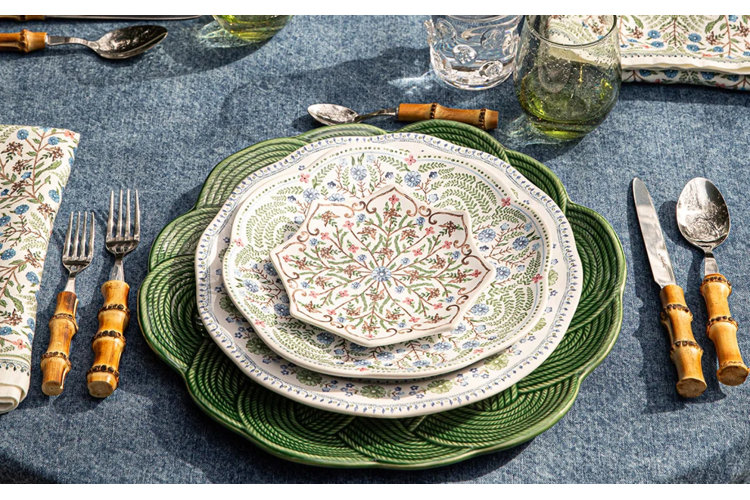
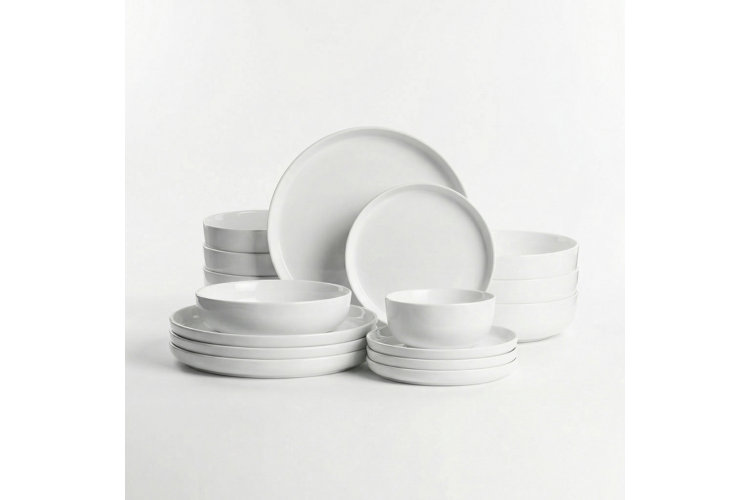
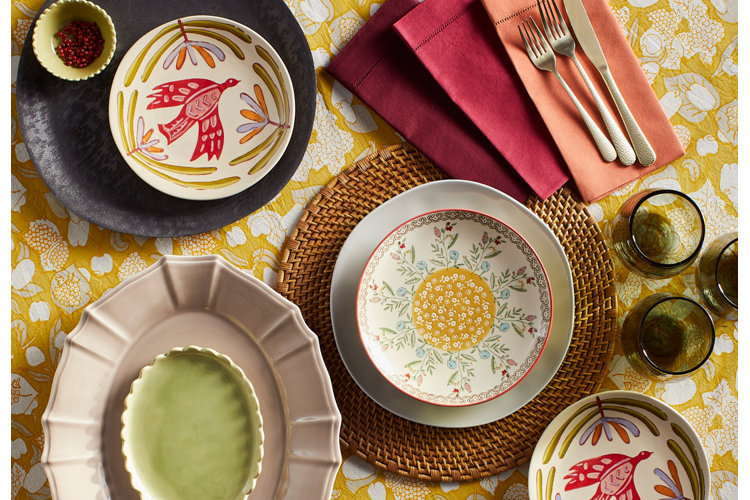
When choosing a casual or formal dinnerware set, porcelain is a beautiful and durable option that can last for years. Aside from plates and dishes, porcelain's easily-moldable composition allows artisans to create drinkware in a variety of intricate shapes and designs. Invest in a set of porcelain dinnerware plates or beautiful porcelain mugs to make every cup of coffee feel special.
Porcelain Dinnerware Buying Tips:
- Look for dishwasher safe options for easy clean up
- Choose bone china for an ultra durable option
- Choose painted porcelain to match your kitchen color palette
- Choose porcelain mugs for unique and durable pieces
2. Porcelain Serveware
Always be ready to host in style with porcelain serveware. Display appetizers, salads, desserts, and buffet items on stunning porcelain serving trays or in bowls to pass around the table, family-style. Whether you're a novice chef or a takeout enthusiast, porcelain serveware is sure to level up every dinner party.
3. Porcelain Storage Containers
Porcelain’s nonporous composition makes it the perfect material for kitchen countertop storage and bathroom accessory sets. Store dry goods like sugar, coffee beans, or flour in porcelain containers to avoid worrying about moisture or bacteria getting in and ruining them. Rest assured that your porcelain soap dish or toothbrush holder can stand up to constant moisture-exposure.
4. Porcelain Home Decor
Decor is another great way to incorporate porcelain in your home. Add traditional charm to your home with a porcelain vase that features a blue toile pattern. Take a modern approach to this timeless material with a sculpted porcelain table lamp.
5. Porcelain Tiles & Bathroom Fixtures
Porcelain is a popular material for bathroom or kitchen remodels because it is ultra-durable and nonporous. This means it can come in direct contact with water and not crack, break, or develop bacteria. Many essential fixtures, such as bathroom sinks and bathtubs are made of porcelain. This material’s durability and moisture-resistant properties also make it a popular choice for bathroom or kitchen tiles. Porcelain tiles come in a range of colors, shapes, and designs to accommodate a wide range of home interiors.
Porcelain Care & Maintenance
Porcelain is generally a low maintenance material, but sticking to these care tips can help you keep your porcelain pieces and tile looking brand new.
- Use Gentle Cleaners: Skip harsh cleaners such as bleach, and stick to water and gentle cleaners or dish detergents to wipe down your porcelain items. Use gentle sponges or cleaning cloths, and avoid abrasive scrubbing pads.
- Avoid Water Spots: Dry your porcelain thoroughly with a microfiber cloth to avoid water spots and streaks.
- Remove Metal Marks: Metal cutlery can leave marks on porcelain plates and dishes. You can remove these by gently rubbing a paste of water and baking soda on your porcelain dinnerware.
- Avoid Temperature Shock: While porcelain is heat-resistant, it can crack or shatter when placed in rapidly changing temperatures. Avoid running hot porcelain under cold water or vice versa.
Frequently Asked Questions
Is Porcelain the Same as Ceramic?
Technically, yes – porcelain is considered a specialized type of ceramic material because it is made from raw natural ingredients. However, it isn't completely identical to standard ceramics. Porcelain is made from a fine white clay called kaolin and fired in a kiln at much higher temperatures – from 2200°F to 2650°F. This intense high-heat process gives porcelain its signature glass-like, nonporous finish, making it significantly harder and more durable than traditional ceramics.
Is porcelain durable for everyday use?
Absolutely! Porcelain is an ultra-durable material that is built to last for decades when well cared for. Because it is nonporous, it is highly resistant to everyday scratches, chips, and stains. Most porcelain dinnerware is tough enough to go in the dishwasher, making it a perfect, low-maintenance choice for daily meals and busy households.
What is porcelain used for?
Porcelain is used for a variety of household items and building materials, including dinnerware, serveware, home decor, tiles and bathroom or kitchen fixtures.
