What Size Ceiling Fan Should You Get?
Pick the perfect ceiling fan the first time.
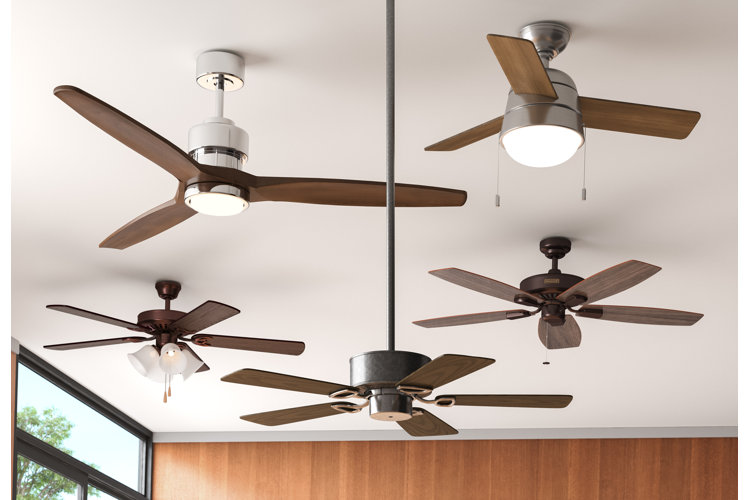
For a cool breeze on a summer day, a ceiling fan can bring comfort both indoors and outdoors. Whether you are replacing an old fan or remodeling an entire room, follow our guide to understand how to choose the correct ceiling fan sizes.
1. Understand Ceiling Fan Measurements
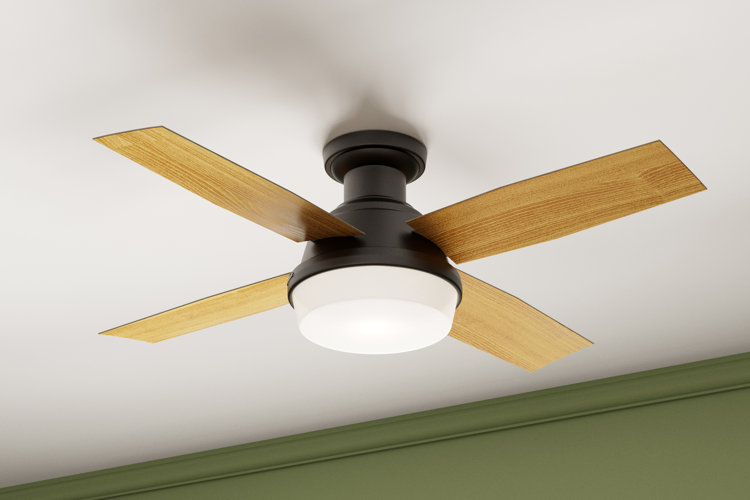
Ceiling fans are measured by diameter – the distance from the end of one blade to the end of the opposite blade. While there is no one standard size, the most ceiling fans range between 50" – 55" in diameter. Choosing the right ceiling fan size ensures optimal air circulation, energy efficiency, and comfort in your home.
Tip!
For more information on types of ceiling fans, read our Ceiling Fan Buying Guide.
2. Consider Room Size
The best way to determine what size ceiling fan you should choose is to know the size of the room. Begin by measuring the length and width of the room you’d like to add a fan to, and use the guide below to determine the ideal fan size.
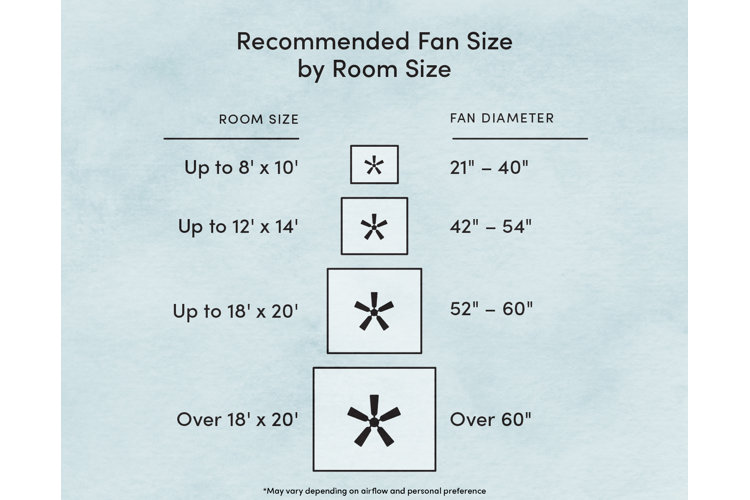
Small: Rooms that are no more than 8' x 10' should have ceiling fan sizes between 21" and 40" in diameter. Small rooms include dens and kitchen nooks.
Medium: If your room is up to 12' x 14', stick with a fan that is 42" – 54" in diameter. Medium rooms include bedrooms and dining rooms.
Large: A room that is up to 18' x 20' should feature ceiling fan sizes 52" – 60" in diameter. This includes living rooms and large bedrooms.
Great: Great rooms are more than 18' x 20' and should include a fan larger than 60" in diameter. Great rooms are characterized by open floor plans and large foyers.
3. Factor in Mount Types
A mounting system should be chosen based on the room's height and ceiling slope. A ceiling fan should be positioned between 7' and 9' above the floor for optimal airflow. Most mounts can be adjusted for an easy way to get that perfect height. Here are three mount types available for ceiling fans.
Flush Mount
This mount type has the ceiling fan connected directly to the ceiling. We recommend a flush mount if your ceiling is under 8' high.
Downrod Mount
A downrod mount has a long pole that connects the fan to the ceiling. Use the following chart to determine how long your fan's downrod should be depending on the room's ceiling height.
Angled Mount
If your ceiling is sloped, choose an angled mount. They are designed so that the blades do not hit the ceiling or the walls, but the fan blades should be at least 18" away from any walls for safety. The mount consists of a regular downrod and a special ceiling fan adapter that firmly attaches to your ceiling. The downrod's length will vary depending on the slope of your ceiling and the size of your fan's blades.
In order to calculate the slope of your ceiling, divide the rise by the run. The rise is the difference between the highest point from the floor to the ceiling and the lowest point from the floor to the ceiling. The run is the length between these two points.
Rise = A − B
Run = C
Slope (°) = Rise / Run or (A − B) / C
Once you've calculated the slope of your ceiling, use the following chart as a reference for the length of the downrod you'll need. Note that your fan still needs to be at least 18" away from the nearest wall and a minimum of 7' from the floor.
Tip!
Many ceiling fans come with features that allow you to customize your setup. Adjustable height and sloped ceiling–compatible ceiling fans make it easy to find one that’s the ideal height for your ceiling, while dimmable designs have built-in lighting that you can set to your preferred brightness.
(Shop this image: black ceiling fans, teal area rugs, faux leather ottomans, and lounge chairs)
Now that you've determined the correct ceiling fan sizes for your rooms, play around with style, finish, blade type, light fixture, and features to customize the perfect ceiling fan. After you've found the right ceiling fan size, read our guide How to Install a Ceiling Fan for step-by-step instructions for a smooth installation, or check out Which Way Should the Ceiling Fan Spin? The Best Ceiling Fan Direction for Each Season for tips on optimizing your ceiling fan for different seasons.
