Where to Put a Microwave in Your Kitchen
Convenience is key.
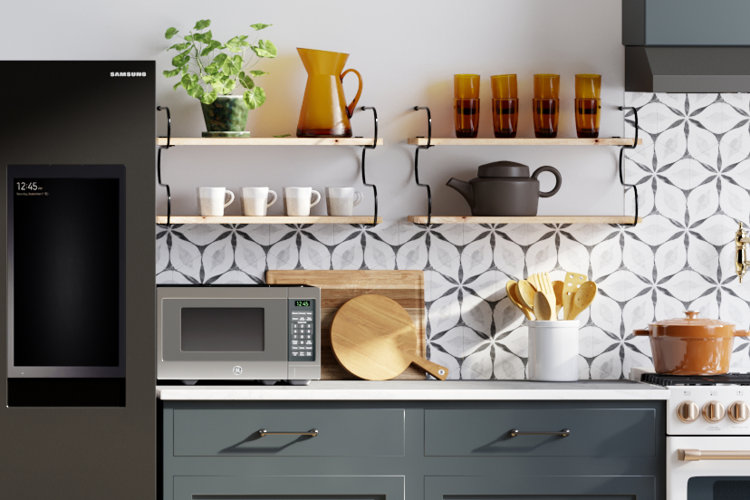
If you’re curious where to put a microwave in the kitchen, you’ve come to the right place. Follow the steps below to help you find the ideal placement for a microwave so your new appliance is convenient, accessible, and safe.
How to Decide Where to Put a Microwave in Your Kitchen
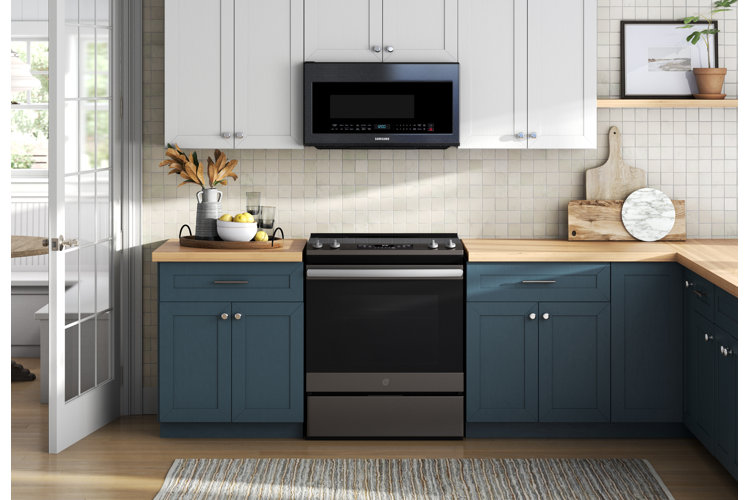
Installation type, available counterspace, and accessibility needs will affect the placement of your microwave. Here are some key considerations to make to determine the ideal appliance layout for your kitchen.
Tip!
Before determining where you can put a microwave in your kitchen, you’ll need to find the proper size and style appliance for your home. Read our guides How to Choose the Best Microwave For Your Kitchen and Microwave Sizes: How to Choose the Right Microwave Dimensions to get started.
1. Identify the Type of Microwave You Have
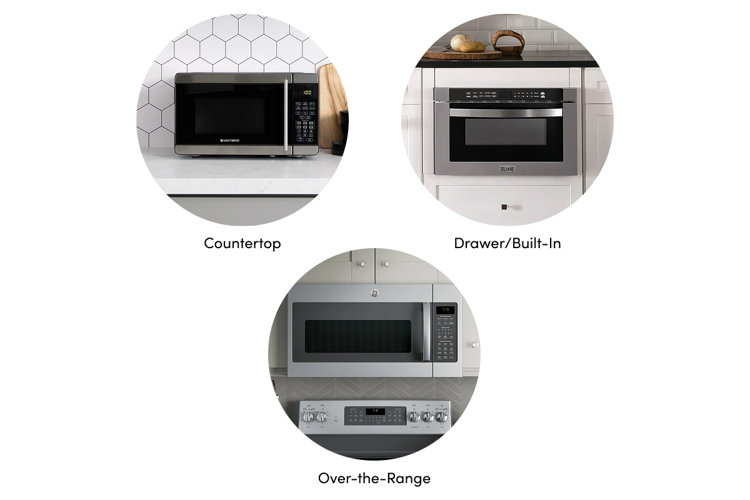
The type of appliance you have or plan on buying will likely dictate where you put a microwave in your kitchen. Consider the installation methods of these three types of microwaves and how they might fit into your kitchen layout:
Countertop: Countertop microwaves are the most flexible in terms of where you can place them in your kitchen, though they must be close to a power outlet. A standard countertop microwave is usually 21" – 25" wide and 16" – 20" deep, so you’ll need enough counter space to accommodate it. Because they take up a significant amount of counter space, these microwaves are often found in larger kitchens.
Drawer/Built-In: Drawer and built-in microwaves are intended to be installed into your kitchen cabinets. Their placement depends on your ideal height for the appliance and if there is enough clearance in the front to open them. Otherwise, they are flexible in terms of placement options but are best suited for open-concept kitchens due to their sleek profile.
Over-the-Range: Over-the-range microwaves are more limited in where you can place them because they are designed to be placed over your range, as the name explicitly states. They also function in place of a range hood and can be used for ventilation while you cook on the stove top. Over-the-range microwaves are commonly found in small kitchens where counter space is limited and multifunctional appliances are coveted.
Tip!
Considering placing a microwave over your range? Be sure to read How to Measure for an Over-the-Range Microwave & Prepare for Installation and
How to Install Over-the-Range Microwaves for comprehensive guides to prepping and installing your new appliance.
2. Assess Your Workflow & Appliance Proximity
Placing a microwave near your refrigerator can help maximize the efficiency of your kitchen workspace since foods often travel from the refrigerator or freezer to the microwave. An over-the-range microwave will obviously be close to your range, but built-in microwaves are also often installed over wall ovens. Keeping your microwave nearby your range or oven can help you multitask while cooking for maximum convenience and efficiency.
3. Factor In Safety Precautions
Always maintain at least 3" of clearance on each side of your microwave for proper ventilation. Avoid placing your microwave near your kitchen sink or dishwasher as the proximity can cause safety concerns in your kitchen. Water mixed with electricity is a dangerous combination and can increase your chance of electric shock or fire should you accidentally splash your microwave and its electrical components while washing dishes.
4. Consider the Accessibility Needs of Your Household
Consider the members of your household and who needs access to your microwave. If you have children, consider placing your microwave up high to keep it out of their reach or lower if you want them to use it independently. Tall people may prefer a microwave that’s higher up, while shorter people, wheelchair users, or those with limited mobility would benefit from something counter-height or lower.
5. Get Creative With Your Microwave Placement
If you need extra space to accommodate a microwave, consider using a kitchen cart or baker’s rack to house your small appliances. These kitchen furniture fixtures can be a helpful storage solution if your kitchen is short on counter space but you don’t have the budget for a built-in or over-the-range microwave.
Alternatively, some may prefer to place a microwave out of sight to cut down on kitchen clutter. Placing a microwave in an appliance garage or inside a walk-in pantry can keep your microwave nearby but hidden from view.
Frequently Asked Questions
How much ventilation do microwaves need?
You should leave at least 3" of clearance around a microwave to provide ample ventilation.
Can a microwave be installed too high?
It’s best to place a built-in microwave no higher than eye level. This helps ensure you can place food inside and take it out safely, reducing the risk of burns or spills.
Can you place a microwave on the countertop?
Yes, you can place a microwave on a countertop. Though the freestanding design requires no installation and allows you to move it easily, it can take up valuable counter space and create visual clutter. If you plan on putting your microwave on the counter, make sure to maintain clearance and avoid placing it too close to the edge of the counter.
