Which Is the Better Pizza Peel? Wood vs. Metal
Learn how these materials compare.
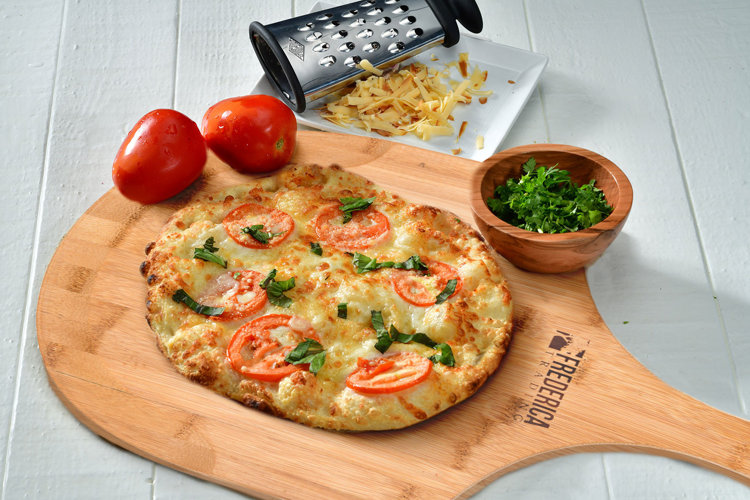
Hosting pizza night at home? Don’t forget to add a pizza peel to your tool belt for the best homemade ‘za. When choosing between pizza peel: wood vs. metal, there are a few factors to consider – durability, heat resistance, and maintenance. Read on to learn the difference between wood and metal pizza peels and determine which one fits in your kitchen.
Tip!
For more details, before your buy, check out our guide, What Is a Pizza Peel?
Wood vs. Metal Pizza Peels: Which Is Better?
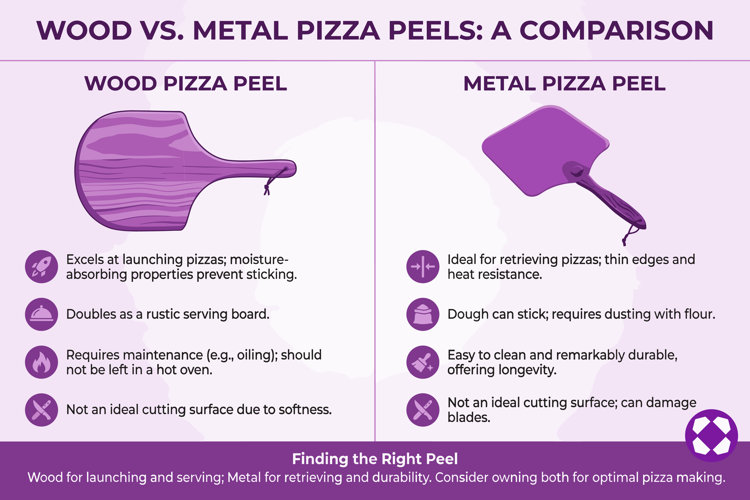
Compare metal and wood pizza peels using the chart above, or keep reading below for more detailed considerations.
Wood Pizza Peels
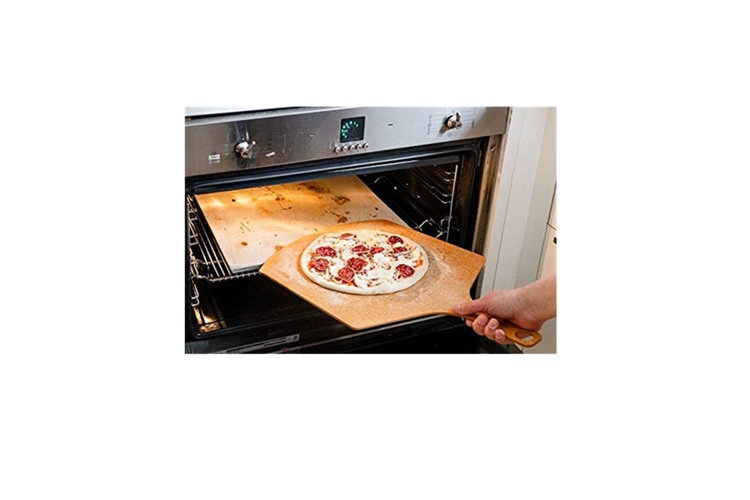
Wooden pizza peels are a great tool to have on pizza night. They have an aesthetic appearance which can double as kitchen decor and doesn’t need to be stored away. The wood material ensures that the taste of the dough remains unaffected and also provides fewer issues with the stickiness of the dough on the peel. The rough, uneven texture of wood allows air to pass and keep the dough from sticking and can be easily deployed onto the baking tray without the need for a pizza screen or flour.
Metal is another pizza peel material that has several benefits. Different from wood, metal is lightweight making it easier to carry your pizza in and out of the oven. The surface is also a good conductor of heat keeping your pizza hot for longer and its durable material can even withstand cutting right on it. Pizza peels made from metal materials like steel or aluminum have more durability than wood and are easier to clean, maintain, and store.
Tip!
Metal pizza peels can sometimes cause the dough to stick, so we recommend using a pizza screen or to dust the peel with some flour before using.
When it comes to pizza night, determining the perfect pizza peel: wood vs. metal, comes down to how you like to operate in your at-home pizzeria. Both materials offer several benefits and ultimately result in the best homemade pies.
