What Is a Wok?
Your go-to for all things wok.
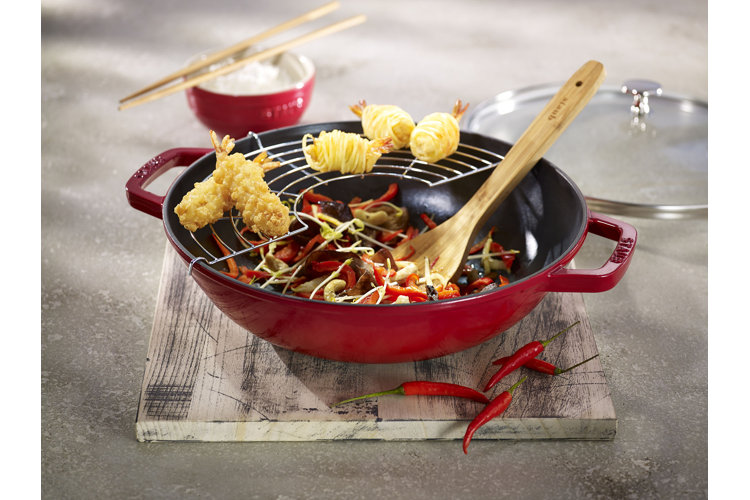
Interested in expanding your kitchen's culinary arsenal with an Asian wok? You may be wondering “What is a wok?”, exactly. Look no further – this guide is for you. Adept at producing intensely flavorful and restaurant quality food of many kinds, an Asian wok is an investment in divine cooking. Learn all about the best materials, sizes, and features by reading this guide so you can confidently know how to cook with a wok to make your favorite Asian-inspired recipes.
What Is a Wok?
Best Wok Materials
Best Wok Diameters
Best Wok Features
What Is a Wok?
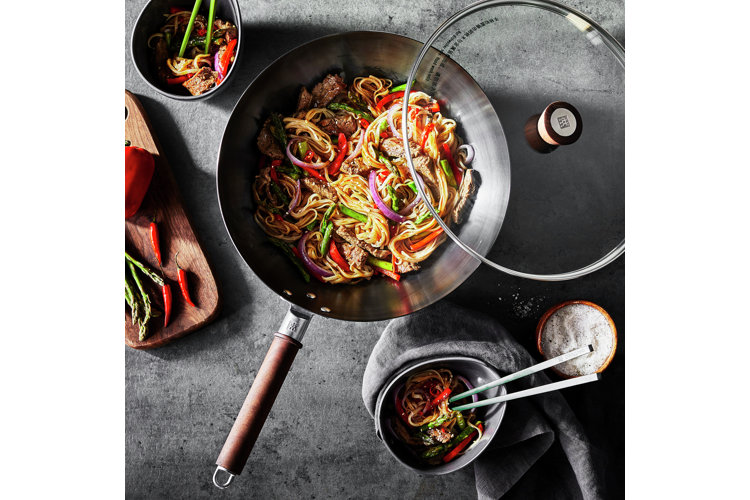
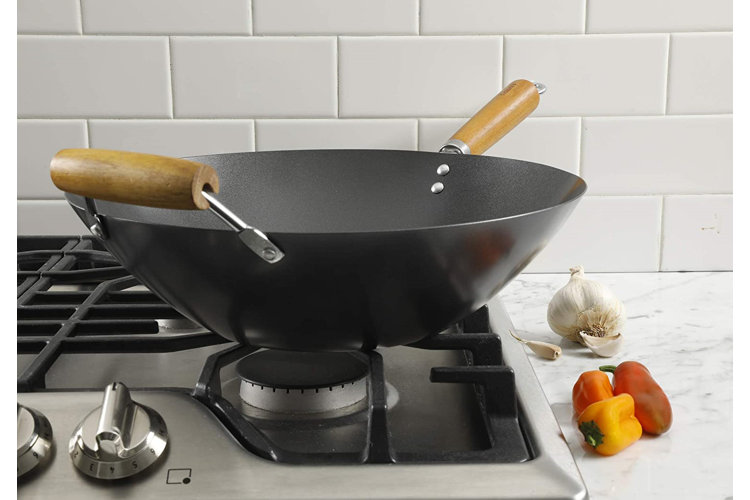
What is a wok and where did it come from? Thought to have originated in China thousands of years ago, the wok is a highly versatile stove-top pan with a rounded bottom and tall, curved sides. These features create excellent heat distribution, even over a very small flame.
What is a wok in modern times? Nowadays, due to the construction of modern restaurant and home stove tops, these pans are being designed with a slightly flat bottom that allows them to balance on flat stove tops more securely. These flat bottom pans can come with two handles on either side or one long handle. What is a wok with two handles and how is it different from a wok with one? Pans with two handles require that you toss food with a cooking utensil, while pans with a long handle enable you to toss ingredients without using a cooking utensil.
What is a wok with a lid used for? Some pans come with a matching lid, which allows you to steam ingredients. Though well known for their ability to make excellent, evenly cooked stir-fried food, they can also be used to steam, boil, deep-fry, braise, and more due to their deep, flat bottom shape and ability to withstand high temperatures.
Best Wok Materials
Asian woks come in a variety of different materials. Traditional chefs consider cast iron and carbon steel the two best materials for flavor and even heat conduction. Seasoning (a treatment of the pan's surface with heated fat that imparts both flavor and nonstick properties) and its ability to conduct searing heat allow it to produce "wok hei" in completed dishes. Wok hei translates to "breath of the wok" and indicates the presence of a signature, sought-after smoky flavor created when oil and water droplets ignite and come in contact with ingredients as they cook food. Though even some of the best traditional restaurant chefs can struggle for years to produce an authentic wok hei, doing so at all is only possible when working with the best materials in the kitchen: cast iron and carbon steel.
Cast Iron: Cast-iron ones are most conducive to seasoning and are excellent at heat distribution. There are two types of cast-iron constructions to choose from: Chinese-made and Western-made. Chinese-made cast-iron woks are thin and lightweight, which makes them excellent for stir-frying and tossing. They heat and cool relatively quickly, though they can shatter if mishandled. Western-made cast-iron pans are much thicker and heavier, meaning they heat and cool much more slowly than Chinese-made cast-iron pans do.
Tip!
Learn how to clean and season cast iron by reading our guide Cleaning 101: How to Clean a Cast-Iron Pan.
Carbon Steel: Carbon-steel options are typically lighter and less expensive than cast-iron options. Carbon steel is excellent at heat conduction, so it can be used over the high heat typically used with traditional ones. Carbon steel is durable and can be seasoned, though it isn't as conducive to seasoning as cast iron. When shopping for a carbon-steel pan, be wary of inexpensive options – they don't conduct heat as evenly and are much more prone to damage than more expensive options.
Nonstick: Coated in a layer of nonstick material, nonstick woks can't be seasoned and thus can't impart wok hei into any dishes. These nonstick woks are acceptable for home use, as many can withstand and conduct the high temperatures necessary to make a good stir-fry. If you're interested in using a deep frying pan to make evenly cooked stove-top dishes but don't want to worry about wok hei or careful seasoning and cleaning, a nonstick wok might be the wok for you.
Aluminum: An excellent conductor of heat, aluminum is a great wok material – but only under certain conditions. While bare aluminum has extremely low durability, anodized aluminum is electrochemically altered to be highly durable, nonstick, and easy to clean. Plus, the taste of metal won't leach into your food. Hard-anodized aluminum woks are supremely durable – even in comparison to anodized woks. If you're interested in an aluminum wok, we highly recommend going with an anodized or hard-anodized option.
Best Wok Diameters
While traditional woks tend to be 12"–14" or larger in diameter, there are several smaller sizes to choose from. Larger ones are excellent for serving family-sized meals but can take up an inconvenient amount of kitchen space for someone serving only a couple people.
Small: A small asian wok is 8"–10" in diameter and is best for feeding between two to four people. Since it’s a little bit bigger than the mini wok, the small option works wonders for side dishes, a stir fry, or protein choice.
Medium: Need to feed four to six people? With medium woks measuring 11"–13" in diameter, you can fix your main asian-inspired creations to feed a standard-size household plus a few extra.
Large: 14" in diameter or larger, large woks are perfect for large households or if you’re planning on having a dinner party and need to feed a crowd.
Best Wok Features
Dishwasher-Safe: Not in the mood to clean your wok by hand every time you use it? Opt for a dishwasher-safe option, typical of many nonstick, stainless steel, and aluminum woks.
Oven-Safe: Looking for a wok that can withstand oven temperatures? Look no further. Some woks can also be safely seasoned in the oven.
Lid Included: Ensure that your wok comes with a snug, matching lid by narrowing your search to only woks with included lids.
PFOA-Free: PFOA is a man-made chemical that has been associated with serious health issues. It has historically been used in the manufacturing process of chemicals including Teflon, which coat nonstick pans. Though PFOA is no longer used in any U.S. manufacturing, it may still be in use internationally, and thus, it's a good idea to be careful when shopping for nonstick cookware.
PTFE-Free: A nonstick chemical historically used on a wide variety of household products including Teflon pans, PTFE itself is generally considered safe. However, because of its production history with PFOA, it's understandable to be wary of products constructed with PTFE.
Enameled: Coated in a thin layer of porcelain glass, enameled woks are lightweight, durable, and nonstick. Treated right, an enameled wok will be able to serve you a lifetime's worth of flavorful meals.
Cool-Touch Handles: Considering woks are used in conjunction with extremely high temperatures, it's natural to worry about burning your hands accidentally on searing hot handles. Remove that concern by shopping for woks with cool-touch handles.
Now that we’ve answered your “what is a wok?” question, it’s time to get cooking!
