Your Guide to the Best Dining Table Wood Options
Find out which one is meant for you.
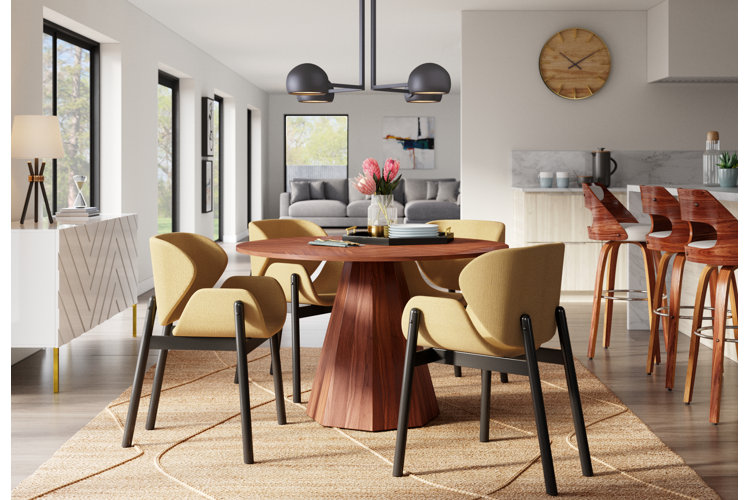
Wood dining tables are unmatched in their durability and style, making them a must-have addition to any home. However, there are so many wood species to choose from when shopping for a dining table. In this guide, we break down all of the dining table wood species to choose from, including both hardwood and softwood varieties so you can determine the best option for your home, lifestyle, and budget.
Starting Considerations
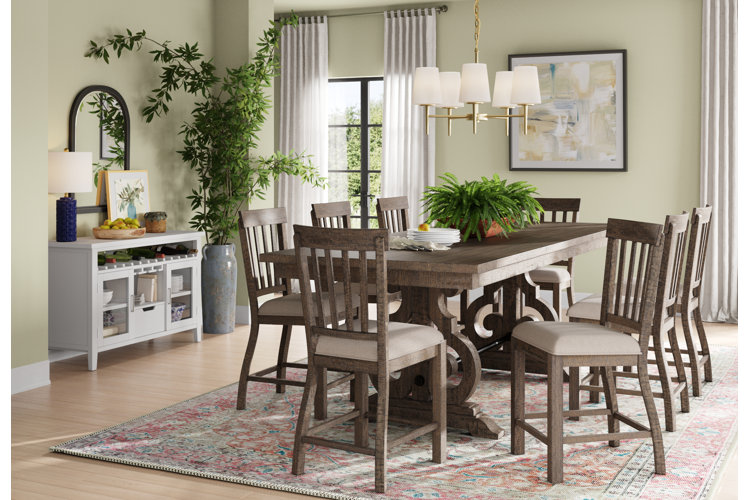
Here are some important factors to consider before you start exploring your options for a wood dining table.
- Budget: Wood dining tables vary in price depending on if they're hardwood or softwood and if the type of wood comes from trees that take longer to mature. Hardwoods like oak, maple, or cherry are more expensive compared to softwoods like cedar or pine because hardwoods are more durable and take longer to mature compared to softwood varieties. More on hardwood vs. softwood in our section on types of dining table woods.
- Durability: You also need to think about which type of wood will enhance the durability and longevity of your dining table. Hardwood species offer more durability than softwood because they have a denser, stronger composition as a result of decades of growth. This prevents the wood from warping or cracking easily and also makes it possible for them to undergo multiple rounds of sanding and refinishing, so you can keep your dining table looking pristine.
- Style & Appearance: Each wood species presents a unique wood grain pattern and natural coloration that influences the overall appearance of dining tables, regardless of the wood finish. For reference, wood species like ash, fir, maple, poplar, and pine have a naturally light wood tone. Cherry, teak, cedar, and oak are medium-toned. Walnut and mahogany have a rich, dark-toned appearance. The best wood for a dining table should speak to your specific style and match other wood finishes in the room.
- Cleaning & Care: Your dining table needs to be able to stand up to spills and stains as you and your family will use it every day. Thanks to modern finishes and protective coatings, you can clean and maintain hardwood or softwood dining tables with ease. Hardwoods like maple are particularly easy to clean because they have a dense construction that makes them less-porous. This means stains won't set as easily and you can wipe down the surface with a damp cloth without worrying about the potential for moisture damage.
- Sustainability: If you want to prioritize sustainability when selecting a dining table, there are a bunch of wood species that fit the criteria! Sustainable wood dining tables are made from wood species that are widely available and easily replanted, that grow and mature quicker than other species, or that are harvested at the end of their lifecycle. Softwoods reign supreme in terms of sustainability (think cedar, fir, or pine) because they're widely available and take less time to mature (about 40 years) compared to hardwood species that can take upwards of 100 years or more. However, there are still plenty of sustainable hardwood options! Some examples include mango wood, bamboo, black cherry, rubberwood, maple, or ash.
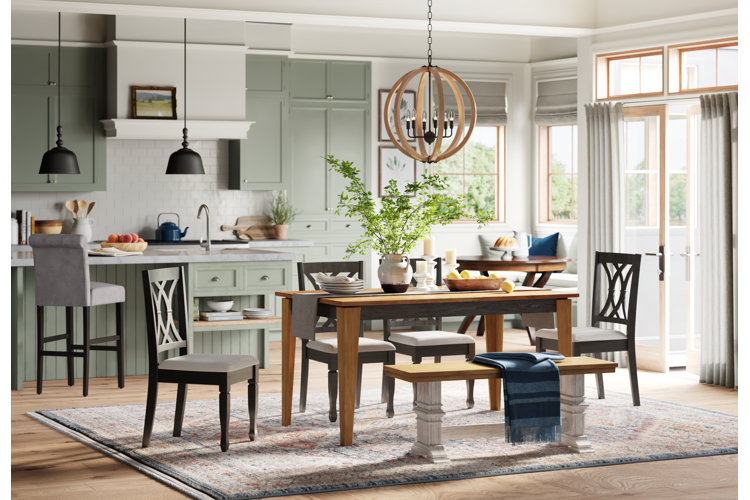
So what is the best dining table wood? Below, we highlight the wide variety of hardwood and softwood options and what makes them stand out so you can decide what type of wood dining table fulfills your criteria.
Benefits of Hardwood Dining Tables
Hardwood dining tables are a popular choice for everyday dining spaces thanks to their durability, versatility, and long-term value. They have a dense structure that allows them to withstand frequent use while maintaining their appearance over time.
Long-Lasting Durability: Hardwood dining tables are resistant to dents, scratches, and warping, making them ideal for busy households, families with children, or anyone who uses their dining table daily.
Refinishable Surfaces: Because of their density, hardwood tables can often be sanded and refinished multiple times, extending their lifespan and allowing you to refresh the look as your style changes.
Wide Style Range: From light-toned maple and ash to rich walnut and mahogany, hardwoods offer a variety of colors and grain patterns that work across modern, traditional, rustic, and mid-century spaces.
Types of Hardwood Dining Tables
Hardwood dining tables are made from a variety of deciduous trees – the category of trees that drop their leaves in the fall. As mentioned above, hardwood trees take longer to grow and have a dense, ultra-durable composition, which makes them perfect for staple furniture pieces like a dining table. Here are the types of hardwoods you can choose for your dining table and what makes each of them stand out.
Walnut
Walnut dining tables are popular for modern or mid-century modern spaces because of their rich dark brown finish and smooth grain pattern. They're also easy to carve to achieve unique table designs. Walnut wood is a medium-density hardwood, which makes it easy to stain and resistant to dents or scratches. Walnut dining tables are usually more expensive compared to other hardwoods like oak, maple, or cherry because of their appearance and quality. As for cleaning, you just need a gentle wood surface cleaner, a microfiber towel, and warm water.
Oak
Oak dining tables are made using either red oak or white oak. Both of these wood variations are medium- or high-density and ultra-durable. Red oak dining tables feature a stylish open-grain pattern and a reddish-brown finish that's perfect for showing off wood grain patterns in traditional or rustic spaces. White oak dining tables have a light coloration and closed-grain pattern that minimizes the appearance of wood grains for a smooth, modern look. White oak dining tables are usually more expensive than red oak tables because they have a higher density and durability. You can clean oak dining tables with a wet cloth or an oak-safe cleaning solution.
Acacia
Acacia wood dining tables have an intriguing uneven wood grain and a rich medium-toned brown finish that can fit into modern, rustic, traditional, or even industrial-style spaces. Acacia wood is high-density, which means any dining table made with acacia wood is scratch-resistant, moisture-resistant, and rot-resistant. Its quality makes it more expensive than other options like oak or maple. Use a warm water-and-soap mixture for regular cleaning.
Mango
Mango wood dining tables are light tan in color and feature a fresh, streak-like wood-grain pattern, which makes them a perfect match for coastal, boho, French country, or mid-century modern spaces, alike. The best part is that mango wood dining tables are usually more budget-friendly than other hardwoods while still being a quality high-density option. You'll find that mango wood dining tables come in a diverse number of designs because they're easy to shape and carve while maintaining their strength. Use a dry cloth to dust and clean mango wood tables. If you do use a wet cloth, be sure to go back over with a dry cloth afterwards to soak up the moisture to prevent the wood from warping over time.
Rubberwood
Rubberwood dining tables are budget-friendly, sustainable, and versatile. Made from medium-density hardwood, rubberwood tables have a straight wood grain and are crack- and warp-resistant. Rubberwood tables are super budget-friendly and sustainable compared to other hardwood options because rubberwood materials are harvested from the Pará rubber tree at the end of its lifecycle. Rubberwood dining tables come in a variety styles and finishes so you can choose the best look for your dining room. Learn more about rubberwood as a budget-friendly hardwood in our rubberwood guide.
Cherry
Cherry dining tables are defined by their beautiful red-brown finish and smooth closed wood grains. Cherry wood is a medium-density hardwood that's super flexible and strong so furniture-makers can create intricate designs or carvings without worrying about the wood cracking or splintering. Cherry wood tables are also resistant to moisture and rot so you can rest assured that you can use it for years to come. Clean cherry dining tables with a damp cloth and water-dish soap mixture.
Teak
Teak is naturally moisture- and pest-resistant, which means there's no potential for rot. Not only does this make teak a long-lasting hardwood material for indoor dining tables, but it also makes it popular for outdoor furniture. As a hardwood, teak has natural oils and a medium-density composition that helps prevent moisture damage, splitting, or cracking. Teak dining tables can be more expensive than other hardwoods, but they have an unmatched quality that will make your teak table a staple in your home for years to come. With a natural light or honey brown color, teak goes well in modern or coastal spaces. Review our guide on Oiling Teak Furniture & Important Teak Care Tips for specific cleaning instructions.
Maple
Maple wood dining tables are popular, affordable, and available in a variety of design styles. When it comes to choosing a maple dining table, you have a choice between hard maple and soft maple. These are both types of hardwood, but soft maple is slightly less dense and less expensive compared to hard maple. Both hard and soft maple dining tables have a naturally light or red-brown appearance that's refreshing and warm. Maple dining tables are available in a range of styles from traditional to modern so you can make the best choice for your aesthetic. Clean maple dining tables with a damp microfiber cloth for the best results.
Mahogany
Mahogany dining tables have a natural red-brown finish that is easy to stain to take on different looks. It is also an ultra-durable furniture option because it doesn't warp, crack, shrink, or split, and it's moisture-resistant. Although at the more expensive end, mahogany dining tables have the quality to last for years to come.
Sheesham
Sheesham wood dining tables display a unique streak-like wood grain with varying coloration, which creates a beautiful textured look. It has a naturally-rustic appearance that makes it suitable for industrial, farmhouse, and coastal-inspired spaces. Sheesham dining tables are also similar in appearance to teak models, but aren't as expensive! Not to mention, sheesham wood is flexible and easy to work with so you can find it in a variety of dining table shapes and configurations.
Ash
Ash wood dining tables are perfect for modern, mid-century, minimalist, and Scandinavian dining rooms because of their light wood tone and smooth wood grain pattern. Ash is an inexpensive alternative to other light-toned hardwoods like oak, even though it's classified as a high-density hardwood and has similar moisture-resistant properties. So if you're looking for a budget-friendly light wood dining table, ash wood might be the way to go.
Bamboo
Yep, bamboo is considered hardwood! Although technically a type of grass, bamboo has strong fibers that are ultra-durable and perfect for dining tables. Bamboo is also a sustainable dining table material because it's super easy to regrow and doesn't take as long to grow as other hardwood options. Bamboo dining tables are resistant to moisture damage and rot so you can rest assured they will maintain their shape and quality for the long-term.
Birch
Birch dining tables are super budget friendly as they're made from widely-available birch wood. Birch wood dining tables have an even, barely-there wood grain pattern and a naturally light appearance that works in any dining room where you want a bright and airy feel (like minimalist spaces, for example). If light and bright isn't for you, birch wood also comes in a range of other finishes thanks to its easy-to-stain composition.
Beech
Beech wood is strong yet flexible, which is why you can get so many different shapes and designs out of a beech dining table. Beech wood dining tables are also usually less expensive than birch wood tables, even though they're similar in appearance – both have light wood tones and even wood grains.
Elm
Elm wood dining tables have a unique look and quality durability to match. They feature a striped wood grain pattern and range in color from light to medium-toned brown or even gray. Elm wood dining tables can be more expensive than other hardwoods because of their intriguing appearance, but they make up for it with their quality. On average, elm wood has a medium-density and is resistant to moisture damage or splintering thanks to its striped/twisted wood grain.
Poplar
Poplar wood (also called tulipwood) is a great inexpensive hardwood option for dining tables because it's easy to stain and resistant to splitting when reshaped or carved. This means you can get a variety of shapes, designs, and finish options within your budget. Poplar wood dining tables are softer than typical hardwood options, but they may be reinforced with metal frames or other components to add to their durability. This also makes them a great fit for rustic farmhouse or industrial interiors where wood and metal furniture is a must.
Softwood dining tables are made from softwood conifer trees. These trees don't drop their leaves because they're evergreen. They also mature fast, which does make them less durable and more porous than hardwood trees. However, their fast growth rate makes them a more budget-friendly option for dining tables and other wood furniture. Check out these types of wood for tables to determine which one speaks to you.
Benefits of Softwood Dining Tables
Softwood dining tables offer a range of benefits that make them an appealing choice for many homes, especially when budget, sustainability, and style flexibility are top priorities. Made from fast-growing evergreen trees, softwoods provide a more accessible entry point into solid wood dining furniture.
Budget-Friendly: Softwood dining tables are typically more affordable than hardwood options, making them a great choice for first homes, apartments, or growing families.
Lightweight & Easy to Move: Because softwoods are less dense, tables made from pine, cedar, or fir are easier to rearrange or transport, ideal for flexible living spaces.
Naturally Rustic Character: Visible knots, grain variation, and natural imperfections give softwood dining tables a relaxed, lived-in look that works beautifully in farmhouse, cabin, industrial, or coastal-inspired interiors.
Highly Customizable Finishes: Softwoods are easy to paint, stain, or distress, allowing you to achieve a wide range of looks from light and airy to bold and dramatic.
Sustainability-Forward Choice: Many softwood species quickly grow and regenerate, often making them more environmentally friendly than slow-growing hardwoods.
Types of Softwood Dining Tables
Softwood dining tables are typically made from conifer trees, which grow and mature more quickly than hardwood varieties. This results in wood that’s lighter, more porous, and often more budget-friendly. While softwoods are generally less dense than hardwoods, they offer plenty of strength for everyday use and are valued for their natural character, sustainability, and versatility. Below are the types of softwoods you can choose from for your dining table and what makes each option stand out.
Pine
Pine is an affordable softwood dining table option because it's so widely available. Pine wood is naturally a light yellow color but it's super easy to stain thanks to its straight wood grain pattern. Pine dining tables are durable enough to last for years while also being lightweight (so they're easy to move). Pine dining tables usually have a rustic look that's perfect for woodsy cabins, farmhouse dining rooms, or industrial spaces.
Cedar
Cedar dining tables display straight wood grains and dark knots that are unique to the tree the wood came from. These visible knots add character to the dining table and the surrounding room. Cedar's rustic appearance makes it perfect for dining tables in cabin-style, farmhouse, traditional, or industrial spaces. On average, cedar dining tables have a natural light-to medium-brown wood tone. However, cedar can take on a range of different finishes because it's easy to paint or stain. Cedar wood is also naturally-resistant to moisture and rot, which is why it's also a go-to choice for outdoor furniture, raised garden beds, and other structures – so just imagine how long it will last indoors!
Fir
Fir wood dining tables are lightweight yet durable and vary in color, which makes them a valuable softwood option. Fir wood dining tables are usually more expensive than other softwood options like pine because of their higher durability. However, they're more budget-friendly than cedar. Fir wood has a straight wood grain that not only looks amazing but also helps strengthen its composition. To top it all off, fir dining tables are resistant to water damage and rot.
Tip!
We also explore hardwood and softwood options in-depth in our Wood Furniture Types & Finishes Glossary.
Care Tips for Longevity
No matter which wood species you choose, proper care helps your dining table maintain its appearance and structural integrity for years to come. Everyday habits and simple maintenance routines can go a long way in preventing damage. Keep reading for tips to ensure your wood dining table stays looking its best.
Use Protective Layers Placemats, tablecloths, and coasters help prevent scratches, heat marks, and moisture rings from hot dishes or drinks.
Clean Spills Promptly: Wipe up spills as soon as they happen using a soft, damp cloth, then dry the surface to prevent moisture from seeping into the wood.
Avoid Harsh Cleaners: Stick to gentle, wood-safe cleaning solutions. Avoid abrasive sponges or chemical cleaners that can strip protective finishes.
Control the Environment: If possible, keep your dining table away from heat vents or excessive humidity to reduce the risk of fading, cracking, or warping.
Refresh Finishes as Needed: Depending on the wood type and finish, occasional polishing or refinishing can restore shine and protect the surface.
