Sauna Buying Guide
Choose the perfect sauna with this inside look at wood types and heating systems.
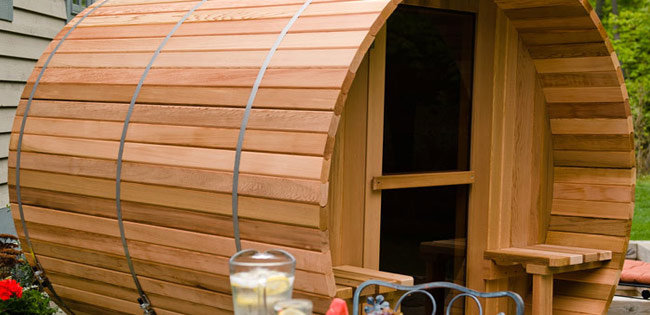
Saunasare used both recreationally and therapeutically by providing a high heat and low humidity environment that is ideal for relaxation. Constructed of soft, close grain woods on the interior, most saunas feature a wooden bench for seating or reclining. Before shopping for a sauna, ask yourself the below questions to ensure you are 100% prepared on installation day.
- What is your budget?
- Where will the sauna be installed (indoors or outdoors)?
- Do you have a preference on sauna size?
- Will you be setting up in a big or small space?
- Do you know what type of finish you would like to use?
- Are you interested in any special features?
As soon as you've asked yourself these questions, decide whether you will be installing the sauna indoors or outdoors. Our editors explore the benefits and disadvantages of each below.
Indoor Versus Outdoor
Indoor: Indoor saunas are typically installed in a bathroom, where there is easy access to your home's main water supply. They do not require insulation or a foundation, but they do need proper ventilation and a draining system.
Outdoor: Outdoor saunas are typically installed near a pool or garden and are a great choice if you do not have extra space indoors. They require a solid foundation, proper insulation, a power connection, and a water supply.
Heat Source Types
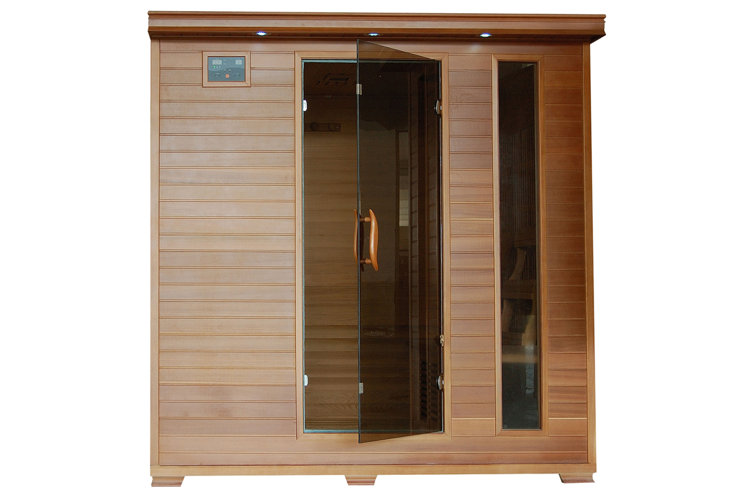
Electric: Also known as "traditional saunas," electric saunas create heat through a pile of hot rocks and can reach a maximum temperature of 195 degrees in 25-30 minutes. You can create a burst of soothing steam by sprinkling water over the hot rocks.
Carbon FAR Infrared: Carbon fibres or panels deliver an even level of infrared heat that reaches a maximum of 140 degrees in about 10 minutes. Infrared saunas are more affordable to operate than electric because they use less electricity.
Ceramic FAR Infrared: These high-quality saunas generate a large quantity of long-lasting infrared heat in about 10 minutes. They are usually more expensive than carbon heaters, but will also be more affordable to operate than electric saunas.
Voltage
The amount of voltage a sauna requires will determine which type of electrical outlet you need. Saunas with 110V and 120V are compatible with most household or commercial electrical outlets and do not require any professional wiring.
Traditional vs. FAR Infrared Saunas
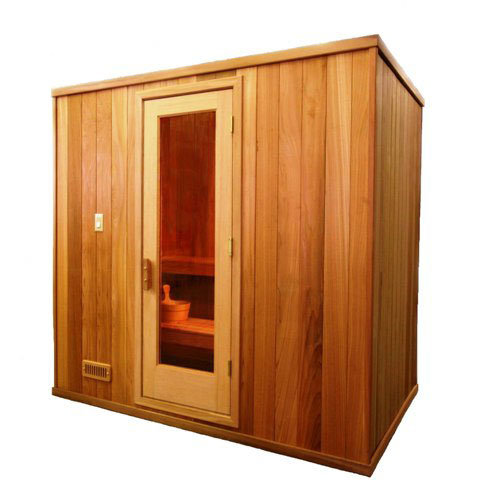
Traditional Sauna
- The heat in a traditional sauna is created by a pile of hot rocks that can reach a maximum of 195 degrees using an electric heater.
- Takes up to 20 to 35 minutes to heat.
- Uses more electricity than an infrared sauna.
- Moisture can be added to the sauna by sprinkling water over the rocks.
- Users will generally perspire more and feel hotter in a traditional sauna.
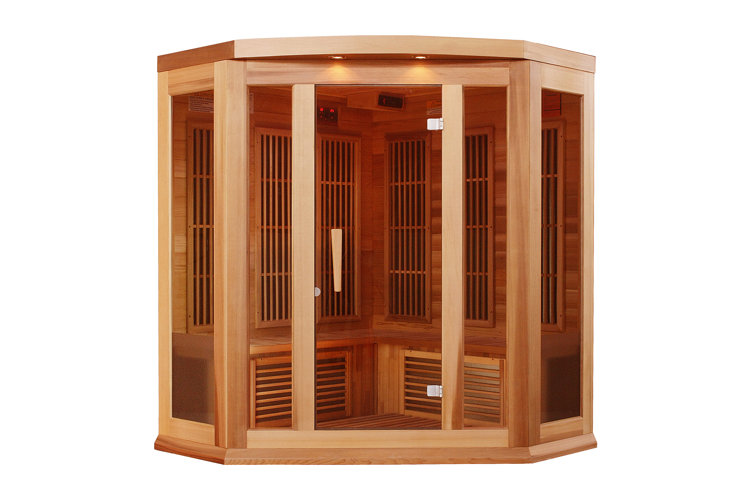
FAR Infrared Sauna
- Infrared saunas use an electric heating element that generates radiant heat lights.
- Reaches a maximum of 140 degrees.
- Heats up in half the time of a traditional sauna.
- Users of traditional saunas will feel a difference in heat, however it provides a gentler form of heat that's less expensive to maintain.
Sauna Wood Types
- Hemlock: This light-coloured hardwood is naturally resistant to stains and mildew. It's less aromatic than other woods, which makes it a good choice for people with allergies.
- Cedar: Aromatic and long-lasting, cedar is naturally resistant to mildew and insects, making it a good option for outdoors. Because of these desirable qualities, it can be more expensive than other types.
- Aspen: Because it's not as durable and decay-resistant as hemlock or cedar, aspen is generally used for indoor saunas. This attractive wood has no odour, which makes it another great option for people with allergies.
LED Lighting: Built-in LED lighting provides long-lasting, energy-efficient illumination
MP3 Auxiliary Output: Enjoy music while you relax with a convenient auxiliary output
Roof Vent: Roof vents can be opened to allow cool outside air inside the sauna
Timer Included: This handy safety feature will remind you how long you've been in the sauna
Adjustable Vents: These vents can be adjusted to allow fresh air into the sauna
Tip!
Consider adding a non-slip flooring option for both inside and outside the sauna to prevent slipping.
