What Is a Weathervane?
Let the wind be your guide.
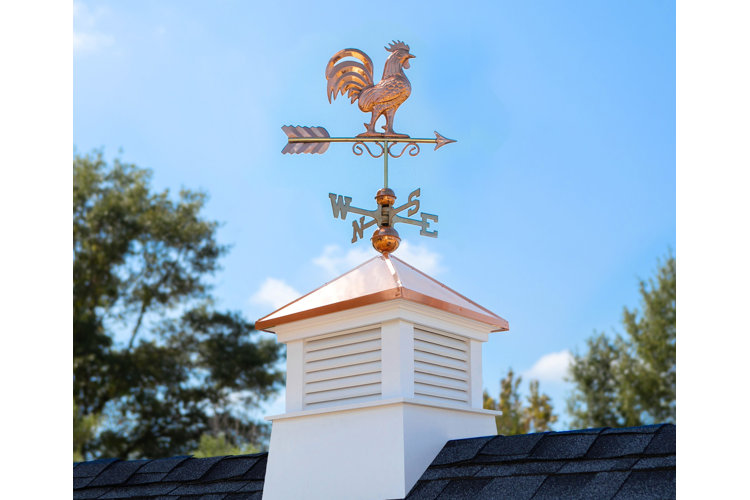
Looking to boost your curb appeal? Consider an ornamental statement that also serves a purpose – a weathervane! There's a reason weathervanes have been around for centuries, and they aren't going anywhere. So, what is a weathervane? Keep reading to learn everything you need to know about weathervanes and why you should have one.
What Is a Weathervane?
How Does a Weathervane Work?
How to Read a Weathervane
Where to Put Weathervanes
What Is a Weathervane?
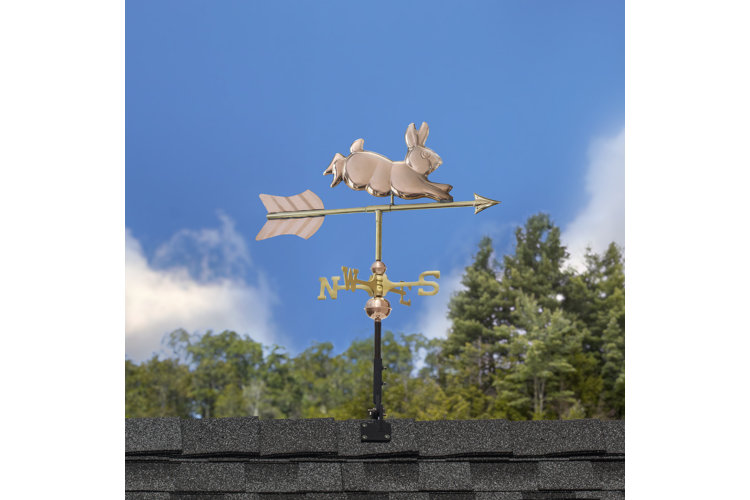
A weathervane, also called a wind vane or weathercock (for the designs with roosters on top), is a helpful weather instrument that demonstrates the direction the wind is coming from (north, south, east, or west), while also being a lovely ornamental feature on buildings. Civilizations have used different variations of weathervanes to predict weather patterns for centuries. Today, weather stations use high-tech versions with built-in sensors to provide accurate information about wind speed and other weather characteristics. A weathervane on your house can be decorative or functional. They typically have a decorative figurine on top. Choose from classic roosters to horses and other animal symbols – even goldendoodles! Or go for fun symbols like sailboats or cars and planes, or festive symbols like witches in flight. Learn more about how a weathervane works in the next section.
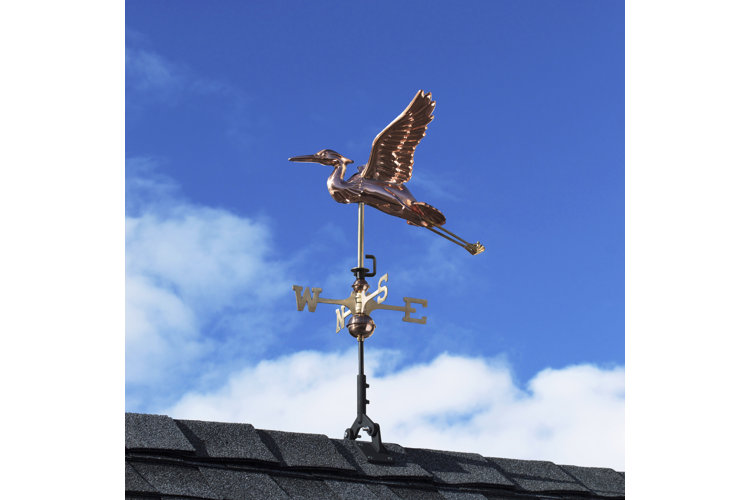
A weathervane has a functional design that uses the wind to its advantage. Weathervanes are designed around a central support rod that each of the components rest on. This support rod is attached to a stand, cupola, or another mechanism to keep it steady and upright (more on this in the last section). The lower half of the rod has fixed directional markers for north, south, east, and west. The directional markers do not move to provide an accurate direction reading. An arrow with a figurine or a standalone figurine (that acts as the arrow) sits above the directionals. In the above image, the stork acts as the arrow. The beak acts as the arrowhead and the feet act as the tailend of the arrow.
The arrowhead (or front of the figurine) and the tailend of the arrow (or the rear end of the figurine) are separated by the support rod with an equal distribution of weight on each side. However, the front of the arrow (in this case the bird’s beak) is shorter in length when compared to the tailend of the arrow (in this case the bird’s legs and feet). Because the tailend is longer in length, it catches more of the wind gusts than the front portion. Therefore, when a wind gust passes through the weathervane, the backend of the arrow (or figurine) is the point of contact for wind to push the arrow. This causes it to turn, and this is also where the physics concept, "point of least resistance" comes into play. Because the front end of the arrow (or figurine) is shorter than the back portion, it doesn't have as much surface area resisting the wind. Therefore, this is the side that turns into the wind, demonstrating the direction the wind is coming from. This should cause the arrow to line up with one of the four directionals.
Now that we've answered the question, "what is a weathervane?" and reviewed how they work, check out this next section for how to interpret them.
How to Read a Weathervane
Now that you have a weathervane definition and understand how it works, let's go over how to read/interpret a weathervane. To put it simply, whichever direction the weathervane arrow/figurine points to is the direction the wind is coming from. For example, if the weathervane is pointing west, this means the wind is blowing from the west. This is important to remember because it is easy to get the concept confused with where the wind is blowing to. However, you can make an educational guess about which direction the wind is going based on where it's coming from! If your weathervane indicates the wind is coming from the west, you can make a guess that it is blowing toward the east. If for whatever reason the weathervane is pointing in the middle of two directions, it is likely that the wind is blowing from the southwest, northwest, northeast, or southeast.
A home weathervane won't necessarily predict weather patterns or wind speed (like high-tech weather station models do), but you can use it to make your own weather assessments for fun.
- If It’s Pointing to the North: If your weathervane is pointed to the north directional, this means that the wind is coming from the north. In terms of weather, this could mean colder temperatures.
- If It’s Pointing to the South: If you see your weathervane pointed to the south directional, it means the wind is coming from the south. In this case, you might expect warmer temperatures.
- If It’s Pointing to the East: If your weathervane is pointing to the east directional, this means the wind is coming from the east. As for weather, easterly winds can indicate storms or wet conditions including rain or snow.
- If It’s Pointing to the West: If your weathervane is pointing to the west directional, this indicates that the wind is blowing from the west. In this situation, you can potentially expect calm, fair weather conditions.
Where to Put Weathervanes
There are so many places you can put a weathervane for aesthetic appeal and for tracking wind patterns. Here's where to install your weathervane outside of your home:
Quick Tip
When you go to set up your weathervane, make sure to have a compass on-hand to ensure you position the weathervane with the directionals facing toward the right direction. Turn or maneuver the weathervane rod so that the north directional lines up with the north indicator on the compass.
1. On Top of a Cupola
The most traditional place to put a weathervane is on top of a cupola. A cupola is a decorative structure that was once used as a way to vent air out of barns or other types of buildings. Today, cupolas are mostly decorative and can be installed on rooftops for an ornamental look and a bit of rustic charm. It's no surprise that many cupolas are paired with weathervanes as these were used by farms, churches, and other buildings to help determine the weather and add decorative flair. Most modern cupolas have an arced foundation that allows them to easily fit onto roof peaks for quicker installation. Cupolas with weathervanes have built-in supports that you can slide the weathervane's rod into and secure. You can purchase and install cupolas by themselves and add a weathervane later, or you can choose a cupola and weathervane set.
Not sure about adding a cupola? No worries! There are plenty of weathervane options that allow you to mount a weathervane directly onto your rooftop. Be sure to choose a spot where the weathervane will always be visible, like on the edge of a roof peak. For the most accurate wind readings, choose the highest point on your roof.
3. On the Deck
You can also add weathervanes to your deck railings! These models typically come with a stand and drill holes so you can secure it to the deck rails.
4. In the Garden
Weathervanes are also available in garden stake form. Simply stake it in the ground amongst your flower beds or herb garden and enjoy! Depending on where your garden is located, you may or may not get strong wind readings, but you will get to enjoy the beauty of a new lawn ornament.
Tip!
Determine a weathervane's mount options (cupola, rooftop, deck, or garden) by looking on a specific product's page and reviewing its "Mount Type" selections and seeing what types of mounting equipment come with it.
You Might Also Like:
Don't let this outdoor staple breeze you by!
