Everything You Should Know About Wood Flooring Types
From wood species to installation methods.
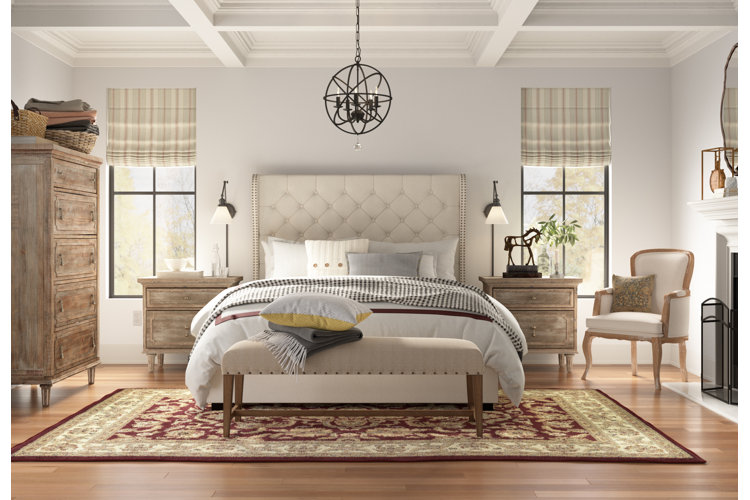
Hardwood flooring comes in a variety of wood species, finishes, and installation types. Take a look at our breakdown of popular wood flooring options and features to consider to ensure you choose the right flooring.
Types of Hardwood Flooring
Hardwood Species Options
Hardwood Installation Types
Additional Features to Consider
Types of Hardwood Flooring
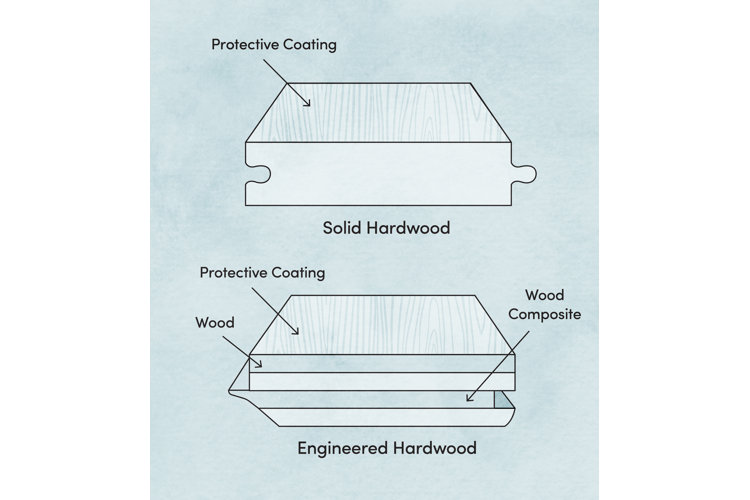
When choosing the right hardwood flooring for your home, there are two main types of construction: solid hardwood and engineered hardwood.
Solid Hardwood
Solid hardwood is made from a solid piece of wood that is cut into pieces that are a few inches wide and a little less than an inch thick.
Pros:
- Available in a wide range of wood species, finishes, and plank sizes, solid hardwood floors are beautiful and long-lasting.
- Solid wood floors can help increase the value of your home when it comes time to sell or refinance.
- Solid hardwood can be sanded and refinished multiple times.
Cons:
- Since it's made with durable natural materials, it can be more expensive than wood alternatives.
- It requires a wood subfloor and should be installed at ground level or above to avoid moisture damage (a concrete subfloor will allow moisture to pass through).
- Keep in mind that certain woods, such as walnut, can be sensitive to light and will lighten or darken over time.
Engineered Hardwood
The planks are constructed with a plywood base and topped with a strip of hardwood. It is available in various styles to replicate the classic look of many natural hardwoods and offers the hardwood look at a more affordable price.
Pros:
- Since engineered wood flooring only has solid hardwood on the top, it's much more affordable.
- Engineered wood flooring can be installed below ground level (like in a basement) since it's moisture-resistant – some options even have a waterproof seal. Look for below grade–specific engineered flooring for the best results.
- Its construction makes it less likely to warp in response to temperature/humidity levels.
- Engineered wood flooring is more DIY-friendly if you want to install it yourself.
Cons:
- Since engineered wood flooring has a blend of plywood and solid hardwood, it isn't as durable/long-lasting as actual solid wood flooring.
- Engineered hardwood flooring needs to be more than .5" thick if you want to be able to sand/refinish it in the future.
(Shop this image: dark hardwood flooring, white area rugs, espresso wood dining sets, traditional wall art, and faux trees.)
Solid and engineered hardwood flooring comes in dozens of natural wood species, each with their own set of characteristics. To search our selection of options, filter by species. Here's a sampling of our most popular options to consider.
Oak: Affordable and easy to stain and refinish, this popular option works well with a variety of styles. Planks with a semigloss finish and warm brown stain work particularly well with traditional spaces.
Maple: Harder than oak, this dent-resistant, light-colored species is durable and ideal for areas with high foot traffic. Maple is popular for traditional homes, but with a smooth matte finish, it can take on a more contemporary look.
Hickory: Harder than maple, this dent-resistant species is also great for high-foot-traffic areas. Planks with natural knots and grains are ideal for rustic homes.
Walnut: Softer than hickory, maple, and oak, walnut is typically a rich, chocolate-brown color with delightful swirling grains. This popular option can work in traditional and modern spaces alike.
Bamboo: Actually a dense grass rather than wood, bamboo is an eco-conscious alternative that offers the equivalent feel and durability of softer hardwoods. The hardness of bamboo varies depending on when the grass was harvested. It is an eco-friendly option that is low maintenance, durable, and light in color.
The type of flooring you choose influences the installation options you have. Here are the most common installation methods based on whether you go with solid or engineered hardwood.
Solid Hardwood Installation Types
Nail-Down: The flooring is secured by driving nails through the tongue of a hardwood plank and into the subfloor. This method ensures each plank fits snugly together.
Staple-Down: This method uses staples instead of nails for quicker installation.
Glue-Down: A strong adhesive is used to secure new flooring to the subfloor.
Floating: This kind of installation does not require staples, nails, or glue to attach the wood to the subfloor, as the pieces simply float above it. Friction between the planks keep them in place. Floating is the quickest and easiest method of installation.
Click-Lock: A type of float flooring, wood pieces are interlocked using a tongue and groove system without nails, staples, or glue.
Tip!
Learn about the installation process in our guide on How to Install Hardwood Flooring.
Additional Features to Consider
(Shop this image: light hardwood flooring, white bar & counter stools, marble backsplash tile, modern home accessories, and kitchen appliances.)
When shopping for hardwood flooring, there are a few additional factors to keep in mind.
Edge Type
There are four common edge types on hardwood planks: square, eased, kissed, and beveled. A square edge creates a clean, uniformed look, while an eased edge is gradual and tapered, allowing you to hide subfloor irregularities. For a more casual feel, opt for kissed or beveled edges, which create small grooves between each plank.
Plank Width
Planks range in width from a standard 2 ¼" to 6" or more. Typically, thin (strip) planks are less than 3.5" wide; medium planks are 3.5–6" wide; wide planks are 6" wide and can even be as wide as 11"; and random width flooring features different plank widths from one row to another. Choosing plank width is a matter of personal style and what appeals to you.
Gloss Level
Gloss levels indicate how much shine is visible on hardwood floors. Choose from one of our six hardwood floor finish sheens: matte, natural, satin, semigloss, low gloss, and high gloss. A matte finish works well in contemporary homes, while high-gloss floors have a traditional look.
Finish Color
Planks can be painted or stained to suit your space. The most popular wood finish colors are brown, dark brown, tan, and gray. Learn more about color options in our Hardwood Floor Colors Buying Guide or check out Which of These Hardwood Flooring Colors & Styles Are Perfect for Your Home?
Surface Texture
Most hardwood floors are sanded to a smooth finish. Other surface texture options are designed to look coarse and distressed, like wire-brushed or hand-scraped. Take a look at The Different Grades of Hardwood Flooring & What They Mean if you're interested in shopping by wood grain appearance (showing minimal defects or highlighting natural irregularities in the wood grain pattern).
Installation Patterns
Hardwood can be installed in a wide range of flooring patterns, with staggered, parquet, and herringbone as the most popular styles. A parquet or herringbone pattern may require a more intricate installation.
Tip!
If you aren’t comfortable installing your hardwood floor yourself, Wayfair offers professional flooring installation services that make renovating stress-free. Get started on a custom quote here.
