How to Choose the Right Type of Bathroom Sink
Make a splash!
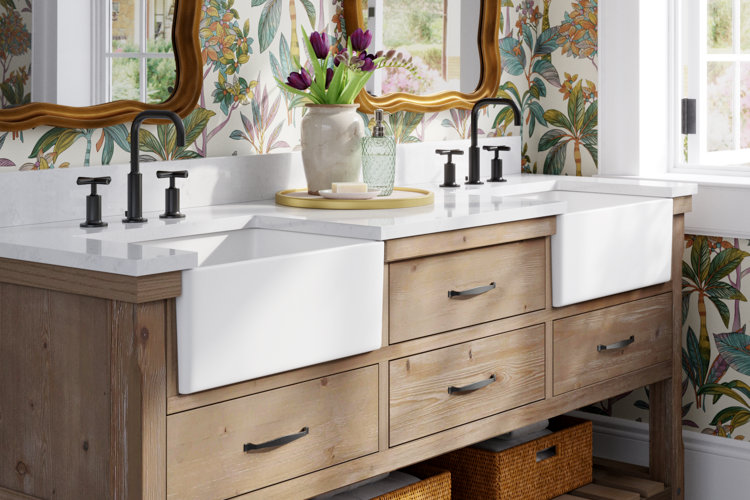
With so many different types of bathroom sinks to choose from, the decision might seem impossible to make. Our guide is here to assist you in choosing the perfect bathroom sink size and style for your bathroom renovation. Let your worries wash away!
1. Choose a Compatible Style & Installation Type
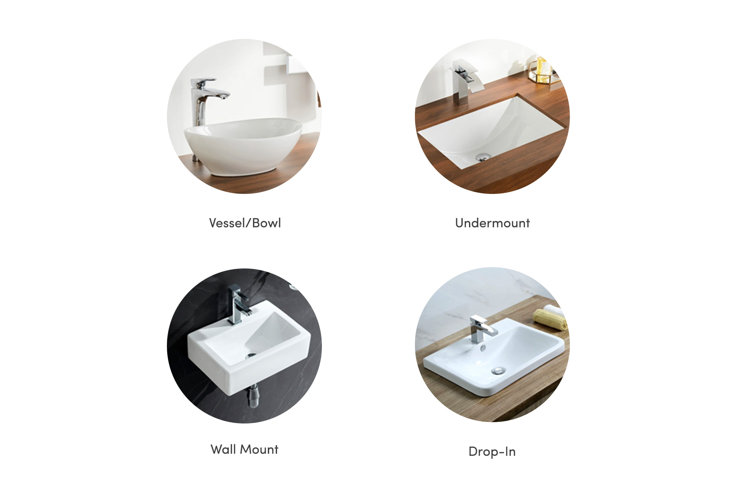
Vessel/Bowl: Once exclusively lavish, vessel sinks are now widely available. These bowl-shaped sinks sit atop the bathroom countertop for a clean, contemporary look. Though many don’t have overflow drains and can be prone to chipping due to their upturned sides, most types of vessel sinks are very easy to install and add a luxe feel to your bathroom.
Undermount: The bathroom countertop acts as the lip of these subtle and comfortable sinks. Undermount bathroom sinks maximize countertop space and are easy to clean. Because the basins are installed beneath the countertop, they are a safe choice for bathrooms of all styles.
Wall Mount: If you have a smaller bathroom or are looking to avoid installing a bathroom vanity, wall-mounted bathroom sinks don’t require a countertop for installation. This maximizes your bathroom’s floor space, but minimizes countertop storage. Wall mounts’ exposed plumbing fits nicely in an industrially designed bathroom, but can be covered if needed. The wall bears all the weight of these sinks, so a professional should install them to ensure they don't damage the wall.
Drop-In: As their name would suggest, drop-in bathroom sinks are installed on a bathroom countertop from above. These easy-to-install sinks, also known as self-rimming sinks, are held in place by their lips and often include their own faucet installation holes. They are one of the most popular bathroom sink styles.
Pedestal: These elegant, unobtrusive basins sit atop a pillar of the same material. Pedestal sinks are good for smaller bathrooms, as they don’t take up a lot of space. These classically designed pedestals merely help hold the sink’s weight; all the plumbing lines attach at the wall, not the floor.
Console: Similar in appearance and installation to wall-mounted sinks, console bathroom sinks have legs, which are usually metal but are sometimes ceramic or porcelain, that support some of the weight. These sinks are great if you have an industrial-style bathroom or if you want to conserve floor space. Like wall mounts and pedestals, console bathroom sinks don’t allow for countertop storage space, though some of their load-bearing legs come equipped with towel racks or minimal shelving.
Trough: A trough bathroom sink is similar to a drop-in sink, except that the sink basin is much deeper and wider, often wide enough for two faucets. If you have a smaller bathroom that must accommodate two people at once. These trendy, minimal basins can be undermount, wall mount, drop-in, console, and even vessel in design.
2. Measure Your Bathroom Space
There is no standard bathroom sink size, but we’ve pulled together some general measurements to guide you when choosing a sink for your bathroom. Remember, the type of bathroom sink you choose often depends on the amount of available space. Read our guide Buying a Bathroom Sink? Here's Exactly What to Measure for more measurement tips.
- Standard undermount and drop-in basins tend to be 15" – 20" across (length), 10" – 16" from front to back (width), and 4" – 6" deep. Rectangular basins with these dimensions will hold more volume than ovular or U-shaped basins of the same dimensions. Keep in mind that the rim of drop-in basins adds about 1" – 3" to the length, width, and depth of the entire sink.
- Wall-mounted basins tend to be smaller than vanity-mounted sinks, usually measuring 12" – 16" long, 7" – 12" wide, and 3" – 6" deep. A common set of measurements for this style is about 15" long, 11" wide, and 4" deep.
- Most pedestal and console sinks are larger than wall-mounted styles because they can hold their own weight, but are still smaller than standard undermount and drop-in sinks. These sinks are typically between 32" – 38" tall.
- Round and square vessel sinks tend to be between 14" – 18" in diameter (or in both length and width) and 4"– 6" deep. A common size for a vessel sink is 16.5" in diameter and 6" deep. Because vessel sinks rest atop a counter, they will add height to your vanity.
3. Compare Different Sink Shapes
Oval: An oval sink is a classic staple with a rounded, easy-to-clean silhouette, making it one of the most popular shapes. Because of its timeless style, this shape pairs well with any bathroom.
Rectangular: Another popular choice, these sinks have a sleek rectangular shape that matches the rectangular shape of your vanity. The clean-lined design makes this shape ideal for creating a modern look.
Round: Similar to oval sinks, round sinks are easy to clean and soften the straight lines often found in bathroom designs. Round sinks are typically less wide than oval sinks and work well in small bathrooms.
Square: With a compact design, square bathroom sinks are often used in a similarly small space as round sinks. The sleek square shape is an excellent choice for modern bathrooms.
Specialty: If you're looking to add unique flair to your bathroom, specialty sinks come in a variety of interesting designs that range from seashell-shaped vessel sinks to sculptural pedestal sinks.
U-Shaped: U-shaped sinks are rounded in the front and have a flat back that lays parallel to the wall. This shape is a common choice for pedestal sinks since the flat back can rest neatly against the wall.
4. Consider Material & Finish Options
Ceramic: Smooth and sturdy, this clay-based material is one of the most popular for bathroom sinks. Vitreous china, porcelain, and fireclay are all types of ceramics, ranging in price and fragility.
Porcelain: Porcelain starts out as fireclay, a versatile material that can withstand extremely high temperatures. It is considered the hardest clay available, and once processed, it becomes less porous, becoming extremely strong with a smooth finish.
Glass: Often tempered, these types of bathroom sinks are commonly used for vessel styles. The surprisingly strong material is resistant to scratching and cracking. Hard water spots can appear but are easily cleaned with household solutions. Glass sinks can be transparent, translucent, or opaque, and come in a variety of colors.
Metal: Sinks made of metal like copper and brass are eco-friendly, rust-resistant, durable, and naturally antibacterial. Metal sinks can be modern, with a smooth, shiny finish, or rustic, with a hammered, handmade look.
Stone: Stoneware sinks have a one-of-a-kind natural look. They’re often hand-carved and can be made to fit a variety of shapes and sizes.
Vitreous China: If you aren't sure what it is, vitreous china is a glossy white enamel coating that is applied to ceramic – especially porcelain, after they have come out of the kiln. It works to make the base shinier, tougher, and effective against stains and scratches, which is why it is most commonly used for sink basins.
Solid Surface: Solid surface sinks are produced when a mineral compound is mixed with polyester and/or acrylic resins to form solid synthetic sheets. This solid surface can then be molded into a single surface for countertops or sinks, providing a seamless appearance. It is available in a large variety of contemporary designs and colors.
5. Factor In Faucet Type
The type of bathroom sink you choose will dictate the type of bathroom sink faucet you purchase. If your sink has pre-drilled faucet holes, it is important to choose faucets that will fit these holes. Make sure to take careful measurements of the distance between pre-drilled faucet holes so you can choose the right faucet and handles. For utmost accuracy, be sure to measure from the center of each hole to the center of the other holes. Read our Bathroom Faucet Buying Guide to help you choose the right fixture.
