Your Guide to Interior Barn Door Hardware
Everything you need to know about hardware that holds barn doors in place.
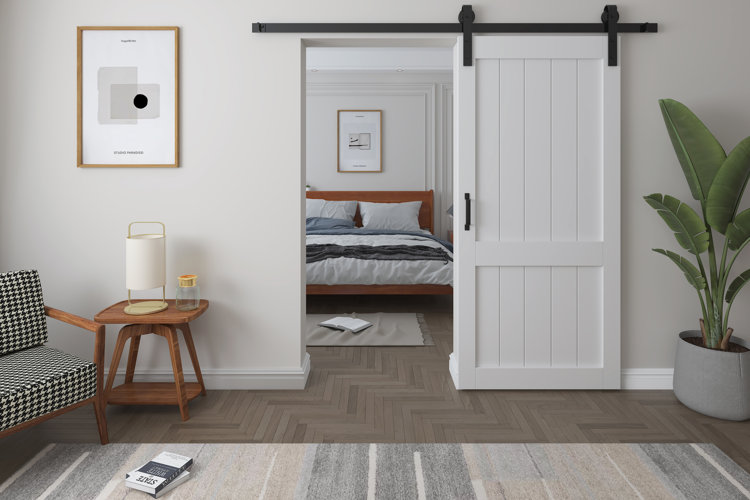
Low in profile but high in impact, a barn door can transform your space. Whether you want a standard single barn door or a pair of bypass barn doors, most barn-door hardware kits come with all the necessary components included. That said, it's always a good idea to familiarize yourself further with each piece of interior barn-door hardware you'll be using in an upcoming project. Read this guide to learn all about each piece of interior barn-door hardware you'll need for your barn-door installation project.
If you need more information about barn-door types, check out our guide Buying Barn Doors: How to Choose the Right One for an overview. For help with sizing, read Measuring 101: How to Find the Right Barn-Door Sizes. If you're inspired to DIY your barn-door installation, read our guide, How to Install Barn Doors for Beginners after familiarizing yourself with interior barn-door hardware.
Interior Barn-Door Hardware Types
Barn-Door Hanging Hardware
Barn-Door Handles & Pulls
Barn-Door Locking Hardware
Barn-Door Hardware Accessories
Interior Barn-Door Hardware Types
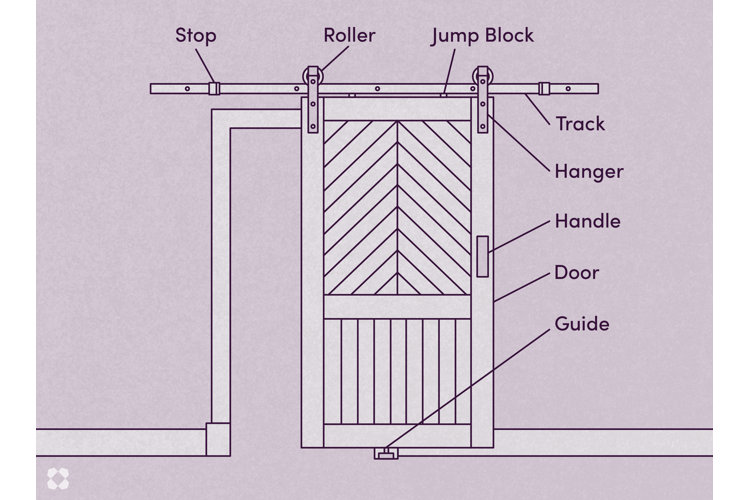
We've outlined different types of barn-door hardware to help you familiarize yourself with each component.
Barn-Door Tracks
These heavy-duty metal bars mount just above the doorway and comprise the tracks along which the barn doors roll. Because the entire barn-door setup must hang from these tracks, they are robust in construction and often made of metal. No barn-door hardware kit is complete without a track. There are two types of barn-door tracks for both single and double doors: standard and bypass.
Standard Barn-Door Tracks
Standard barn-door tracks are the simplest barn-door tracks available. The barn-door hardware kit will come with one sturdy, wall-mounted track that holds the single or double barn doors all on its own.
Standard Single Barn-Door Tracks: With one track and one door, this type of barn-door track is the most basic and the easiest to install. This option is great if you're looking to replace a single swinging door in your home with a low-profile alternative.
Standard Double Barn-Door Tracks: Double the length of standard single barn-door tracks, double door tracks are designed to hold two sliding barn doors, one on each side of the track. The two barn doors can't slide past each other; instead, they are meant to come together in the middle of the track to close off a large entryway.
Bypass Barn-Door Tracks
As their name suggests, bypass barn-door tracks allow two barn doors to bypass each other. On a bypass barn-door track, both doors can slide freely across the track without touching each other.
Single-Bypass Barn-Door Tracks: Single here refers to the number of tracks, not the number of doors. On a single-bypass track, both doors are mounted onto the same track, but while one door is hung flush with the track, the other door is hung so it projects out just enough to be able to slide past without touching. Because these doors are on the same track, they can only move freely so long as their rollers aren't intercepting each other.
Double-Bypass Barn-Door Tracks: Double-bypass barn-door hardware kits come with two doors and two tracks. Because they are mounted on two separate tracks, both barn doors on double-bypass tracks can move freely across the entire track without coming in contact with each other. These barn doors protrude more than barn doors on other tracks, but because they won't collide as they are sliding, they are quieter and less susceptible to damage than other barn-door types.
Barn-Door Hanging Hardware
Barn doors hang on brackets attached to rollers that slide along the barn-door tracks. Most barn-door hardware kits come with two roller brackets per barn door. When shopping for barn-door hardware, you can broadly browse "barn-door hanging hardware" to find rollers along with other pieces of barn-door hardware, or you can narrow your search to just "barn-door rollers" to browse just rollers.
Barn-Door Handles & Pulls
Most sliding barn doors are easily operable without any handles or pulls, but adding some can be a helpful touch. Just beware of the track type on which your barn doors are mounted; a protruding handle could make it difficult or impossible for bypass doors to smoothly slide past each other.
Barn-Door Handles: These barn-door handles protrude out from the door. They tend to be a bit more decorative than flush pulls but may interfere with bypass doors' ability to slide past each other. Some barn-door handles actually double as flush pulls – the handle installs into one side of the door and is held in place on the opposite side by a flush pull. These tandem handles/pulls are a great solution if you'd like to put handles and pulls on all sides of your barn doors without obstructing their sliding.
Barn-Door Flush Pulls: Some barn-door flush pulls are simple, subtle pieces of hardware that screw into a sliding barn door to allow you enough of a finger hold to open the door easily. Others require that you manually create a recess in your barn doors into which the flush pull is installed. Though more difficult to install, recessed flush pulls can allow you more purchase on the door with almost no protrusion.
Barn-Door Locking Hardware
You might be wondering if sliding barn doors' fatal flaw is their inability to lock, but you'd be incorrect! With barn-door locking hardware, you can lock a barn door in place just like you would any other door. All it takes is a little extra installation of a couple small pieces – one on the barn door and one on the doorframe.
Barn-Door Hardware Accessories
Other essential pieces of barn-door hardware include guides, stops, jump blocks, standoffs, soft-close mechanisms, and track connectors.
Barn-Door Guides: These pieces of door hardware mount to the floor to hold the barn doors in-line while sliding and prevent them from swinging too far inward or outward, which can be damaging. They typically consist of either a U-shaped bracket or a bracket with one or two attached rollers. The barn doors slide gently along these guides.
Barn-Door Stops: Some barn-door stops mount to the floor to prevent barn doors from swinging too far at the end of their track. They stop the doors' momentum, which protects them from strain. Other barn-door stops mount to either end of the track instead of the floor.
Barn-Door Jump Blocks: Jump blocks are small, round pieces that screw directly into the top edge of barn doors. They protrude from the top of the door just enough to prevent the door from jumping off the track if it incidentally gets bumped upward.
Barn-Door Standoffs: Just like guides, stops, and jump blocks, barn-door standoffs are pieces of additional door hardware that can protect your sliding barn doors and your wall from unnecessary damage. These plastic or rubber spacers mount to the wall behind the barn doors and act as buffers, preventing contact between the doors and the wall.
Barn-Door Soft-Close Mechanisms: These metal pieces mount behind the barn-door track to prevent the barn doors from slamming at the end of the track.
Barn-Door Track Connectors: Some barn-door setups require tracks that are longer than the standard. Barn-door track connectors allow you to connect two standard-length (or any length) tracks end-to-end so that barn doors can slide between them.
Shop all your barn-door hardware accessories here:
