Cooktop Buying Guide: Types of Cooktops & Which One You Need
Everything you need to know about buying a cooktop, made simple.
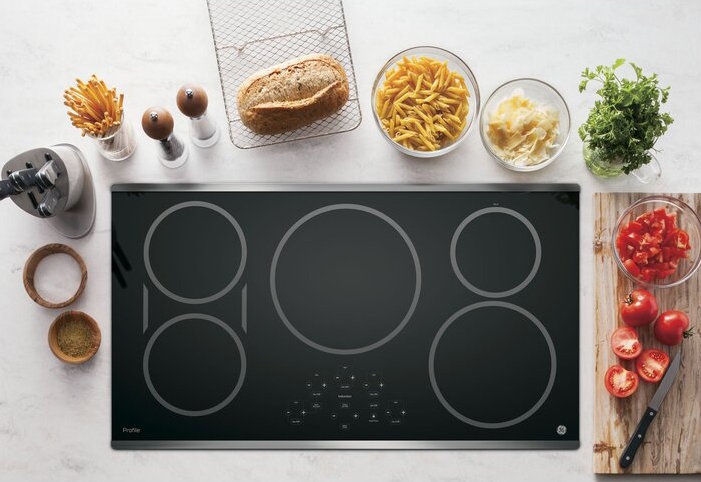
Cooktops are versatile additions to any kitchen and can fulfill a variety of needs. Cooktops are super helpful, whether you need more burners to accommodate your elaborate dinner plans, want to be able to change up your cooking station from the counter to the kitchen island, or if you have an ovenless kitchen but want to reap the benefits of a stove top. What's more, having a cooktop separate from an oven will give you more options when designing a kitchen space, plus newer cooktops are often designed for energy-efficiency.
Feeling overwhelmed on how to choose the right cooktop for your home? Not to fear! We break down everything below so you can decide which type of cooktop will fulfill your needs.
What Is a Cooktop?
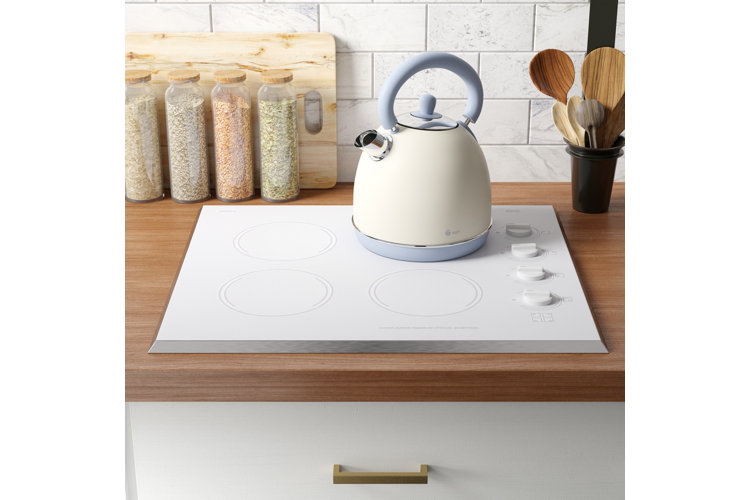
A cooktop is a type of kitchen appliance that resembles a stove. The difference? Cooktops stand alone, whereas stoves typically rest on top of ovens. Cooktops can do all the same things that stoves can do, depending on their size and the number of burners. This includes sautéing food, boiling water, searing meats, and so on. There are a variety of types of cooktops, but each helps create a more flexible kitchen environment for you, whether you're looking for a standalone cooktop for an ovenless kitchen that you can move when desired, or an installable cooktop that completes your kitchen island.
How to Choose the Right Cooktop for Your Kitchen
Step 1: Decide on the Best Type of Cooktops
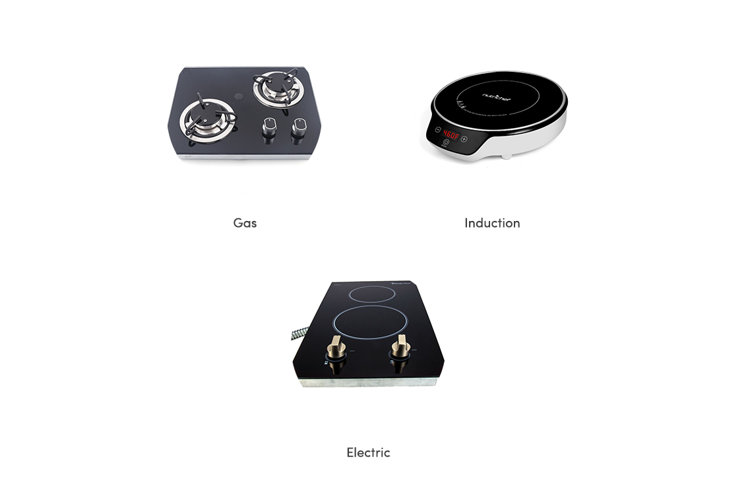
The type of cooktop you choose should reflect your cooking needs, make daily life easier, and pair well with your home's power source or your energy goals. Find the best cooktop type for your kitchen, below.
Gas: Gas cooktops are the way to go if you want precise temperature control and quick heating and cooling properties. Gas is the most traditional type of cooktop, and a favorite among chefs because of the control you have to cook, sauté, or boil to perfection. Gas cooktops measure burner heat by Btus, British Thermal Units. This unit of measurement stands for “how much heat is necessary to boil one pound of water and raise heat by one degree Fahrenheit.” Small burners have a range of up to 5,000 Btu, and large burners have a range of up to 15,000 Btu or more.
Although gas cooktops sit at the more expensive end of the spectrum, their quality is unmatched. For an unparalleled cooking experience, pair a gas cooktop with stainless steel cookware that has an inner core made up of copper and aluminum.
If your home has electric heat, check to make sure a gas cooktop can easily be installed. You may need to add a gas line if the utility isn’t already run to your house.
Induction: Induction cooktops offer the safest form of cooktop heating, without compromising on heat capabilities. These cooktops use electromagnetism to heat up cookware quickly and efficiently while the surrounding area remains cool to the touch. This makes this type of cooktop a great option for families with small kids who have a tendency to get too close to the stove.
Induction cooktops also use less energy than other types of cooktops because they use an electromagnetic coil, typically made of copper. The magnetism of the coil means it transfers heat specifically to the cookware on top of the burner. Ensure the best experience with an induction cooktop by using cookware made of magnetizable materials like cast iron or stainless steel.
Although induction cooktops use up less energy, they can reach a higher heating temperature than gas cooktops – induction cooktops can reach above 600° Fahrenheit, while gas cooktops can only reach above 400°. Induction cooktops cook at a range between 1,500W (suitable for smaller burners) and 3,000W (suitable for larger burners).
Tip!
Interested in learning more? Take a look at our induction cooktop guide for all the information you need to make a well-informed decision on your next cooktop.
Electric: Electric cooktops are the best option if you want to stay cool as you cook, while maximizing burner heat. This is because electric cooktops are designed to allow for 70% or more of the heat to transfer from the burner to a pot or pan. To compare, gas cooktops transfer around 40% of the heat from the burners to cookware, meaning that the other 30% escapes into the surrounding room. Because electric cooktops are able to transfer more heat to the cookware itself than gas cooktops, less heat escaping into the surrounding room keeps you cool and focused on your culinary masterpiece — if you can't stand the heat, stay in the kitchen with an electric cooktop.
Electric cooktops are also ideal for renters because there’s no rewiring required and no need to put in a gas line. They're also compatible with most types of cookware, so there’s no need to go out and purchase all new pots and pans — unless you want to, of course.
Heat ranges for electric cooktops range in heat from about 1,000 to 2,500W or sometimes even higher, from 3,000 to 3,500W, for larger burners. They feature either a flat or a coil surface.
Tip!
Always check to make sure your pots and pans are compatible with the cooktop type you choose; some cooktops don't work with certain metals. For more information on cookware, see our Cookware Materials Guide.
Step 2: Determine the Correct Cooktop Size
A cooktop's size is an essential consideration when deciding on a cooktop for your kitchen. The right cooktop size should blend right in and not impede on the use of other kitchen appliances and daily tasks. Compact varieties work well in small-space kitchens, while standard and large cooktops fulfill large-quantity cooking needs. Figure out what size will work best for your kitchen, below.
12" & 15" Cooktop Sizes: Cooktops measuring 12" or 15" in width are ideal for small-space kitchens, outdoor cooking (camping, anyone?), or adding an extra burner to your busy kitchen. Because of their compact size, these cooktops either have one large burner, two equal-size burners, or one large burner paired with a smaller burner.
21"& 24" Cooktop Sizes: Look for 21" or 24" cooktop dimensions if you want a more standard size with a lot of cooking potential. Cooktops with 21"-24" widths can have anywhere from two large burners to four or five small burners or a mix of two different size burners to accommodate the space. This means you can have multiple things going at once without having to take turns completing each task — instantly reducing dinner prep time.
30" & 36" Cooktop Sizes: Maximize the number and size of your burners by going for cooktops measured at 30" or 36" in length. These types of cooktops are a good substitute if you don't have an actual stove in your kitchen, but plenty of counter space. Larger cooktops typically have four or five burners with plenty of space and variety, but they can also have four or five medium-size burners, or two large burners and three small burners. So go ahead and cook to your heart's content. Boil pasta, heat up sauce, sauté vegetables, and sear meat all at once.
Cooktop surfaces add a cool design element to the mix, while also providing a functional element for an easier cooking experience — and after dinner cleanup. Take a look at these types of cooktop surfaces to figure out which matches your style and functional needs.
Grate: Gas cooktop enthusiasts should look to grate cooktop surfaces, as these are designed specifically for gas cooktops and configured to hold your cookware the optimal cooking distance above the gas flame below. Grate surfaces feature metal grates that cover individual burners or the entire cooktop, and that can be easily removed for cleaning. Grate cooktop surfaces are also the most flexible, since they range in price and meet a variety of budgets.
Gas-on-Glass: Want a gas cooktop with a more luxury look? Gas-on-glass cooktops combine gas burners with a smooth tempered glass surface. Not only does this add a touch of modern flare to your kitchen, but it also makes cleaning a breeze, as the tempered glass surface is easy to wipe clean after use.
Smooth: If you're leaning towards an induction cooktop that's durable and design-forward, smooth cooktop surfaces are the way to go. This cooktop surface is usually made using a ceramic-glass composite, and it is powered by induction or radiant heat through electricity. Smooth cooktop surfaces are also more streamlined, which makes them super easy to clean. Keep in mind, induction surfaces tend to be the most expensive.
Coil: If an electric cooktop is the right choice for you, then a coil cooktop surface is a great affordable option! Its coil design creates a cool alternative to a grate to cover open flames. You can efficiently clean coil surfaces by removing the drip pans when needed.
Once you've decided on the right fuel type and the right size and surface type for your kitchen, it's time to think about which features will take your cooktop to the next level. Discover the best cooktop features below, which will help make your job easier, safer, and more enjoyable!
Continuous Grates: Continuous grates are a feature of gas cooktops where one grate covers the entire cooktop, rather than having separate grates for each individual burner. This is both a design-focused and practical choice, as it creates a distinctive cooktop look, while also reducing the chances of spilling food. This is because individual grates sit raised above each burner with gaps in-between the burners and the cooktop surface. Continuous grates eliminate the balancing act, and allow you to use a variety of cookware sizes on gas burners without worrying that the size is going to lead to a spill.
Deep Recessed Burners: Deep recessed burner features are commonly paired with gas cooktops with overhead grates. This feature means that the cooktop dips down so that the burners rest lower than the edges of the cooktop. This creates a safer alternative for those who want a gas cooktop but aren't sure about the open flame, since it sits lower so the flame stays beneath the top level of the cooktop grates. Above all else, deep recessed cooktops create a clean, uniform look that's perfect for the luxe kitchen as individual burners are hidden beneath one continuous grate.
Downdraft Exhaust: This feature ventilates the cooking area by capturing and filtering smoke and odor down through the cooktop and out of the room. Downdraft exhaust features are similar to overhead oven vents that remove smoke and odor from a stove. They're typically placed in the center of the cooktop and look like narrow vents, but they can also be round to draw in the air from surrounding burners.
Grill/Griddle: Some cooktops provide space for a griddle or grill to be placed between two sets of burners so you can cook and grill at the same time. A cooktop griddle makes it easy to whip up pancakes or fry bacon while you scramble up some eggs on an adjacent burner. A built-in grill feature allows you to perfect your barbecue skills while sautéing vegetables in a cast iron pan.
Hot-Surface Light: Keep this light feature in mind when looking at different cooktop options – it is an important safety feature that lets you know when the stove top is still hot, even if it is currently turned off. Induction and smooth electric cooktops indicate the presence of heat with a red outline around the burner. Gas grills typically feature a red light above the control knobs that turns off once burners are completely cooled.
ADA-Compliant: Cooktops with ADA-compliant features are identified as safe for use by those with disabilities, as per the Americans With Disabilities Act of 1990.They have features or layouts that make them easier to use. For example, a cooktop that can be placed at an appropriate height for someone to cook while sitting down comfortably, or one with central controls and knobs that are easy to move with little effort, can be classified as ADA-compliant.
You Might Also Like
Ready to get cooking?
