Guide to Bathroom Sink Styles
We explain the six most popular styles (including mounting options).
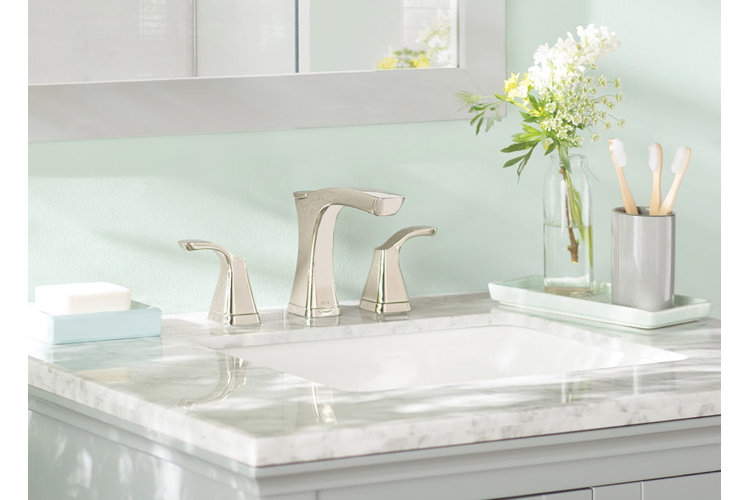
With so many different types of bathroom sinks to choose from, the decision might seem impossible to make. Our guide is here to assist you in choosing the perfect bathroom sink size and style for your bathroom renovation. You’ve got this!
Types of Bathroom Sinks
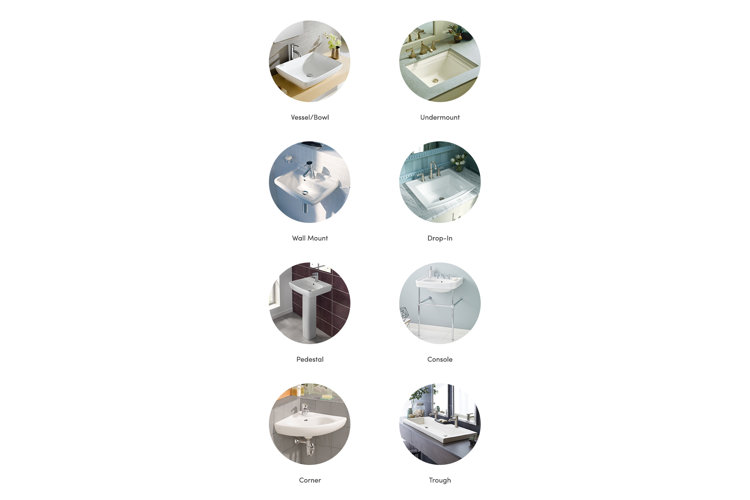
Vessel/Bowl: Once exclusively lavish, vessel sinks are now widely available. These bowl-shaped sinks sit atop the bathroom countertop for a clean, contemporary look. Vessel sinks are very easy to install, but many don’t have overflow drains and are prone to chipping due to their upturned sides.
Undermount: The bathroom countertop acts as the lip of these subtle and comfortable sinks. Undermount sinks maximize countertop space and are easy to clean. Because the basins are installed beneath the countertop, they are a safe choice for bathrooms of all styles.
Wall Mount: If you have a smaller bathroom or are looking to avoid installing a bathroom vanity, wall-mounted bathroom sinks don’t require a countertop for installation. This maximizes your bathroom’s floor space, but minimizes countertop storage. Wall mounts’ exposed plumbing fits nicely in an industrially designed bathroom, but can be covered if needed. The wall bears all the weight of these sinks, so a professional should install them to ensure they don't damage the wall.
Drop-In: As their name would suggest, drop-in bathroom sinks are installed on a bathroom countertop from above. These easy-to-install sinks, also known as self-rimming sinks, are held in place by their lips and often include their own faucet installation holes. They are one of the most popular bathroom sink styles.
Pedestal: These elegant, unobtrusive basins sit atop a pillar of the same material. Pedestal sinks are good for smaller bathrooms, as they don’t take up a lot of space. These classically designed pedestals merely help hold the sink’s weight; all the plumbing lines attach at the wall, not the floor.
Console: Similar in appearance and installation to wall-mounted sinks, console bathroom sinks have legs, which are usually metal but are sometimes ceramic or porcelain, that support some of the weight. These sinks are great if you have an industrial-style bathroom or if you want to conserve floor space. Like wall mounts and pedestals, console bathroom sinks don’t allow for countertop storage space, though some of their load-bearing legs come equipped with towel racks or minimal shelving.
Corner: Corner sinks are the ultimate solution to limited space. They fit snugly into the corner of the bathroom and don’t require any countertop space. Most corner sinks are wall-mounted, though some can have a pedestal. These aesthetic basins require a very specific plumbing layout.
Trough: A trough bathroom sink is similar to a drop-in sink, except that the sink basin is much deeper and wider, often wide enough for two faucets. If you have a smaller bathroom that must accommodate two people at once. These trendy, minimal basins can be undermount, wall mount, drop-in, console, and even vessel in design.
Bathroom Sink Sizes
There is no standard bathroom sink size, but here are some general measurements for you to use when choosing a sink for your bathroom.
Standard undermount and drop-in basins tend to be 15” – 20” across (length), 10” – 16” from front to back (width), and 4” – 6” deep. Rectangular basins with these dimensions will hold more volume than ovular or U-shaped basins of the same dimensions.
The rim of drop-in basins adds about 1” – 3” to the length, width, and depth of the entire sink.
Wall-mounted basins trend smaller than vanity-mounted sinks, usually measuring 12” – 16” long, 7” – 12” wide, and 3” – 6” deep. A common set of measurements for this style is about 15” long, 11” wide, and 4” deep.
Most pedestal and console sinks are larger than wall-mounted styles because they can hold their own weight, but are still smaller than standard undermount and drop-in sinks. These sinks are typically between 32” and 38” tall.
Round and square vessel sinks tend to be between 14” and 18” in diameter (or in both length and width) and 4” – 6” deep. A common size for a vessel sink is 16.5” in diameter and 6” deep. Because vessel sinks rest atop a counter, they will add height to your vanity.
Bathroom Sink Materials
Bathroom sinks come in a variety of material options, with the most common being ceramic, glass, metal, and stone.
Ceramic: Smooth and sturdy, this clay-based material is one of the most popular for bathroom sinks. Vitreous china, porcelain, and fireclay are all types of ceramics, ranging in price and fragility.
Glass: Often tempered, glass sinks are commonly used for vessel styles. The surprisingly strong material is resistant to scratching and cracking. Hard water spots can appear but are easily cleaned with household solutions. Glass sinks can be transparent, translucent, or opaque, and come in a variety of colors.
Metal: Sinks made of metal like copper and brass are eco-friendly, rust-resistant, durable, and naturally antibacterial. Metal sinks can be modern, with a smooth, shiny finish, or rustic, with a hammered, handmade look.
Granite: Stoneware sinks have a one-of-a-kind natural look. They’re often hand-carved and can be made to fit a variety of shapes and sizes.
Faucet Compatibility
The type of sink you choose will dictate the type of bathroom sink faucet you purchase. If you already have a faucet, you will need to match your sink accordingly.
If your sink has pre-drilled faucet holes, it is important to choose faucets that will fit these holes. Make sure to take careful measurements of the distance between pre-drilled faucet holes so you can choose the right faucet and handles. For utmost accuracy, be sure to measure from the center of each hole to the center of the other holes.
Types of Bathroom Faucets
Widespread: The faucet and handles in this style are three separate components. Ideal for larger sinks, widespread faucet handles are at least 6” apart.
Centerset: Centerset faucets and handles are mounted on one base plate and installed together. Typically, centerset handles are 4” apart and fit smaller sinks.
Single-Hole: As its name would suggest, a single-hole bathroom faucet only requires one installation hole in the sink. These faucets have one swiveling handle mounted atop the spout.
Wall-Mounted: This faucet style requires three installation holes in the wall above the sink. Wall-mounted bathroom faucets come in many installation styles, but your sink must be set close to the wall and your plumbing lines must be compatible.
Vessel: Because of their height, vessel sinks must be paired with taller faucets. Vessel bathroom faucets are typically single hole and minimal in design.
Faucets Included: Some sinks are available with accompanying faucets, so you won’t need to worry about buying them separately.
