Guide to Kitchen Sink Styles
We explain the five most popular styles and basic bowl configurations.
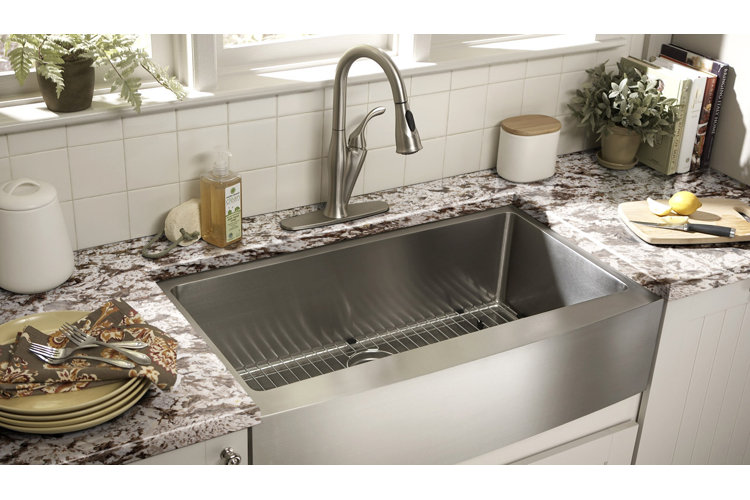
There are a few things to think about when choosing a kitchen sink. First is the overall look that you want to achieve. Does your kitchen design lean more sleek and contemporary, or vintage and relaxed? Then, think about the way you work in the kitchen. Are you a foodie who needs lots of room in your sink to prep and cleanup, or is takeout food more your style and you mostly use your sink to rinse glasses and plates?
Finally, think about the layout of your kitchen. You may have limited space and a challenging floor plan or plenty of room to accommodate a second prep sink. Whatever your requirements, there is a kitchen sink to meet your needs. Below, we explain the five most popular styles (including mounting options) and breakdown the basics of single, double, and triple bowl configurations.
5 Most Common Sink Styles
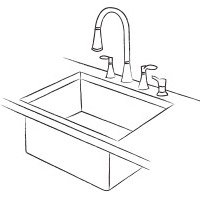
1. Undermount Sinks
This sink is designed to be installed under the counter for a cleaner appearance. Because there are no exposed edges, this style makes countertop cleanup easy and fuss-free. This type of sink typically requires professional help for installation and needs to be mounted to sturdy, non-porous countertops.
Installed below the countertop
Can only be used with solid-surface counters
Gives a smooth, trendy look
You can wipe directly into the sink
Easy to clean
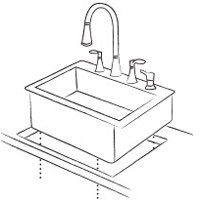
2. Drop-In or Self-Rimming Sinks
Also known as a top-mount sink, this style is mounted directly into an opening on the counter, with its edges resting on it. This is the easiest type of installation.
- A rim that sits on the countertop supports the sink's weight
- Self-rimming sinks have a slightly higher rim
- Most popular style
- Easiest to instal; usually about an hour
- Affordable, durable stainless is the most popular material
- Also available in cast iron or porcelain
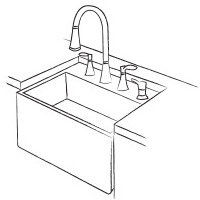
3. Farmhouse Sinks
Also called an "apron sink," this style features an exposed front and a large, deep basin, which makes it easy to wash large pots and pans. This type of sink typically requires professional help for installation and needs to be mounted to sturdy, non-porous countertops.
- A deep, rectangular basin with an exposed front
- A vintage, country style that's becoming more popular
- Undermount installation for a cleaner appearance
4. Bar Sinks
These sinks are smaller in size than standard kitchen sinks, and are perfect for small bar areas where you need as much counter space as possible. A small basin makes it ideal for simple prep tasks, like washing fruit for cocktails.
- Usually range from 9.5-18 inches wide
- Good for limited counter space
- Available with one or two bowls
- Either undermount or drop-in mounting
- Rectangular, round, or square shapes
5. Corner Sinks
This is a great option for small spaces and kitchens with unique layouts where you need a specialized shape to make the most of the space.
- Smart solution for U- or L-shaped counters
- Can help achieve an efficient work triangle
- Space-saving choice
Sink Bowl Specifications
Single Bowl
- This basin's wide, open space is great for cleaning large pots and pans. A single-basin sink is typically deeper than other types.
- Generally as wide as 33 inches
- Good for large dishes and large pots because they are not divided
- Overall, takes up less space than other sinks
- Smart choice for a small kitchen or as a secondary prep sink
Double Bowl
- Two basins offer the option to work on separate tasks, such as rinsing produce in one side and soaking dishes in the other.
- Generally as wide as 48 inches
- Provides separation for washing and rinsing dishes or food prep and cleanup
- Standard; most popular configuration
- Sometimes, the two bowls are different sizes (one deep and one shallow, or one large and one small)
Triple Bowl
- These are typically wider than other sink styles. Three basins offer maximum flexibility for meal prep and cleanup.
- Generally as wide as 60 inches
- Have a small, shallow third basin that's usually used as a prep sink
- Often accessories, such as cutting boards, fit into the third bowl
Sink Measurements
Be sure to measure your countertop and cabinet depth before purchasing. Standard cabinets are 24 inches and standard countertop depth is 25 inches.
Different styles of sinks require a different amount of clearance around them. Farmhouse sinks have an exposed front which protrudes a bit and drop-in sinks have a rim that sits on top of the counter.
Be sure to note the interior and exterior measurements of a sink. The exterior measurement is needed to ensure that there is enough clearance to install it in your kitchen.
Try using a large piece of butcher paper to draw and measure the placement of your sink before making your purchase. This will help you to visualize it in the space and ensure a good fit.
Number of Faucet Holes
Once you've chosen a sink, you want to make sure it has enough faucet holes for all of your needs. Kitchen faucets most commonly require three holes. If you want a soap dispenser, a side sprayer, or a filtered water spigot, you may need more. If your sink comes with more holes than you need, hole covers can be used to disguise them. Also, many sinks offer cutout holes, where you can simply punch out the hole if you need it. Before making a purchase, be sure the number of holes on your sink and faucet match up.
