How to Choose Living Room Colors & 17 Color Palette Ideas
Breathe new life into well-loved living spaces.
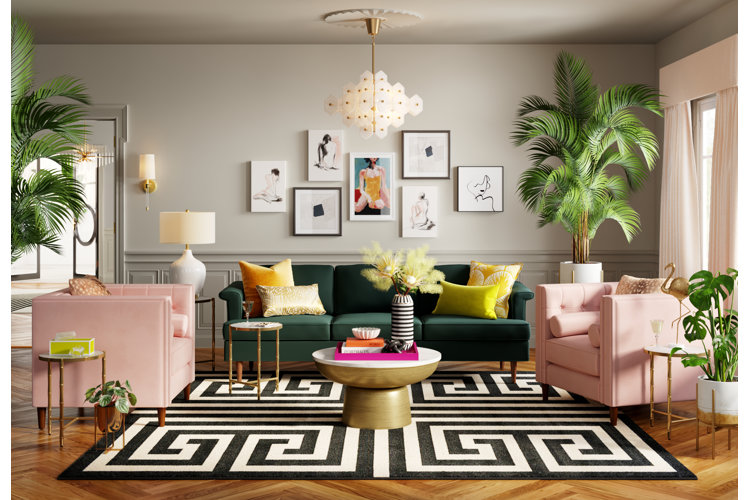
In many homes, the living room is the main gathering space for family and friends – setting the tone for the rest of the house. That's why choosing the right color palette is so important! Keep reading to learn how to choose the best colors for the space and get inspired with 17 unique living room color schemes that will show off your personality.
How to Choose a Color Palette for Your Living Room
1. Evaluate the Space
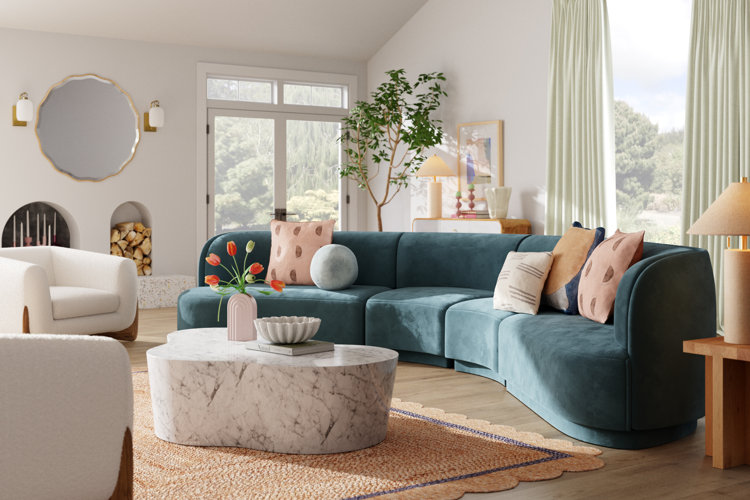
The first step in determining the best color is looking at your space. Factors like room size, the amount of natural light it receives, and existing architectural features can help you make a decision. Is your living room small and dark? Opt for a light color palette that will brighten the space and make it feel roomier. Do you have a large, bright space? Feel free to incorporate darker shades that will balance and ground the room to make it feel cozier.
2. Consider Anchor Pieces
Consider the large fixtures in your living room (such as furniture upholstery, area rugs, and wall color) and how you will use these as anchor points for your color scheme. You can choose to use neutral colors for the foundation of your living room and add small accents of color through the use of decor. Or, if you want your primary color to be the main focal point, use it on the larger pieces like a colorful area rug or bold sofa. When deciding how to incorporate color in your space, consider if your budget will allow for big changes like new furniture or a wall color change. Otherwise, opt for small changes like a colorful throw or some wall art.
3. Determine the Aesthetic
For a balanced look, it’s important to incorporate a mix of light and dark shades, warm and cool tones, or neutral and vivid colors. Secondary colors – especially contrasting hues – add visual interest and depth to your living room design.
If you want to take a more monochromatic approach, select furniture, upholstery, and wall colors that are in the same color family. Using different shades of the same color creates a cohesive feel and allows you to experiment with different silhouettes or textures.
Tip!
For more information to help you craft a masterful monochromatic living room, check out our guide What Is a Monochromatic Color Scheme?.
4. Choose a Color
Time to get creative! Choose a color that you feel speaks to your personality and complements the style of your home. For example, blue goes well with coastal, emerald with glam, orange with mid-century modern, and so on. Keep reading for some inspiration!
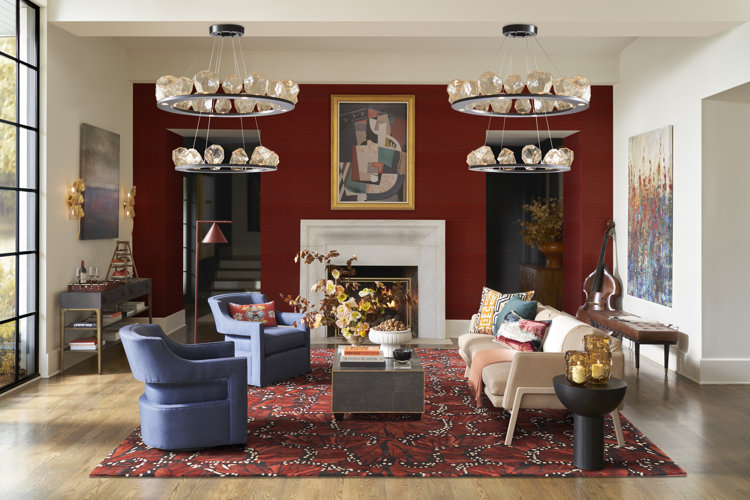
Deep shades like maroon, burgundy, and wine red add a dramatic but timeless pop to any living room. Since red is a primary color, it pairs well with a wide range of colors, but especially blue and yellow. Consider grounding your red living room with an accent wall or area rug and then accenting with lighter hues for a balanced look.
Tip!
If you love the bold look of a red living room, check out our guide on Living the Sweet Life: How to Bring Cherry Aesthetic to Your Home.
2. Sophisticated Pink
Look for shades of pink like blush, dusty pink, rose, or mauve to create a relaxed, romantic vibe in your living area. You can't go wrong with light pink wall color or soft pink velvet sofas to create a soothing space to lounge. However, more bold shades like hot pink or fuchsia are also on the rise.
Tip!
Check out our guide on Pink Interior Design Inspired by Your Favorite Doll for more bold interpretations of this color.
3. Earthy Orange
Orange is a stunning color for a living room because it can make a bold statement without overwhelming the space. Though it’s common in mid-century modern homes, orange can complement a variety of interior design styles. Choose muted tones like rust, terracotta, and burnt orange to bring an earthy vibe to your home and draw on the warm tones of natural wood.
Yellow is a cheerful and energizing color that is perfect for living spaces. You can choose more subtle shades like daffodil and buttermilk, or you can make a bold statement with vibrant canary, chartreuse, or lemon. Whether you decide to go all-out with a yellow color palette, or incorporate bright accents here and there, this color is sure to bring a smile to your face.
Tip!
Take a look at our comprehensive guide on What Colors Go With Yellow to help accent your living room.
5. Refined Gold
Gold is an elegant shade for any living room aesthetic and will bring a neutral but stunning color to your home. Level-up beige or ivory living room furniture with notes of gold to make a shimmery statement. For a more subtle look, choose to incorporate gold in your decor – drapery, decorative objects, lighting, or mirrors.
Combine subtle sophistication with earthy organic by choosing sage green as the focal point in your living room. The relaxed hue of sage green makes it a beautiful wall color, but it can also be the perfect accent color in the form of artwork, throw pillows, and even decorative foliage.
Enrich your living room with emerald green. Add deep hues to the room with artwork and an emerald accent wall to transform the space into an elegant lounge. Swap in a green velvet accent chair and sprinkle in some gold fixtures for the ultimate feeling of luxury.
Tip!
Discover What Colors Go With Green to elevate the green tones in your living room.
8. Rich Navy
Create an elevated ambience in your living room with navy blue notes. Navy is a sophisticated color that's as refined as it is dramatic, which makes it a seamless addition to any aesthetic. This dark tone serves as a strong foundation for light furniture and decor, creating bold contrast that adds depth to the space.
Tip!
Complement navy living room schemes by reading up on What Colors Go With Navy Blue.
9. Dark Teal
Teal and turquoise shades are the perfect way to blend blue and green tones in your living room. Elevate your sitting area with a deep turquoise wall color for a dramatic effect and stun guests with teal sofas, statement artwork, and velvet ottomans.
Lighten your approach to color with icy shades like celeste, powder, or dusty blue. These shades of blue create a tranquil atmosphere in your living room for an especially relaxing space. When paired with white upholstery and wood fixtures, pale blue is the perfect color to use in a coastal-style home.
A mauve-colored living room will create an airy and elegant space in your home. When paired with light neutrals and soft pastels like cream, sage, and pale pink, this subtle purple is sure to be a showstopper. Add sleek furniture pieces and velvet upholstery to enhance the sophistication of the space for an elevated, glam room.
Purple signifies creativity, luxury, and magic, which makes it a stunning color choice for living rooms – the center of your home. Make a bold statement with a dark purple accent wall while tying in other colors with an abstract area rug. Deep purple accents add a dramatic and moody feel to the room for a relaxing but elevated vibe.
The color white will make any space feel spacious and clean. White reflects natural light to brighten up the room, contributing to an airy feeling in your home regardless of the style. Feature fresh white walls and upholstery balanced with some natural wood tones. Use light ivory and cream tones for end tables, curtains, and lamp shades for subtle contrast against the stark surroundings.
Tip!
Leaning toward more neutral-inspired color schemes? Take a look at these 22 Neutral Living Room Ideas to Cleanse Your Palette.
14. Warm Beige
If you want a neutral color scheme in your living area but prefer a softer look than crisp white, opt to include beige hues instead. Choose a light but warm upholstery to set the tone and incorporate natural materials like a jute area rug and dark wood tables to build on the warmth of the space. Beige is a versatile color and can provide a neutral foundation if you choose to add pops of color later on.
Rich brown shades are oh-so-comforting – providing an earthy and warm tone to your living room. Chocolate, tan, and copper hues help ground light-filled living rooms when used for walls, furnishings, and decor. When used with natural wood finishes, leather, and greenery, brown is the perfect color for a soft but natural ambience.
Slate gray is a cool neutral alternative to brown or beige. Gray encompasses a variety of shades including silver, ash, charcoal, and more – slate gray being the coolest with some blue undertones. These gray tones are subtle and soothing while providing a solid foundation for accents of blue and teal. Warm up a cold gray space with some warmer neutrals like deep wood or ivory upholstery.
Black is a statement neutral that adds depth and drama to any living room. It looks particularly stunning as a wall color when paired with light furnishings and decor. Black wallpaper or floor coverings can also emphasize bold-colored furnishings, decor, or wall art. Black living room furniture creates a high contrast in spaces with white walls and floors.
