How to Choose the Best Wall Oven: Wall Oven Sizes, Types & More
Everything you need to know about choosing the right wall oven for you.
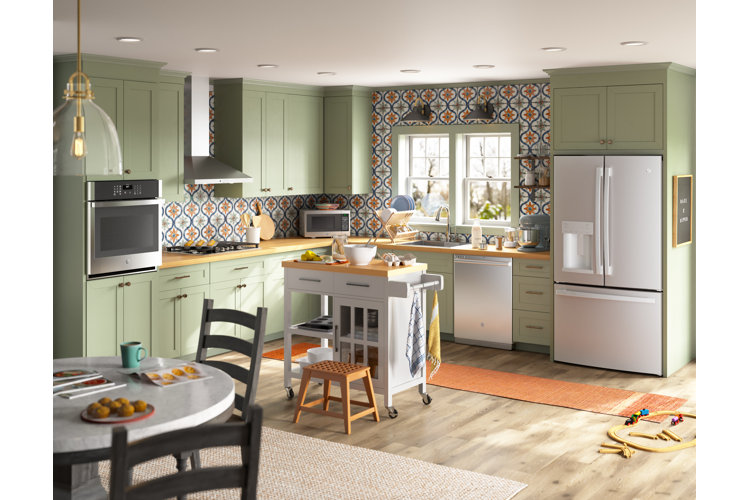
Wall ovens are an alternative to standard, all-in-one ranges and can be a space-saving solution for small kitchens. These compact ovens mount to the wall to allow for easier insertion and removal of food items. Interested in learning more? Keep reading – we've prepared a wall oven buying guide to help you choose one that’s right for your kitchen.
1. Find the Right Type
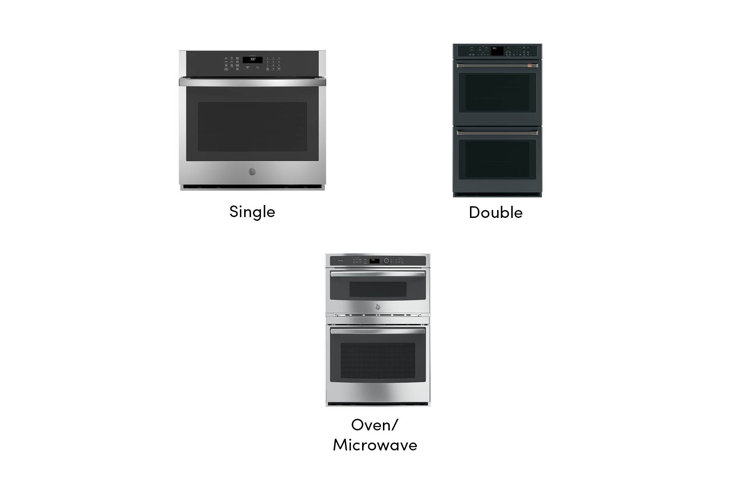
Wall ovens tend to take up less space than a standard range, which makes them ideal for small spaces.
Single: Single wall ovens are some of the smallest wall ovens available. They can be installed under a counter or cooktop to maximize your kitchen space. A wall oven has one cooking zone and is ideal if you do not use your oven often or have a super small kitchen.
Double: If you are looking for more cooking space, double ovens are a great way to achieve this. Depending on your kitchen size and style, you can mount your double wall ovens side by side or one on top of the other. Double wall ovens offer more flexibility and are a great option if you love to cook or find yourself needing to cook multiple dishes at once.
Wall Oven & Microwave: A wall-oven-and-microwave combo can come in two different forms: an all-in-one appliance that can perform the tasks of an oven and a microwave all in the same cooking zone or an appliance composed of two distinct parts that are fused together (an oven and a microwave). A wall-oven-and-microwave combination is an excellent choice if you're looking for the most compact way to add an oven and a microwave to your space.
2. Decide on a Fuel Type
Wall ovens can be fueled by the same sources as traditional ranges: gas and electricity. Both have distinct benefits and drawbacks.
Gas: These wall ovens use natural gas as fuel, a more environmentally friendly and energy-efficient option. Gas wall ovens can be a bit more expensive upfront than electric wall ovens, but they can save you money on your energy bill each month. Gas has its drawbacks – if you don't already have a gas line installed in your home, you'll need to install one, which can be costly. A gas wall oven must also be vented outside, and its internal temperature may fluctuate as it cooks.
Electric: By far the most common and popular wall ovens, electric wall ovens are fueled by electricity. Because they're electric, they offer incredibly precise internal temperature control, a stellar feature for bakers and particular chefs. Electric wall ovens can cost you more in energy usage, but the appliances themselves tend to be less expensive than gas wall ovens. They also typically cost much less to install, their only additional installation requirement being a 240V electrical outlet nearby.
Wall Oven Dimensions
Wall ovens are available in standard widths of 24", 27", and 30" (30" wide wall ovens are comparable in width to traditional ranges). The height of a wall oven can vary depending on the additional features – like microwaves or warming drawers – but a single wall oven tends to hover around 24" tall. Double wall ovens can be as tall as 55" or above. Wall ovens have varying depths that range between 20" and 31".
Measuring for a Wall Oven
If you are installing a new wall oven and not replacing an old one, there are a few things to think about. You’ll want to place your wall oven around eye level, which makes it easier to access when carrying hot or large items. Also, consider the type of door you will be installing on your oven. You can choose from a single door with hinges on the side or French doors. Make sure that whatever door you choose will not interfere with anything. Plan for extra space below the oven if you are going to install a warming drawer underneath.
If you are measuring for a replacement oven, be sure to turn off the wall oven’s breaker inside your home’s breaker box. You can access the mounting screws by opening the oven door. They are located along the right and left edges of the oven. After unscrewing the mounting screws, pull the oven far enough out to access the cabinet opening. Measure the width, height, and depth of the opening.
While you have your tape measure out, don’t forget to measure your doors and hallways that are on the route to your kitchen. You need to choose an oven that you can fit through your doors! If your entryways are 4" – 5" wider than the oven, you should be able to get it through your route.
Wall Oven Capacities
The capacity of your wall oven will be one of the most consequential metrics to pay attention to as you shop, as it will determine how much food you can cook at one time. It is measured in cubic feet. For reference, standard kitchen ranges have capacities of 5 cu. ft. on average.
1–1.9 cu. ft.: These wall ovens are some of the smallest available, with heights of approximately 20" on average. They are excellent for one- or two-person households who cook small, infrequent meals and don't plan on hosting large meals like Thanksgiving dinner.
2–2.9 cu. ft.: Wall ovens with capacities between 2–2.9 cu. ft. are small to medium in size, with the space to handle enough food for couples or small families.
3–3.9 cu. ft. & 4–4.9 cu. ft.: Medium to large wall ovens with capacities of 3–3.9 cu. ft. are a little harder to find than those with smaller capacities, but if you can find one, it'll capably serve an average four-person family. If you're looking for a wall oven that will stand up against traditional ovens in capacity without all the bulk, opt for a wall oven with a capacity of 4–4.9 cu. ft. These wall ovens are excellent for larger families or avid chefs who love preparing lots of food for lots of people.
5 cu. ft. & Over: Wall ovens with capacities of 5 cu. ft. are often double wall ovens, with each oven having a capacity of approximately 5 cu. ft. on its own. These are amazing if you're an avid chef who likes to tackle large cooking projects that may involve cooking several large dishes simultaneously.
Tip!
Check out our guides for more sizing and measuring advice:
Wall Oven Sizes: Pick the Right One for Your Kitchen How to Measure for a Wall Oven to Make Installation a Breeze
4. Consider Convenient Features
Wall ovens – especially electric ones – can come with a wide variety of user-friendly features designed to improve your experience while using one of these little space-saving devices.
Self-Cleaning: A wall oven's self-cleaning feature uses extreme temperatures to cook off any food residue left behind, turning it into ash that is easily wiped away. Though this method is certainly effective, it's important to note that this process can take up to two hours and may release an unpleasant odor.
Digital Temperature Display: If ease of use is important to you, opt for a wall oven with a digital temperature display. With one of these wall ovens, there's no need to get out the oven thermometer to monitor your oven's temperature – an easy-to-read digital display will read out the temperature for you.
Hidden Bake Element: Hidden bake elements conceal an oven's cooking mechanism beneath a smooth, easy-to-clean enameled panel so that crumbs and other food debris won't fall into hard-to-reach crevices.
Soft-Close Door: With a wall oven with a soft-close door, you won't need to worry about the noise and damage that may result from a slammed oven door. Your oven's door will shut softly at a controlled speed.
Wi-Fi-Connected: Want even more control over your oven's cooking process? Opt for a Wi-Fi-connected model – these high-tech smart ovens link to your home's Wi-Fi and offer you additional monitoring capabilities and controls via smartphone apps.
