The Art of Designing an Organic Modern Living Room
Natural vibes, modern lines.
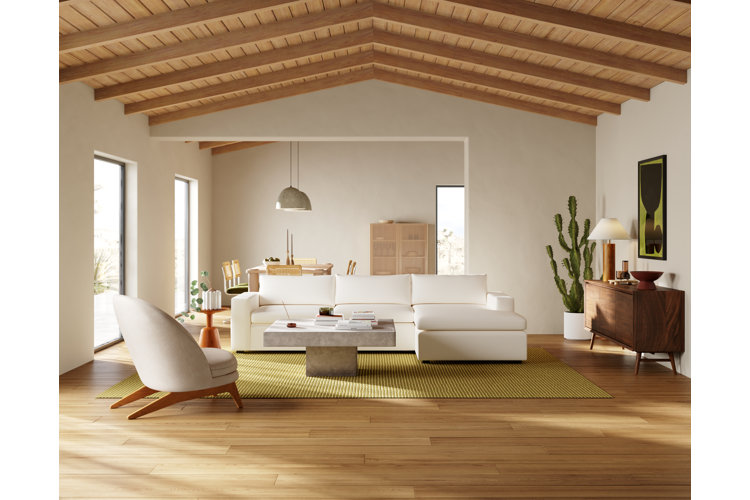
Designing an organic modern living room is about striking a balance between natural warmth and sleek sophistication. By combining earthy textures and the clean lines of modern style, you can create a space that feels both grounded and stylish. Let’s explore some ideas for bringing this organic modern aesthetic to life in your home.
Tip!
Read Your Guide to Organic Modern Style for a comprehensive overview of this popular style.
1. Create a Neutral Color Scheme
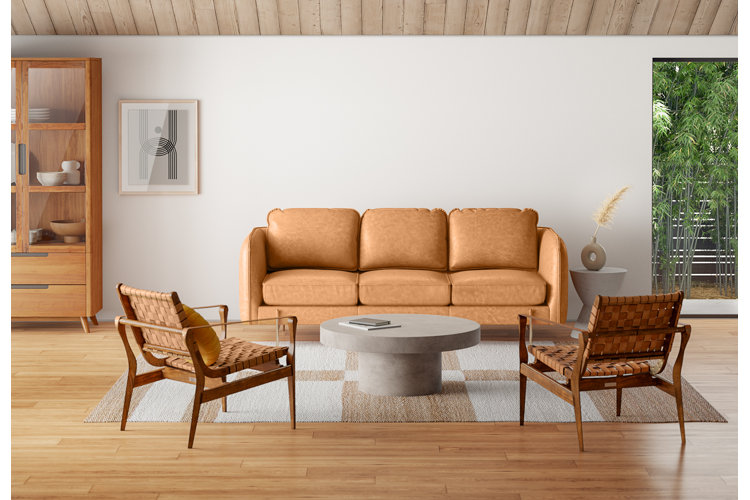
For an especially organic feel in your living room, establish a neutral color scheme with your furniture and decor. Lean into shades of ivory, beige, and brown that are commonly found in natural materials like cotton, leather, and wood.
Tip!
Read our guide What Are Neutral Colors for more information to help you design your dream color palette.
2. Use Organic Shapes & Materials
An abstract painting, freeform coffee table, or uniquely patterned sofa will bring organic shapes to your living room to create a laid-back environment. Paired with natural materials like a jute and rattan, these shapes are sure to add some earthy charm to your modern home.
There’s nothing as sleek and modern as a crisp white sofa. Opting for white upholstery on your main furniture fixtures allows you the freedom to experiment with other accent colors while keeping the focus on the beautiful, natural elements in the room. Against a white backdrop, green foliage and deep wood tones really pop.
If you prefer added durability or a more warm-toned upholstery, choose a leather sofa for a simple way to bring earthy brown tones to your living area. Leather is a stylish and durable upholstery material that combines comfort with chic design – making it the perfect material to incorporate into an organic modern space.
Opt for earth tones and muted colors to maintain a natural feel when adding pops of color to your living room. Dark green, burnt orange, and muted yellow are great color options to choose if you’re looking to bring vibrancy and warmth to your home without sacrificing its organic ambience.
Tip!
For more color scheme inspiration, check out our guide What Are Muted Colors & How to Use Them in Your Home.
6. Design a Light, Airy Atmosphere
The key to creating an organic-feeling space is to maximize on natural light and design a layout that flows in your home. Consider using simple furniture and minimal window treatments to maintain clean lines that are characteristic of modern style while allowing the most light to pass through.
Floors and walls provide the foundation for your room and play an important role in establishing its ambience. Consider installing floors and walls made of organic materials – like natural-toned wood panels or tiles made of stone – for an extra down-to-earth feeling in your home.
Keep minimal decor in your living room to emphasize the simplicity of modern design. Limiting the clutter of decorative objects can promote a sense of calm in your home and contribute to a sophisticated aesthetic. Utilize wall space to add some decorative details to your living room without overwhelming the space.
Use an area rug to establish the seating area in your living room and tie together your furnishings for a cozy, cohesive look. In an organic modern living room, choose a neutral area rug for a subtle appearance or opt for a deep earth tone to make a statement against a light color palette.
Tip!
Looking for the right area rug to tie your living room together? Read our guide How to Choose the Perfect Rug Color for Your Space for some helpful tips.
10. Include Woven Textures
Woven baskets, with their natural texture and earthy tones, can serve as either functional storage or decorative accessories that add to the organic charm of your living room. Choose a woven area rug to carry this texture throughout your space for a cohesive and natural-feeling environment.
Plants are guaranteed to make your home feel more organic by bringing an aspect of nature indoors. Not only do houseplants add a pop of color with their foliage and decorative pots, but they can even improve the air quality in your home. If you don’t have a green thumb, never fear! Faux plants offer the same visual effect as houseplants (just minus the air purifying benefits).
For a well-balanced living space, strive to incorporate as many natural elements as possible. In addition to your airy layout and earthy houseplants, consider adding a fireplace or indoor fountain to tie in the elements of fire and water. Centering your living room around natural elements will greatly improve its organic ambience.
While wallpaper is typically found in more traditional-style homes, it can add a charming accent to a modern room. Opt for a wallpaper with a muted color palette and natural motifs to complement your organic modern style. To maintain the simplicity of your space, consider adding wallpaper to an alcove or accent wall so as not to overwhelm the room.
Tip!
Interested in adding wallpaper to your home? Check out Wallpapering 101: How to Install Wallpaper for guidance to help you along the way.
14. Emphasize Comfort & Relaxation
When designing a living room, you should prioritize the comfort and functionality of the space. Choose furniture fixtures and a layout that suit your lifestyle and give you a space to relax – whether that’s a grand sitting area or a cozy reading nook. Regardless of how you style an organic modern living room, make it feel natural to you!
