How to Install Vinyl Plank Flooring
DIY your own floor refresh.
Vinyl plank flooring is an innovative alternative to hardwood that's more budget-friendly and easier to install. Keep reading to learn how to install vinyl plank flooring, whether you go with click-lock, floating, glue-down, or peel-and-stick installation types.
How to Install Vinyl Plank Flooring
How to Install Click-Lock or Floating Vinyl Plank Flooring
How to Install Glue-Down Vinyl Plank Flooring
How to Install Peel-and-Stick Vinyl Plank Flooring
Vinyl Plank Flooring Installation Overview
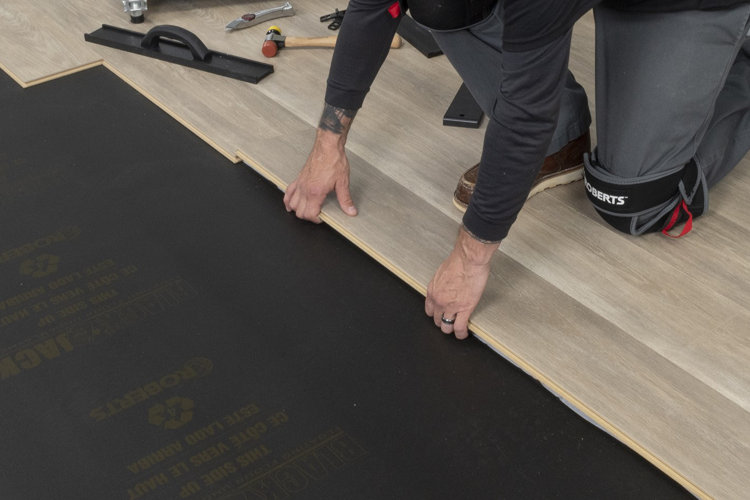
Review this section before you get started to make sure you have the right tools and flooring materials.
Skill Level: Beginner to Intermediate
Time Requirements: 4–8 Hours (Depending on room size)
Number of People: 1–2
What You'll Need:
- Either click-lock, floating, glue-down, or peel-and-stick vinyl plank flooring (reference step one for how to choose the best type)
- Tape measure (to measure room square footage and measure vinyl flooring planks prior to cutting)
- Pencil & notepad (to record square footage and mark flooring panels for cutting)
- Floor scraper/stripper (for removing old flooring or leveling out subfloors)
- Mop (for cleaning subfloors prior to glue-down or peel-and-stick plank installation)
- Pry bar (only needed for removing old baseboards)
- Hammer (to remove or level nails on the subfloor)
- Floor cutter or circular saw (for cutting click-lock, glue-down, or floating vinyl flooring panels to fit the space)
- Undercut jamb saw (to cut beneath door jambs so click-lock, glue-down, or floating vinyl planks will fit snugly underneath)
- Safety glasses (to protect your eyes when cutting vinyl planks)
- Chalk line tool (to draw reference lines on the floor for glue-down or peel-and-stick vinyl flooring and/or a level to ensure planks lay straight)
- Vinyl flooring underlayment (for click-lock and floating planks)
- Underlayment tape (unless the underlayment comes with pre-attached tape)
- Adhesive (for glue-down vinyl planks)
- Trowel (to spread adhesive on the subfloor prior to installing glue-down planks)
- Utility knife (for removing excess underlayment or trimming peel-and-stick planks)
- Cushioned mat (for working on your knees)
- Duct tape (to mark floor panels for cutting)
- Spacers (to place between the first set of click-lock or floating vinyl floor panels and the wall to account for natural expansion and contraction)
- Tapping block (to protect click-lock of floating vinyl planks when using a rubber mallet to lock them together)
- Rubber mallet (to close gaps between click-lock or floating vinyl flooring planks)
- Pull bar (to help reduce gaps between click-lock or floating vinyl plank floor panels)
- Floor roller (to go over newly-installed glue-down planks to ensure they adhere to the subfloor)
- Baseboards or quarter rounds (if you don't want to remove previous baseboards)
- Transition pieces (like overlap reducers or flush reducers to span doorways if adjacent rooms sit at slightly different heights or have another type of flooring)
- Nail gun (to attach baseboards, quarter rounds, or transition pieces to walls and floors)
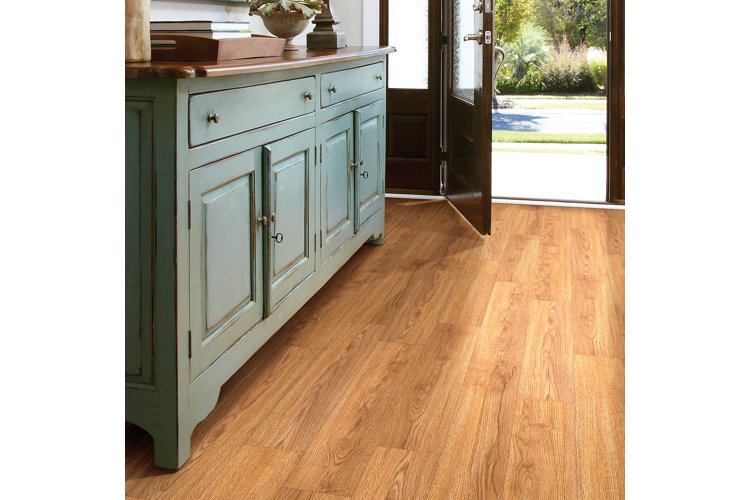
Follow these steps to install vinyl plank flooring with confidence.
1. Choose a Vinyl Plank Flooring Type
- Click-lock and floating vinyl plank flooring methods are designed to be installed directly on top of an underlayment layer. No glue or adhesive is required, thanks to the tongue-and-groove or click-lock mechanism that occurs when two or more planks are pressed against each other.
- Glue-down vinyl plank flooring is the most permanent option, as it requires an adhesive to be applied to the subfloor before laying down the planks.
- For rental spaces or a quick remodel, peel-and-stick vinyl plank flooring is the way to go. Similar to peel-and-stick wallpaper, peel-and-stick vinyl floor planks have adhesive backings that can be applied directly on top of existing flooring.
Learn more about your options in our guide on Types of Vinyl Flooring to Transform Your Floors.
Whether you go with click-lock, floating, glue-down, or peel-and-stick vinyl plank flooring, you need to determine your room's square footage. Knowing how to calculate the square footage of a room for vinyl plank flooring will save you time and money because you'll know exactly how much to buy ahead of time. To calculate a room's square footage, measure the length and width of the room. Then, multiply (L x W) or reference the diagram above to calculate the square footage of a unique-shaped room. The sum of these calculations is the total square footage. We also have guides on How to Find the Square Footage of a Room: Flooring & Walls and How to Calculate Square Footage for Rooms for more in-depth guidance.
Most vinyl flooring products on Wayfair have a square footage calculator to help you determine how many boxes of flooring you need to buy for a specific room size.
3. Prep the Subfloor
The first step for successfully installing vinyl flooring is to prepare the subfloor for the flooring panels. This process includes removing old flooring, leveling the floor, and removing any bumps or protrusions to create a smooth flat surface.
- For click-lock, floating, and glue-down vinyl flooring, you'll first need to use a floor scraper to remove the old floor material and flatten the surface. You may also need to use a hammer to remove or level nails protruding from the subfloor.
- For glue-down and peel-and-stick vinyl plank flooring, you'll also need to wash and dry the subfloor prior to installation. This ensures that the adhesive components adhere to the subfloor or existing flooring instead of dust or dirt particles.
- For click-lock, floating, and glue-down vinyl planks, you'll also need to remove any baseboards with a pry bar. Review How to Remove a Baseboard in One Piece if you want to reuse your old baseboards.
- If you choose to leave your old baseboards, then you'll just need quarter rounds to cover the gaps between the edges of the floor panels and the baseboards.
- For peel-and-stick vinyl flooring, you should be able to keep the old baseboards as is and will simply have to cut the edges of the peel-and-stick panels to fit along the baseboards.
- You may also need to trim the bottom edges around door jambs if you plan to use click-lock, glue-down, or floating vinyl plank flooring, as this makes it easier to slide/fit the planks underneath for a seamless look.
How to Install Click-Lock or Floating Vinyl Plank Flooring
Do you have click-lock/floating vinyl planks to install? Follow these instructions for specific installation help.
1. Install the Underlayment
Once you've prepped the subfloor, the next step is the underlayment. The underlayment layer is super important for click-lock and floating vinyl flooring because it helps absorb sound, improve comfort, and limit strain on your flooring. Check out What is Underlayment?: How This Extra Layer Of Material Protects Your Floors to learn more. Like vinyl planks, underlayment comes in square foot–measured rolls. As an example, a 250 sq. ft. room will likely need three 100 sq. ft. rolls of underlayment to ensure there's enough to cover the subfloor. You can also skip this entire step by going with vinyl plank flooring that comes with a pre-attached underlayment layer!
1. Roll out the first portion of underlayment. Unroll the underlayment until it's touching both walls on opposite sides of the room. Use your utility knife to cut along the edge of the underlayment to detach it from the roll. Secure the edges of the underlayment that are next to the walls with underlayment tape or duct tape to ensure they don't move around during the installation process or after flooring has been installed. This way, you also don't have to worry about the underlayment moving/exposing a portion of the subfloor to potential moisture or debris that gets beneath the floor panels.
2. Roll out the next portion of underlayment to slightly overlap the first. Overlap the first row of underlayment with the second row by a few inches to prevent gaps in the underlayment layer. Use your utility knife to detach the underlayment from the roll.
3. Peel off the tape liner on the overlapping piece and press down. Peel off the tape liner on the overlapping piece of underlayment and use your hands to press down along the length of the overlapping piece to ensure both pieces of underlayment are taped together. If your underlayment doesn't come with pre-attached tape, just use underlayment-suitable tape to tape the overlapping layer to the first layer.
4. Repeat the process until the entire floor is covered. Repeat steps 2 and 3 until the entire floor is covered in one layer of underlayment.
5. Use a utility knife to remove excess underlayment. Take this time to cut an excess underlayment that you don't need.
2. Play With the Plank Layout
Before you actually go to install, consider how you want your planks to lay. Staggering planks is a popular method that gives your floors a cool organic look. Here are some layout ideas for vinyl plank flooring. You may need to cut pieces to size in order to achieve a specific look.
Horizontally:
Example 1: (Full length, followed by 1/3 length, followed by 2/3 length, followed by a combo of 1/3 length and 2/3 length, followed by full length)
Example 2: (1/3 length followed by full length, followed by 2/3 length, followed by 1/2 length)
Vertically:
Example 1: (1/3 length, followed by full length, followed by 2/3 length, followed by 1/2 length)
Example 2: (Full length, followed by 2/3 length, followed by full length, followed by 1/3 length)
3. Install Click-Lock/Vinyl Plank Flooring
- First, position spacers along the bottom edges of the walls. These are designed to keep a 1/4" gap between vinyl flooring and the wall, which will prevent the floor panels from warping or breaking when exposed to natural temperature changes.
- Most spacers are designed to be freestanding or to clip onto the outer edge of the floor panels that rest beside the wall. However, you can ensure a snug fit and prevent spacers from falling/moving by pressing the vinyl floor panel against the wall and lightly tapping a spacer or a wooden shim into place with a mallet. You need to remove all spacers once the entire floor has been installed to allow the floor panels to breathe.
- Lay down the first click-lock/floating vinyl floor panel beside the spacers.
- Then, add the second panel by inserting the lengthwise edge of the second panel into the grooves of the first panel.
- Once you hear a click, press the new panel down onto the floor to help lock the panels together.
- Then, line your tapping block up with the outer lengthwise edge of the panel you just installed – making sure that the block fits into the panel's click-lock grooves.
- Use a rubber mallet to lightly tap on the side of the tapping block until the gap closes between the two floor panels.
- Repeat the process of laying down individual vinyl planks until you cover the entire floor – making sure to insert the lengthwise edge of the new panel into the grooved edge of the previous panel. Depending on the amount of space left, you may need to cut the last row of panels to be narrower so they can fit snugly between the second-to-last row and the wall. Remember, you want 1/4" of space between the floor panels and the wall to allow the panels to swell or contract without buckling.
- Click-lock/floating vinyl flooring also has click-lock grooves on both ends of the panel to make it easy to add panels above or below.
- To ensure a snug fit, use the tapping block and rubber mallet for each vinyl flooring plank you add.
Tip!
If using a combination of a tapping block and a rubber mallet doesn't close the gap between vinyl flooring planks, incorporate a pull bar. This tool is designed to lock onto the edge/underside of a floor panel. Repeat the tapping process but this time use a second rubber mallet to tap the pull bar at the same time. This should help the floor panels fit tightly together.
Considering glue-down vinyl plank flooring for a more secure flooring solution? Keep reading to learn how to install it:
1. Choose a Starting Wall & Draw a Line Out from the Center Point of the Wall
This is where you'll put your guideline using chalk or pencil to help "guide" your placement of the vinyl flooring planks during installation. It ultimately ensures that you don't accidentally lay your planks at an odd angle.
2. Experiment With the Plank Layout
Stagger and reorder vinyl flooring planks on the subfloor using the central guide line as the starting point. Like the other installation methods, make sure you take a picture of the proposed layout before you remove the planks. This step is super important because once you place the planks on the adhesive, they're there to stay.
3. Apply the Adhesive to the Subfloor
Next, it's time to spread the adhesive! This is usually done using a notched trowel because the grooves it creates help ensure a secure bond between the adhesive and the planks when installed. Follow the instructions for a particular adhesive to determine how long to let it dry before laying down the planks. We also suggest checking if the vinyl planks you plan to install have a recommended glue adhesive to use for the specific product.
Pour a generous amount of adhesive onto a section of subfloor and use your trowel in a curved motion to help spread the adhesive evenly.
4. Let the Adhesive Rest for the Recommended Time Frame
Reference the adhesive's directions to determine the proper wait time. This could be up to 30 minutes or less, or when you notice the adhesive starts to harden.
5. Lay the Vinyl Planks
Using your guide line, which should still be visible through the adhesive, lay down your first plank. Like peel-and-stick vinyl planks, start at one end, pressing down on the plank until it's flat on the floor.
6. Go Over the Planks With a Floor Roller
Press the roller along the planks lengthwise to make sure that they're secured to the adhesive.
7. Repeat the Process Until the Entire Room Is Complete
Repeat the process of applying the adhesive, laying the planks, and pressing them with a floor roller until your floors are completely transformed! It's important to apply the adhesive and lay planks in sections because the adhesive might dry out too much if you try to do the entire room in one sitting. You may need to cut or trim planks that overlap the walls.
After washing and drying the floor to ensure peel-and-stick planks adhere correctly, you can start installing! Here's how to install them:
1. Try a Few Different Plank Layouts
Grab four or five peel-and-stick planks and lay them out on the floor without removing the adhesive backing. Experiment with staggering the planks as we outlined in the click-lock/floating plank section to create a stunning flooring display. Make sure to take a picture so you can remember which layout to recreate.
2. Use a Level & a Chalk Line Tool to Visualize Placement
Choose a starting wall from which you plan to draw your guide line. Place a level on the floor beside a peel-and-stick panel and adjust the angle until it's laying perfectly vertical or horizontal. Use a chalk line tool to draw a straight line from the wall, outwards so you don't lose your place when you go to remove the adhesive backing. If installing over grouted tile, you may be able to use the grout lines as a guide for placement instead – same with if you're installing peel-and-stick vinyl planks over existing vinyl or wood flooring.
3. Remove the Adhesive backing to the First Plank & Install
After removing the backing of the first plank, line it up with your reference line and start from one end, adhering it to the floor and smoothing it with your hand as you go.
4. Use Your Fingers to Smooth the Surface
Once the plank is fully adhered to the floor, go back over with your hands to smooth the surface again and get rid of any air bubbles under the surface.
5. Repeat Until the Floor Is Covered
Use a utility knife to trim edges that overlap baseboards or wall trims.
