What Is Vinyl Flooring?
Everything you need to know about top-notch vinyl flooring.
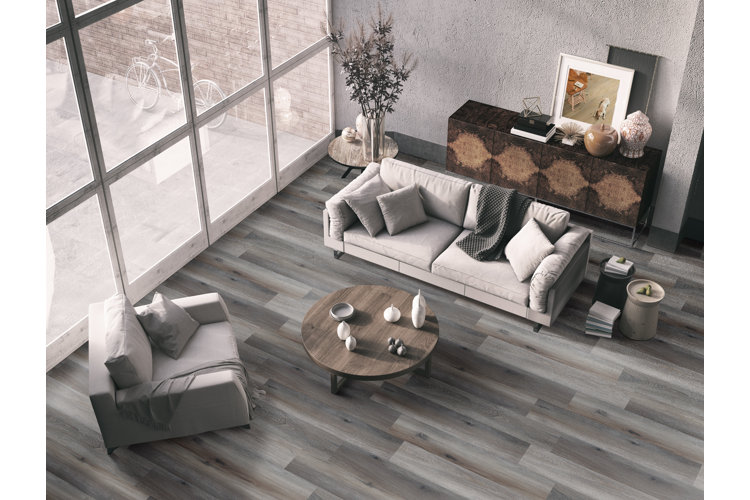
If you're at the flooring stage of your home renovation process, you have many reliable flooring options. You may be asking yourself, "What is vinyl flooring?" – if so, you're in luck. Read our guide to learn more about types of vinyl flooring. Durable, affordable, water-resistant, and low-maintenance, vinyl flooring is an excellent choice for every room in your home.
What Is Vinyl Flooring?
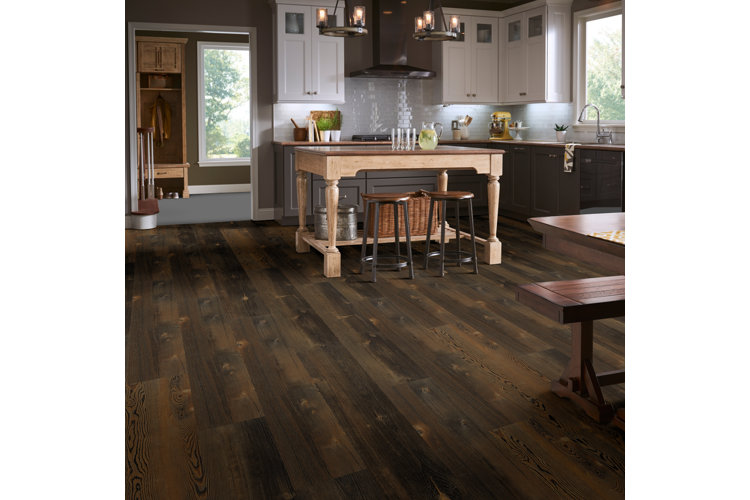
(Shop this image: dark wood-look vinyl flooring, kitchen islands, and counter-height stools.)
Vinyl flooring is a synthetic flooring option made from polyvinyl chloride plastic (commonly known as PVC). Small pieces of colored PVC are heated and then pressed into thin layers that are adhered to form flexible sheets of vinyl that can be left as is or cut into tiles or planks. Vinyl flooring can be colored and textured to resemble a variety of materials including wood, stone, and ceramic. Vinyl flooring is often compared to linoleum or laminate flooring, but linoleum and laminate flooring are both composed of all-natural materials. Vinyl is completely synthetic and thus cheaper, more durable, and easier to install.
Tip!
Trying to decide between vinyl vs. laminate flooring? Check out our guide on Hardwood vs. Laminate vs. Vinyl Flooring: How to Choose Flooring That Exceeds Your Expectations to weigh your flooring options.
Construction of Vinyl Flooring
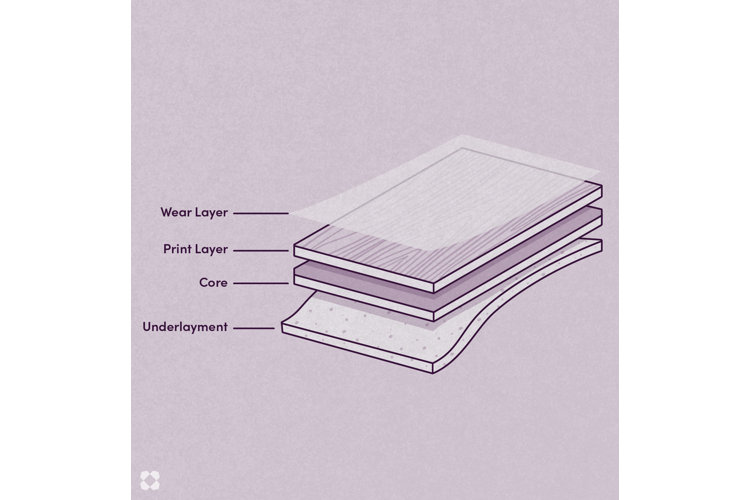
So, what is vinyl flooring made of? Vinyl flooring is made of four layers of material to promote comfort and durability.
1. Wear Layer
Made of a clear, protective urethane sealant, this layer is what makes vinyl flooring durable and water-resistant. Measured in mil (thousandths of an inch), the thickness of the wear layer determines how durable the vinyl flooring is.
- 0–5.9 mil: Light traffic, good for bedrooms and low-activity spots
- 6–11.9 mil: Moderate traffic, good for living rooms and average activity
- 12–19.9 mil: higher traffic, good for homes with active pets/children or in spaces like kitchens/hallways
- Over 20 mil: heavy traffic, good for busy commercial areas
2. Print Layer
This layer is what gives vinyl flooring its attractive appearance. The print layer is a thin film decorated with the desired flooring pattern that shows through the clear wear layer.
3. Core
Vinyl flooring can be either flexible or rigid, depending on the core type. Rigid core vinyl flooring typically comes in the form of sturdy planks or tiles with little pliability. These ultra waterproof cores can be made of stone plastic composite (SPC) or wood plastic composite (WPC), with SPC tending to be the harder, denser, more compact, and more durable of the two.
4. Underlayment
Made of fiber, felt, rubber, or foam, this bottommost layer provides vinyl flooring with additional cushioning, insulation, sound absorption, and durability. When installed over a subfloor that is vulnerable to moisture, underlayment can provide the underside of vinyl flooring with a protective moisture barrier. Underlayment can come pre-attached to vinyl flooring or as a separate element – check the flooring manufacturer's details to be sure before you purchase.
(Shop this image: stone-look vinyl flooring, metal backless stools, and white kitchen islands.)
Vinyl flooring is available in two design configurations (plank or tile) and several different installation types (click-lock, floating, groutable, and peel-and-stick). Explore these options and installation methods further in Types of Vinyl Flooring to Transform Your Floors.
(Shop this image: light vinyl flooring, pink hallway runners, shoe racks, and dog care accessories.)
With a better understanding of what vinyl flooring is, let's discuss its endless benefits! Because of its hardiness and versatility, vinyl is one of the most reliable flooring options for almost any room in your home, even the kitchen and bathroom.
Durable: Its construction renders it incredibly durable – it is highly resistant to scratching and denting, so it's a great choice for high-traffic areas and homes with pets.
Water-Resistant: One of vinyl flooring's greatest strengths is its water-resistance – it is highly impermeable and can stand up against moisture and liquid spills. This makes it the perfect flooring choice for the kitchen or bathroom.
Low-Maintenance: Vinyl flooring's water-resistance also means it resists stains and is easy to clean. A light sweeping is all that's necessary to remove dirt and debris, and a gentle mopping with vinyl-friendly cleaning solution is effective at removing tough stains.
Affordable: More affordable than many other flooring options and versatile in design, vinyl flooring can provide the high-end look and feel of wood, ceramic, and natural stone without the steep price tag.
Easy to Install: Whether you choose vinyl sheets, tiles, or planks, you won't need to hire a contractor to help you install vinyl flooring. It is DIY-friendly and can be installed over a wide variety of subfloors.
Tip!
Looking for more hands-on help with flooring? Get a consultation with Wayfair's Flooring Installation Services by Installation Made Easy®. Learn more here.
You Might Also Like
Now that you know what vinyl flooring is, start transforming your floors!
