Bassinet vs. Cradle: Is There a Difference?
Soothe your baby to sleep.

Bringing a baby home is a major event that requires plenty of preparation, especially when it comes to their sleeping setup. Take a closer look at the differences between a bassinet vs. cradle to discover if either of these infant beds will work in your home.
Cradle vs. Bassinet: What Is the Difference?
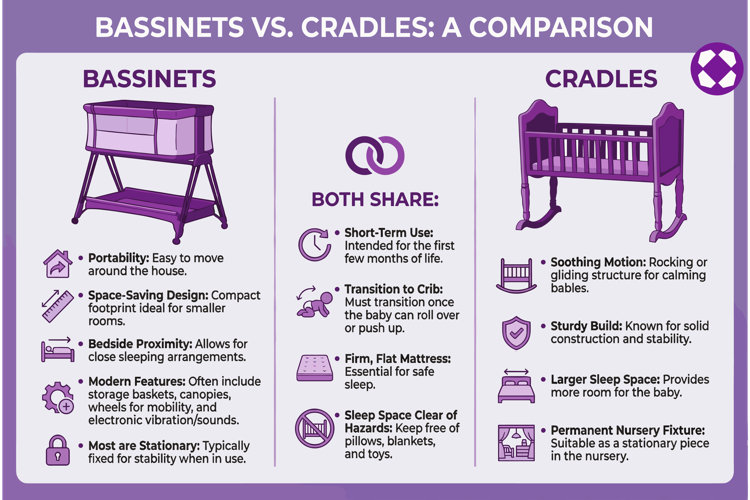
When it comes to baby sleep solutions, you have three primary options to choose from: a crib, cradle, and bassinet. Of these three, the crib is the easiest to identify as it is the largest and is typically placed in the nursery where the child can sleep until they are old enough for a full-size bed. Cradles and bassinets are a little more nuanced, with the former being sturdier and often offering a rocking motion to aid baby's sleep, while the latter is smaller and more portable for easy movement around the house and when traveling. Both are used as intermediary sleeping options until your child can graduate to a crib.
Tip!
Read our guide Bassinet vs. Crib: What Does Baby Actually Need? to take a closer look at these two sleep options.
What Is a Cradle?
Measuring around 36 inches long and 20 inches wide, cradles are typically used by newborns and infants. They're good for parents who want to keep their baby in their room during those first few months, allowing them to closely monitor and tend to their little one. In terms of design, most cradles feature rockers that help to lull your baby to sleep. Some also come with a hood or a canopy so your baby feels more cozy as they rest. While cradles are more portable than cribs, they are not as portable as bassinets. And because they are sturdier than bassinets, they do also come with a higher price tag.
Note: Both cradles and bassinets can only be used until your baby is able to roll over and push up on their hands. After this point (usually around six months of age), they will be able to climb out on their own.
Pros of a Cradle
- Though they don’t feature wheels, they're still easy to move from room to room.
- They're the sturdier of the two options, typically made from solid materials like wood.
- Those with a rocking or gliding function help your baby fall asleep more easily.
- They allow you to keep your baby nearby in their early months.
Cons of a Cradle
- They're not as portable as a bassinet.
- They're more expensive than bassinets.
- They can only be used for a limited amount of time until the baby outgrows it, often around six months or when a baby can sit up.
Tip!
Regularly inspect your baby's bassinet, crib, or cradle for any loose screws and bolts or faulty parts to ensure it is as safe as possible.
What Is a Bassinet?
A bassinet is also used in the bedroom during your baby's transition to the crib. It's the smallest sleeping option (and lowest to the ground) and is most suitable for newborns and young infants. Because it's smaller (30 inches long and 18 inches wide), a bassinet is often placed right near the bed for late night feedings and soothing your baby back to sleep.
It is the most portable option, often featuring handles that allow you to carry the bassinet from room to room, so you can always keep an eye on your little one wherever you are. The sides of most bassinets are lower than those of a cradle, giving you easier access to your baby. They are often designed without any rocking features, only straight legs, although some also come with wheels and a handle for added portability. Some bassinets are even designed to be placed next to or attached to your bed. These bedside bassinets offer easy access for middle-of-the-night feeding while providing a separate sleeping space for your baby.
Pros of a Bassinet
- They're the smallest and most compact option, making them ideal for small bedrooms.
- They're more budget-friendly than cradles or cribs.
- Bassinets are more portable for your convenience, especially when you are traveling.
- They often feature handles to make moving them easier.
- They typically weigh less than cradles.
- Bedside designs make it easy to check on your baby without having to get out of bed.
Cons of a Bassinet
- Your child can quickly outgrow the bassinet. Babies should be transitioned from a bassinet to a crib around 15–20 lbs. or when they can push themselves up on their hands and knees.
- They tend to be a little less sturdy than the other sleeping options.
- They don't usually have the rocking feature.
Tip!
For a closer look at bassinets, read What Is a Bassinet? Everything You Need to Know.
