Hardwood vs. Laminate vs. Vinyl Flooring: How to Choose Flooring That Exceeds Your Expectations
Decide on the best flooring for your home.
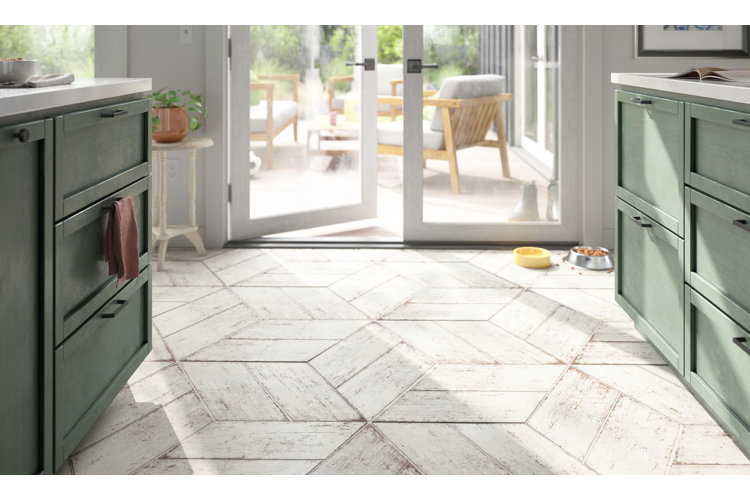
With so many flooring choices to consider, it can be hard to choose the right one for your home. This guide will take away the guesswork about laminate vs. vinyl flooring vs. hardwood floors, so you can make a well-informed decision that's best for you and your home. Keep reading to discover which type suits your preferred flooring qualities, style, and budget!
In this guide:
Hardwood vs. Laminate vs. Vinyl: Which Is Best?
Hardwood Flooring
Laminate Flooring
Vinyl Flooring
Frequently Asked Questions
Hardwood vs. Laminate vs. Vinyl: Which Is Best?
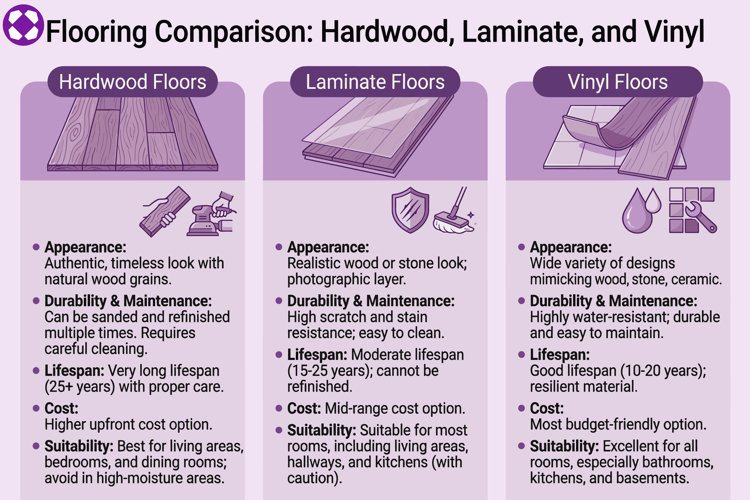
Hardwood is natural and durable, laminate is affordable with wood look, and vinyl is waterproof and versatile. Consider your budget and room type to determine which flooring option is best.
Most Affordable: Vinyl
Vinyl flooring is the most inexpensive option of the three because it's made solely of plastic materials that are more readily available, whereas laminate flooring contains wood fibers at the base and hardwood includes all real wood. Laminate is a close second when it comes to affordability – it also has wood fibers, which help strengthen its base layer.
Highest Durability: Hardwood
Hardwood is more durable than laminate and vinyl in the long-term because of the strength of natural wood grains and special finishes that make it water- and fade-resistant. With the right care and maintenance, hardwood floors can last up to 100 years. If you want to go with a durable option that is more affordable, Vinyl is a great second place option that can last up to 25 years with the right care.
Most Water-Resistant: Vinyl
As mentioned, vinyl flooring has waterproof properties that allow it to withstand water damage for up to 72 hours, which is why it takes first place for being the most water-resistant flooring option of the three. Laminate flooring and hardwood can both be water-resistant and in some cases waterproof, but they don't share the impermeable layers of synthetic materials that vinyl flooring has.
Easiest to Install: Laminate
When deciding on hardwood vs. laminate vs. vinyl flooring, laminate reigns supreme as the easiest to install because each panel comes with pre-attached tongues and grooves that allow for a seamless installation. All you need to do is fit them together like puzzle pieces to achieve success. Vinyl flooring requires an adhesive to lock panels in place, but some have pre-installed grooves and holes like laminate flooring to help make the process of fitting panels together much easier, making it runner up in terms of installation.
Easiest to Clean: Vinyl
Vinyl flooring is the easiest to clean because of its water-friendly properties. Vinyl only requires a wet mop and plain water, and there's no need to worry about potential water damage. You can also vacuum over vinyl floors easily so long as your vacuum cleaner has a setting meant to clean smooth floors and prevent dents or scratches. Laminate and hardwood flooring tie for second as the easiest to clean because both benefit from a vacuum with a gentle setting meant for smooth floors, and both benefit from an occasional mopping.
Highest Comfort Level (Underfoot): Laminate
Laminate flooring offers the best in terms of comfort while walking because of its smooth top layer. Laminate floors that come with a thick foam underlayment enhance the floor's absorbency even more so that it feels light underfoot. Both vinyl and hardwood flooring come in second for comfort, as they both have a hard composition and cold feel. However, you can increase your walking comfort with a foam underlayment.
Most Eco-Friendly: Laminate
Laminate takes first place as the most eco-friendly of the three flooring materials because it's the right balance of natural materials and synthetic components (wood fibers and resin). Therefore, you aren't using up a lot of wood with laminate floors while equally limiting the amount of plastic used for an all-around environmentally conscious choice. Hardwood gets second place for most eco-friendly because it is a biodegradable material that can be returned to nature and turned into compostable materials.
Best for Design Flexibility: Vinyl & Laminate
Vinyl's plastic composition makes it easy to manipulate to look like wood, tile, or stone, while laminate's use of photographic images on each panel creates equally realistic adaptations of the same.
Best Room Placement Flexibility: Vinyl & Laminate
In terms of where you can install vinyl or laminate flooring, you have endless options. With vinyl being renowned for its waterproof properties it works in any room of the house but especially in the powder room, bathroom, basement, and other water-prone spots. Laminate flooring's scratch-resistant coating and water-resistant properties make it a welcomed addition to any room in the house as well.
Best Resale Value: Hardwood
If you ever decide to sell your home, hardwood floors can give you the best resale value out of the three flooring options. This is because hardwood adds a sophisticated look and has the potential to last for up to 100 years or undergo re-finishing to create a new look altogether.
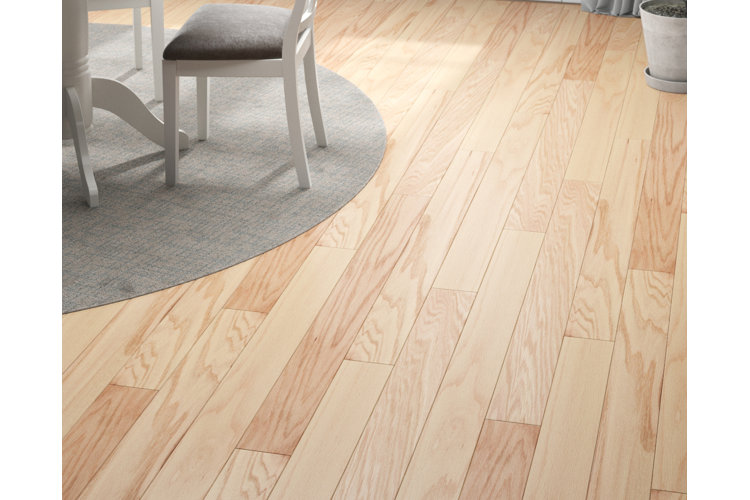
Hardwood flooring is the best choice if you’re looking for a durable and long-lasting option. Besides its unmatched quality, hardwood floors also offer a textured, detailed design that wood alternatives like laminate or vinyl often seek to emulate. Interested in hardwood floors? Review the list of features below to help focus your search:
Tip!
When looking to install hardwood flooring, we recommend enlisting the help of a professional flooring service, as hardwood planks either need to be nailed, stapled, or glued. Going with professional installation takes away the guesswork and ensures an excellent finished floor that you can enjoy right away.
Water Performance Level
You can easily prevent water stains, knicks, and scratches by looking for hardwood flooring with strong protective coatings and finishings that protect the wood beneath and add a smooth sheen. Water-resistant hardwood can withstand occasional spills without accumulating water damage and stains, making it a good choice for the kitchen, laundry room, or living room. Waterproof hardwood floors have a completely impermeable surface that ensures the prevention of swelling or rotting wood, no matter what. This makes waterproof hardwood a must for your bathrooms, flood-prone basements, or entryways that accumulate water from rain or snow you trek in from outside.
Engineered vs. Solid Wood
Hardwood flooring comes as either engineered or solid wood constructions, so choose the one that best appeals to your needs and your budget. Engineered wood is made from layers of plywood or wood veneer with a real wood layer on top and a plywood core. This ultimately strengthens engineered wood floors and gives them more flexibility to withstand moisture that can cause wood to warp, as well as allowing it to hold up well against concrete subfloors.
Solid wood flooring is made from a single piece of wood and its solid construction makes it more expensive per square foot than engineered counterparts. To prevent warping and moisture damage, install solid wood floors over tile, laminate, or carpet subfloors instead of concrete (which retains moisture and humidity) for the best results. If you're set on solid wood but have a concrete subfloor, consider a high-quality underlayment with moisture-resistant properties.
Hardness Rating
Hardwood flooring's hardness rating uses the principles of the Janka scale, which measures the level of resistance a wood panel can withstand to prevent daily wear and tear. Hardwood with mid-range hardness ratings can resist general scuffs and dents that occur in spaces like the dining and living room. Hardwood with high hardness ratings have a strong resistance level made for high-traffic hallways, or kitchens.
Thickness
Choose from a variety of thickness options for your hardwood flooring. Hardwood with a thickness of 3/4" or greater works best in high-traffic areas or over the top of unfinished sublayers to level out uneven spots, while thinner hardwood panels that range between 1/4" and 1/2" work best in low traffic rooms with smooth or finished subfloors.
Tip!
Want to learn more about hardwood flooring? Check out our guide The Different Grades of Hardwood Flooring & What They Mean for additional tips.
Laminate flooring is an inexpensive yet sturdy option for high-traffic areas and households with pets or kids. This is due to a base layer, which is made of fiberboard (usually composed of real wood fibers) and bound together with resin, and the topmost layer, which includes a clear protective coating that protects the flooring from knicks or scratches. A photographic image goes between the base and the top layer to provide the appearance of hardwood at a fraction of the price.
Laminate flooring usually comes in collections of paneling with pre-installed grooves that fit together like puzzle pieces without the need for glue or grout – making it super easy to install on your own! Check out these additional facts about laminate options to help with your decision:
Water Performance Level
The difference between water-resistant and waterproof is that water-resistant flooring can only withstand so much water before it seeps through, while waterproof flooring prevents any water from getting past the top layer. This makes water-resistant laminate flooring perfect for anywhere with the occasional spill like the kitchen, living room, or bedroom, while areas that see consistent water spills like the bathroom or a flood-prone basement will benefit from fully-waterproof laminate.
AC Rating
Most laminate flooring comes with an AC rating, or "Abrasion Coefficient" rating that manufacturers use to grade its durability on a scale of one to six. AC ratings of one to three work best in residential areas with low traffic, like bedrooms, while AC ratings of four to six are better for high-traffic spots like the family living space or entry hallways. You can determine a laminate flooring product's AC rating by referencing the AC category to the right of a product image on product pages.
Thickness
Laminate flooring comes in different thicknesses to support different areas of your home and ground surfaces. Place laminate floors with a thickness of 5 mm or less in low-traffic areas like your bedroom or your home office or in spots that have a smooth, even ground layer (like polished concrete). Place laminate flooring with a thickness of 6 mm –12 mm in high-traffic spots like the kitchen, living room, or dining room. The extra thickness helps absorb weight without putting strain on the floor boards, preventing cracks. Thicker laminate flooring also works best when covering over unfinished concrete, brick, or wood sheets as it levels uneven spots.
Tip!
Leaning toward laminate but still deciding between laminate vs. vinyl flooring or going all the way with hardwood? Learn more in our all-encompassing guide on How to Choose the Best Laminate Flooring and review How to Install Laminate Flooring to learn more about the process.
Vinyl flooring usually has a base layer composed of fiberglass – known for its stability and its impermeability. Vinyl floor panels either come with a pre-applied adhesive that helps lock panels into place, or they might require an adhesive glue that you can pick up at your local hardware store. Check out more of vinyl's key attributes here:
Water Performance Level
Vinyl floor can be either waterproof or water- resistant – but don't let this throw you. Water-resistant vinyl can withstand spills for up to 24 hours, for a slightly cheaper option that's perfect for the kitchen, living room, or dining space. Waterproof vinyl, on the other hand, can withstand water damage for up to 72 hours, making it a must-have for bathrooms or basements prone to flooding.Add a vinyl sheet layer on top, and you can rest assured no water will seep through or damage the flooring.
Wear Layer
All vinyl flooring comes with a wear layer that consists of a clear protective coating. It's scratch-resistant, which makes it a must in high-traffic areas with pets running around or constant foot traffic, and it also prevents the wood or tile-like layer beneath from fading, preserving your floor’s color and quality. The thicker the wear layer, the longer the floor’s durability, and the more suitable it is for those high-traffic spots in your home like hallways or well-loved living spaces.
For light-traffic bedrooms:
For moderate-traffic living rooms:
For high-traffic areas like the kitchen:
For the utmost durability; commercial-level vinyl:
Core Type
When choosing vinyl flooring, you have the option of a flexible or rigid core type. It's important to choose the compatible core type for your subfloor to promote a level floor space and your comfort when walking across it. Flexible core types (also called a PVC core) works best when paired with smooth subfloors like polished concrete. This core type is cheaper because it's usually thinner and more lightweight, with a softer feel when you walk on it. This makes it ideal for bedrooms. Vinyl flooring with a rigid core (also called a WPC/SPC core) works best for unfinished subfloors with uneven areas like unfinished concrete, as its thickness disguises the imperfections below and ensures you don't feel them when you walk over them. Rigid core types are also stronger and more durable, making them a great choice for high-traffic spots.
Tip!
Read more about the benefits and qualities of vinyl in our guide on What Is Vinyl Flooring?
Frequently Asked Questions
Which flooring is most durable?
With the proper care, hardwood lasts the longest.
What is best for bathrooms?
Vinyl is the best flooring for bathrooms because it's waterproof.
Which flooring is cheapest?
Laminate is the least expensive of the three options.
