How to Care for a Philodendron Plant
Stay green.
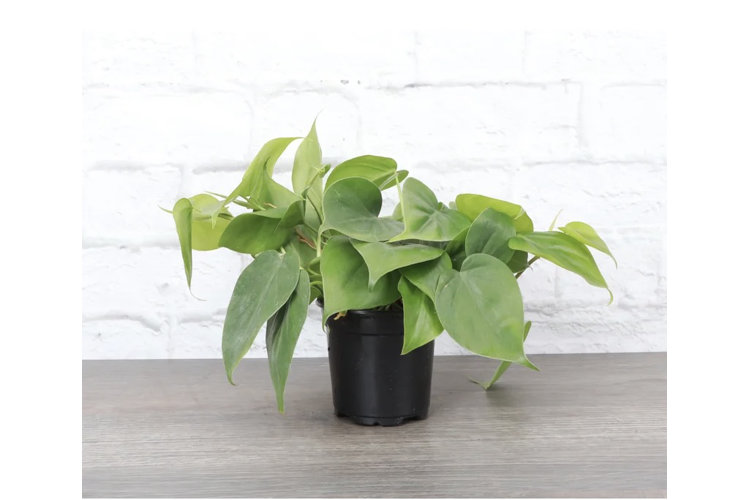
Tired of your indoor plants dying faster than you’d like? Enter a philodendron – one of the easiest indoor plants to grow that are extremely low-maintenance to take care of. These gorgeous plants feature luscious leaves and are very forgiving in terms of care. If you like introducing nature and life into your home and are looking for the perfect plant, here’s how to care for a philodendron so you can enjoy their natural beauty for months to come.
Tip!
Learn more about indoor plants in this guide: The Best Houseplants to Grow Indoors
What Are Philodendrons?
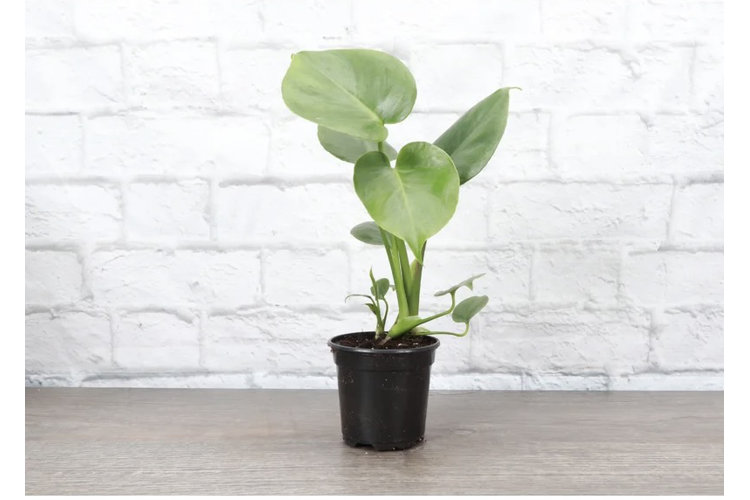
Originating in Central and South America, philodendron plants produce leaves and sometimes vines in dark green colors. These types of house plants can grow indoors year-round to keep your home freshly stocked with life and greenery that doesn’t require a strict maintenance schedule.
There are two main types of philodendrons: vining and non-climbing. Vining philodendrons are just as the name suggests. They produce leaves that are vine-like and extend from the side. Non-climbing philodendrons solely grow upright with straight leaves instead of spanning out like the vining philodendron. This type of philodendron can be seen in the picture above.
Although philodendron plants are easy to maintain, that doesn’t mean they can be completely neglected. Philodendron plants still need to be cared for with water and sunlight to ensure they stay healthy and grow. Here’s the right way to go about caring for a philodendron plant to preserve your precious plant baby.
Sunlight
So, how much sun does a philodendron plant need? Unlike many other houseplants, philodendrons need partial light as opposed to direct sunlight. Too much sunlight can scorch your philodendron and damage their leaf colors. The best placement for your indoor philodendron is somewhere that brings in dappled sunlight instead of direct exposure. Windowsills, tables, or shelves are excellent areas to store your philodendron as long as they’re directly out of the sunlight.
Tip!
Looking for more low-sunlight indoor plants? Check out this guide: 11 Low-Light Indoor Plants for Your Home
Water
Say goodbye to remembering to water your plants every day! With a philodendron plant, you only have to water it every seven to 14 days with one to two cups per session. The best way to determine when it's time to water your philodendron plant is to check its soil for moisture. Once the top inch of the soil is completely dry, it needs to be watered with 1 to 2 cups of water. Do not overdo it with water as philodendrons do not do well in soggy soil, and this will cause the leaves to droop.
Soil
These plants thrive on loose, acidic soil that’s also organic and has good drainage. You can find this type of soil at your nearest hardware store. Without the drainage, the container your philodendron sits in can build up salts from the watering sessions that will discolor your leaves. The best rule of thumb to follow is to replace the soil your philodendron sits in every few years.
Temperature
Philodendrons need to have a temperature higher than 55℉. These plants also love humidity, so it’s possible that you may have to boost the humidity around your plant depending on where they’re sitting. If you live somewhere that has a dried climate, keep a spray bottle nearby to mist your philodendron every few days to keep the humidity levels high for your plant.
Troubleshooting Tips
Now that you know about caring for a philodendron plant, you also need to know about philodendron troubleshooting. There are two common problems philodendron owners notice, and fixing these issues is a piece of cake.
Curling Leaves
Noticing the leaves on your philodendron starting to curl? The easy solution is to be more consistent with watering. Even though philodendrons don’t need an everyday watering session, neglecting to water your plant for too long dries out the leaves and causes them to curl. For philodendron leaves that have curled badly, you’ll need to soak your philodendron following these instructions:
- Remove your philodendron from the saucer and place your potted plant in a sink or tub.
- Fill the sink or tub with 3”–4” of water with lukewarm water.
- Soak your philodendron for 45 minutes (the exposed drainage hole in the bottom of your plant container will soak up the water).
- After 45 minutes, check the top 2”–3” of soil. If it’s damp, drain the sink or tub and place your plant back in the saucer.
- If your plant doesn’t feel damp and still feels dry, pour another half cup of water to saturate the plant and speed up the process of rejuvenating the soil.
Yellow Leaves
Overwatering is typically what leads to yellow leaves. Philodendrons only need to be water when the top inch of soil is completely dry. Yellow leaves can also be caused by poor humidity levels. The best way to fix this issue is to stick to a proper watering schedule of watering every seven to 14 days, or keeping the spray bottle nearby to mist your plants every few days to increase humidity.
Tip!
For more advice on caring for indoor plants, check out this guide: Caring for Indoor Plants: How to Care for Plants
You May Also Like
Now that you know how to care for a philodendron plant, it’s time to find your next plant baby!
