How to Remove Vinyl Flooring In 6 Steps
Professional advice for your DIY project.

Vinyl flooring is a great flooring option that fits anywhere in your home. It’s resilient enough for high-traffic rooms of the house like the living room and bedrooms, while also being capable of withstanding high-moisture rooms like the bathroom. This type of flooring has a long lifespan of 10 to 20 years if maintained properly, but if your vinyl flooring is starting to show signs of wear and tear, you’re probably wanting to replace it. Luckily, replacing vinyl flooring is a DIY project that can be completed in just a few hours. Here’s how to remove vinyl flooring step by step for new floors to rejuvenate your home.
Tip!
Freshen up on all that is vinyl flooring with this guide: What Is Vinyl Flooring?
Tools You Will Need
Removing vinyl flooring is a process that requires removing more than the actual sheets. You will need to remove your baseboards, slice through the vinyl sheets, and scrape glue off the subfloor. The vinyl planks you are replacing will not be reusable once they are removed, so it’s best to have your replacement flooring picked out and ready to be installed right after.
Here are all the materials you will need when replacing vinyl flooring:
- Broom
- Work gloves
- Goggles
- Flat pry bar
- Hammer or mallet
- Utility knife
- 5-in-1 tool
- Heat gun
- Vacuum
How to Remove Vinyl Flooring
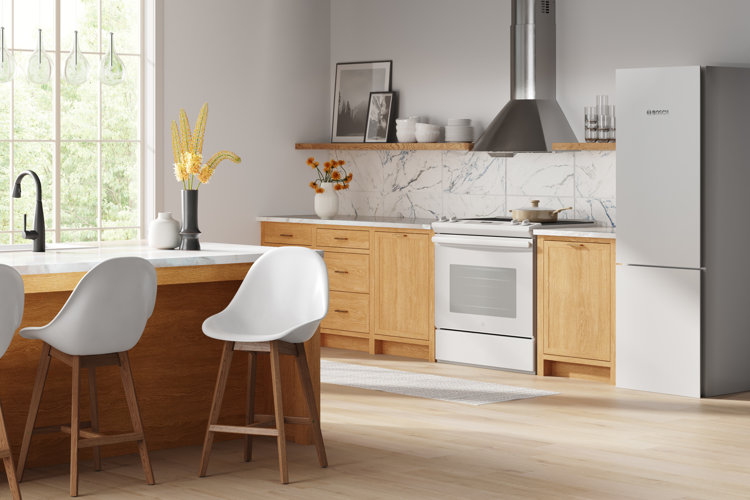
Once you’ve gathered all your materials, keep reading for the process of removing vinyl flooring step by step.
Step 1: Clear the Room
Before you begin pulling up your vinyl sheets, planks, or tiles, you must clear the room. Remove all furniture and moveable items to create a clear workspace. Take your broom and sweep the floors to remove any dirt or debris.
Step 2: Pry Off Your Baseboards
Once your room is clear, the first step in actually replacing vinyl flooring is prying off your baseboards. For this step and all others, be sure to wear your protective goggles and gloves as pieces of the flooring and glue can fly away during the removal.
After putting on your safety gear, the first place you’ll start with removing vinyl flooring are the baseboards. The edges of your vinyl flooring are installed underneath the baseboards, so you will need access to them in order to remove the sheet entirely.
Take your flat pry bar and position the wider end where the top of your baseboard sits against your wall. Next, take your mallet and hit down on your pry bar to insert it underneath the trim of your baseboard. To prevent damage to your wall, gently pry back your baseboard in sections slowly.
You can reinstall your baseboards once you’re finished laying down new vinyl flooring, but odds are they will be damaged somehow during the process. Before removing vinyl flooring, it’s necessary to pick out new baseboards, or try to go slowly to preserve the ones you have now.
Step 3: Removing Vinyl Sheets
Now that your baseboards are fully removed, follow this step if your floor is made of a vinyl sheet (as opposed to planks or tiles). Removing vinyl flooring is easiest if you work in sections. Vinyl sheets are a flooring option that is all in one piece, so once you start the removal process, you will be rolling up whole sheets.
To do this, take your utility knife to cut a big slice down the middle or center of the room. The slice needs to be straight down from one end of the room to the other. After slicing down the middle, the best rule of thumb is to move over a foot to either side and cut another strip with your utility knife from end to end of the room to form long sections of sheets to roll.
Once your narrow strips are sliced, it’s time to pull up the sections. Vinyl sheets are flimsy and easy to roll from one end to another. Do so by pulling up the edges from the floor and then rolling each strip down the section until you find a section that’s stuck with glue. When you meet glue resistance, take your 5-in-1 tool and use the scraper to break the sheet free from glue and continue rolling, scraping again each time you meet glue.
Step 4: Removing Vinyl Planks & Tiles
If your vinyl flooring is in the form of planks and tiles rather than all in one piece, removal is still easy. These vinyl flooring options require the use of a putty knife. Starting at the corner of the room? The corner of the tile? Insert the flat end of your putty knife under the corner and pull up. If your plank or tile comes off the floor a good amount, use your putty knife to scrape the rest of the glue off underneath to pull it up entirely. For planks or tiles that are more stubborn and start breaking off in chips, you will need to use more force with your pry bar.
Step 5: Scrape Excess Glue
Spots of the glue that was used to lay down your vinyl flooring will still be left behind on the subfloor after all sheets, planks, or tiles have been removed. Removing excess glue is easy and just requires your pry bar and 5-in-1 tool.
Start by going to each section of glue and using your pry bar to chip away at the leftover residue. Your pry bar will remove a good portion of glue, but you will need to use your 5-in-1 scraper to remove the rest.
If your glue is being difficult to remove and not fully coming off with these two tools, you can use your heat gun to melt the rest. Use your heat gun to loosen up the adhesive spot before using your scraper to remove it from the subfloor.
Step 6: Vacuum Leftover Debris
Once all of your vinyl flooring has been removed, use your vacuum cleaner to suck up all remaining debris. Your floor needs to be debris-free before replacing your vinyl flooring with new sheets, tiles, or planks.
Tip!
Not sure if you want to reinstall new vinyl flooring? Check out other flooring options in our guide: Hardwood vs. Laminate vs. Vinyl Flooring: How to Choose Flooring That Exceeds Your Expectations
You May Also Like
Now that you know how to remove vinyl flooring, it’s time to pick out your new sheets!
