Masticating vs. Centrifugal Juicer: What's the Difference?
Learn what sets these juicing methods apart.
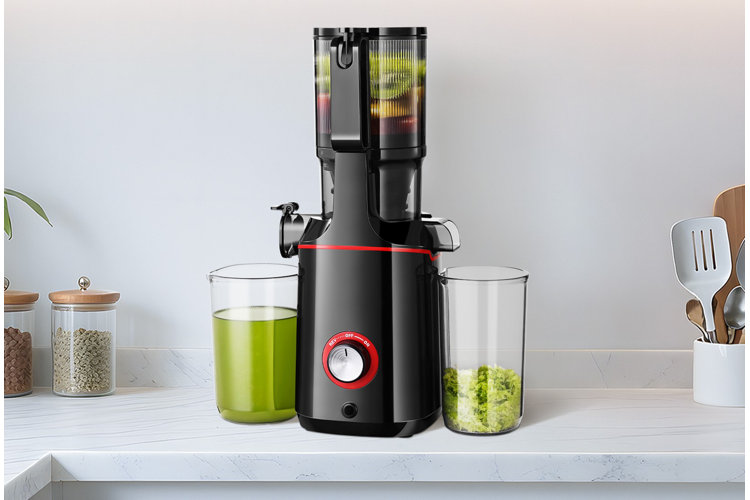
When looking for a new juicer, both masticating and centrifugal models offer convenient ways to enjoy fresh, homemade juice. While they may look similar on your counter, they work in very different ways, and one may suit your lifestyle better than the other. Keep reading to learn the key differences between these models so you can choose the best fit for your kitchen and get juicing.
The Difference: Masticating vs. Centrifugal Juicer
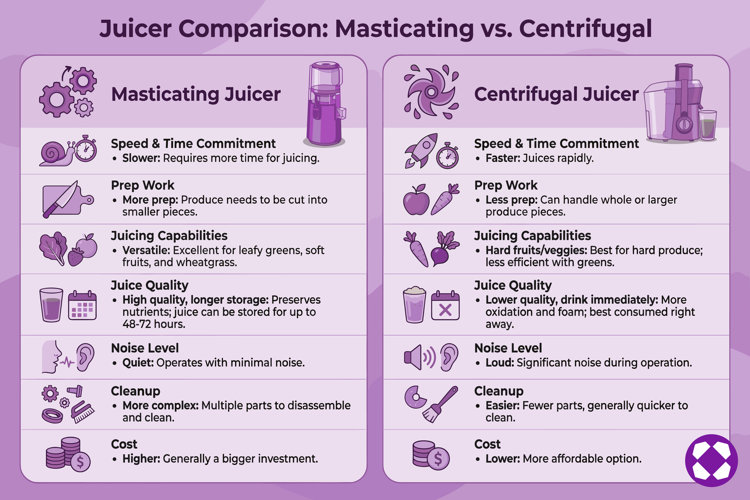
While both masticating and centrifugal juicers turn fresh produce into delicious homemade juice, the key difference comes down to how they extract liquids from fruits and vegetables.
Masticating juicers use a slow, grinding motion to gently press juice from produce. This method helps preserve more nutrients, reduces heat buildup, and typically yields more juice. On the other hand, centrifugal juicers rely on fast-spinning blades and centrifugal force to quickly separate juice from pulp, making them a speedy, everyday option.
For maximum juice extraction, quieter performance, and nutrient-rich results, a masticating juicer may be the better fit. If you prefer faster juicing with minimal prep, a centrifugal juicer may be the right choice for you.
When choosing the best juicer for your kitchen, consider your priorities like speed vs. yield, noise levels, juice quality, and how often you plan to use the appliance.
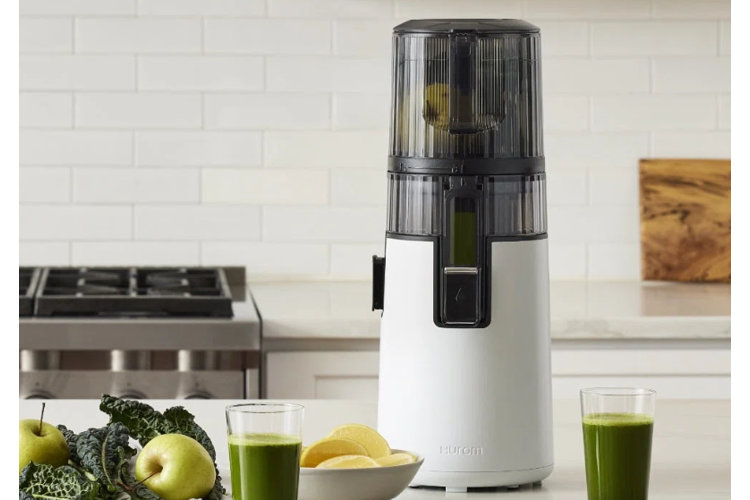
Masticating juicers, also known as slow or cold-pressed juicers, are popular for their nutrient retention and efficiency. Read on for an overview of their benefits:
1. Higher Juice Yield
Because produce is thoroughly crushed and pressed, masticating juicers typically extract more juice from the same amount of fruits and vegetables, resulting in less waste.
2. Nutrient-Rich Results
The slow, low-heat extraction process of masticating juicers helps preserve vitamins and enzymes that can degrade under high temperatures, making this style a favorite for those who are health-focused.
3. Quiet Operation
Masticating juicers run at lower speeds, keeping noise levels minimal. This is a major perk if you live in a shared space or want to juice early in the morning.
4. Versatile Functionality
Masticating juicers are ideal for green juice lovers because they can handle leafy greens, wheatgrass, and even soft fruits with which centrifugal models sometimes struggle. Juice can also last longer when made in a masticating juicer thanks to reduced oxidation, making this option perfect for prepping ahead.
Centrifugal juicers are a go-to choice for beginners thanks to their simplicity and speed. Below are some of this model’s top benefits:
1. Fast Juicing
Centrifugal models use rapidly spinning blades to juice produce in a matter of seconds, making them ideal for quick morning drinks.
2. Minimal Prep Work
The wide feed chutes found on many centrifugal juicers allow you to insert larger pieces of fruits and vegetables, effectively reducing chopping time.
3. Easy to Use
With straightforward controls and simple designs, centrifugal juicers are convenient and beginner friendly.
4. Budget-Friendly Options
Centrifugal juicers are often more affordable than masticating models, making them an accessible entry point for anyone new to juicing.
Tip!
Browse our guide on Types of Juicers & the Best One for You for even more information on every model.
